Tomato study didn’t get co-author okays, includes unreliable data

scientia-horticulturaeA journal has retracted a paper examining the traits of drought-resistant tomatoes after an investigation at the first author’s institution in Italy found a number of problems.

For starters, the first author — Maria Riccardi of the National Research Council of Italy-Institute for Agricultural and Forest Systems in the Mediterranean (CNR-ISAFOM) in Ercolano, Naples, Italy — apparently submitted the paper without consulting the study’s four other listed co-authors. What’s more, according to the retraction notice in Scientia Horticulturae, the paper’s description of the experiment “does not reflect the real conditions under which the data was collected,” rendering the findings invalid.  

Riccardo d’Andria, CNR-ISAFOM’s former director who conducted an investigation into the case, said Continue reading Tomato study didn’t get co-author okays, includes unreliable data
More questions arise over gene-editing tool

13238A new letter signed by 20 researchers is casting additional doubts on the validity of a potentially invaluable lab tool — and alleges the lab that produced the initial results turned them away when they tried to replicate its findings in mammalian cells.

In a letter published this week in Protein & Cell, the researchers add their voices to the critics of the gene-editing technique, first described earlier this year in Nature Biotechnology.

The researchers outline their attempts to apply the technique — known as NgAgo — to a variety of cell types, which fell short:

Continue reading More questions arise over gene-editing tool

Authors retract paper lacking approval to study asthma in athletes

british-journal-of-sports-medicineThe authors of a 2014 study about asthma in Norwegian athletes have retracted it after realizing they hadn’t obtained proper approval from an ethical committee.

The study’s first and corresponding author of the study in the British Journal of Sports MedicineJulie Stang from the Norwegian School of Sports Sciences in Oslo — told us the authors had struggled to obtain ethical approval for the research, but believed the issue had been resolved.

However, earlier this year, a member of an ethical committee wrote an article in the Norwegian press about his concerns regarding the study, which tested the effects of three drugs on top athletes’ breathing. In it, he said the Regional Committees for medical and health professional research ethics (REC) had not approved the study, as members were concerned the presumably healthy athletes were being exposed to drugs used to treat asthma, which could enhance their performance. 

Stang has denied that the study had anything to do with boosting athletic performance.

Stein Evensen, the committee member who wrote the article, declined to comment beyond the published text. So we’ve gotten the kronikk article translated from Norwegian using One Hour Translation. It reads: Continue reading Authors retract paper lacking approval to study asthma in athletes

Authors pull two papers about faulty glucose meters after industry prompts

4.coverTwo papers evaluating glucose meters — used by diabetics to monitor blood sugar levels — suggested that a couple of the devices don’t work as well as they should. Perhaps unsurprisingly, the companies that sell those meters objected to how the studies were conducted. By all accounts, the companies appear to be justified in their complaints.

In both cases, researchers used blood drawn from veins to test the meters. But manufacturers of the WaveSense JAZZ and GlucoRx glucose meters said their devices are designed to work with fresh blood from a finger-prick. Both papers have now been retracted.

The retraction notice for “Technical and clinical accuracy of five blood glucose meters: clinical impact assessment using error grid analysis and insulin sliding scales,” published in 2015 in the Journal of Clinical Pathology, hints at the issue:

Continue reading Authors pull two papers about faulty glucose meters after industry prompts

Nature Cell Bio paper may be headed for retraction

ncbA Nature Cell Biology paper published only a few months ago by prominent researchers in Taiwan has sparked a heated discussion on PubPeer, which now includes a comment allegedly from an author saying they have requested its retraction.

Although a representative of the journal wouldn’t confirm to us that the authors had requested a retraction, the comment on PubPeer says the paper contains several figures that were “inappropriately manipulated” by the first author.

Here’s the full comment on PubPeer, tagged as coming from one of the authors of the paper:

Continue reading Nature Cell Bio paper may be headed for retraction

Should journals reject papers solely on ethical grounds?

biological-conservation

Recently, an ecology journal received a submission that made them pause. In order to conduct their research, the authors had to kill thousands of fish. The study had been approved by conservation authorities, but it still wasn’t sitting well with the journal.

So it rejected the paper, on ethical grounds.

Biological Conservation explained its decision in a recent paper, noting the killing of thousands of vertebrates (marine and freshwater fish) in a protected area was “unnecessary and inappropriate,” and adds the journal will continue questioning and rejecting papers that “do not meet reasonable standards of practice.”

This is not a universal practice, however — years ago, The New England Journal of Medicine (NEJM) published the results of a research project that resulted in 90 people becoming infected with HIV. Again, that study had obtained the necessary ethical approvals — but should the journal act as the final judge?

According to the editors of Biological Conservation, yes. In “Field work ethics in biological research,” they write: Continue reading Should journals reject papers solely on ethical grounds?

Two Harvard-led groups pull well-cited cancer papers for duplication

the-journal-of-clinical-investigationTwo sets of authors based largely at Harvard Medical School have each retracted a paper for duplication in the same journal.

Both papers — which are more than a decade old — were pulled in The Journal of Clinical Investigation on November 1 by their respective corresponding authors.

One paper’s last author told us it was difficult to identify how the duplications occurred since the study took place so long ago, but added that multiple experiments had corroborated the results.

Here’s the first retraction notice for “Complementary roles of IRS-1 and IRS-2 in the hepatic regulation of metabolism:” Continue reading Two Harvard-led groups pull well-cited cancer papers for duplication

Prominent researcher in Scotland resigns after misconduct finding upheld

robert-ryan_0
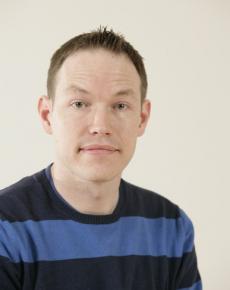
Robert Ryan

A rising star in the field of infectious disease has resigned from the University of Dundee in Scotland after the university upheld the findings of an investigation concluding that he committed misconduct.

Earlier this year, Robert Ryan was suspended amidst the investigation, which focused on data doctoring in several publications. We’ve now been forwarded an internal email from Julian Blow, dean of the School of Life Sciences, which alerts staff that Ryan has resigned, and the institution has upheld its finding of misconduct, despite Ryan’s appeal.

In 2015, Ryan was selected to be an EMBO Young Investigator; yesterday, EMBO announced that it had withdrawn him from the program.

Blow’s email to staff, dated November 9, states:

Continue reading Prominent researcher in Scotland resigns after misconduct finding upheld

Official notice published for chem paper slated for retraction in 2011

process-safetyAfter five years, Elsevier has finally issued a notice of retraction for a paper it announced it was pulling for fraud in 2011.

All of the papers were produced by a research group in Brazil; all were retracted after the publisher conducted an investigation, concluding that the NMR results had been manipulated. At the time, the last author on the latest retraction, Claudio Airoldi, defended the work. Since then, however, Airoldi has logged two more retractions, bringing his total to 13.

Here’s the full text of the retraction notice, from Process Safety and Environmental Protection: Continue reading Official notice published for chem paper slated for retraction in 2011

Make America Retract Again: Physics group yanks release that quoted Trump, angered scientists

american-physical-societyBowing to outraged scientists, the American Physical Society (APS) has retracted a press release (archived here) it issued yesterday that urged President-elect Donald Trump to  “Make America Great Again” by strengthening “scientific leadership.”

The statement, attributed to Tawanda Johnson, in the APS’ Washington, D.C. office, congratulated Trump on his victory over Hillary Clinton and said the nation must “reclaim its scientific leadership, which it has lost during the past decade. APS believes that such policies” — which it did not specify — “will help the Trump administration achieve its goal captured by its slogan, “Make America Great Again.”

The release goes on to claim that the United States ranks 10th worldwide in “overall innovation,” thanks in part to less-than-adequate funding for scientific research.

Social media went predictably bonkers as the release made the rounds. From Twitter: Continue reading Make America Retract Again: Physics group yanks release that quoted Trump, angered scientists