A group of chemists whose work was investigated by the University of Texas-Austin has had another paper retracted, this one of a Chemical Science study previously subjected to an Expression of Concern.
Noriyuki Takai, a gynecologic cancer researcher in Japan, has notched one more retraction — bringing the total to eight — due to figures that were “processed inappropriately” and did “not accurately report the original data.”
According to the notice, Takai alone put the figures together in the 2006 Oncology paper, which tested a histone deacetylase inhibitor on endometrial and ovarian cancer cell lines. The team is part of the department of obstetrics and gynecology at Oita University in Japan.
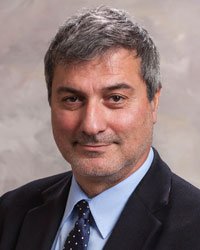
Surgeon Paolo Macchiarini, who is under investigation for allegedly downplaying dangers of an experimental surgery, has been cleared of some misconduct allegations by the Karolinska Institutet in Stockholm.
Macchiarini, a thoracic surgeon, has made headlines for repairing damaged airways using tracheas from cadavers and even synthetic tracheas, both treated with the patients’ own stem cells to assist in the transplant.
In a letter to Vice-Chancellor Anders Hamsten dated last month, KI’s Ethics Council refuted a number of accusations leveled against Macchiarini by Pierre Delaere at KU Leuven in Belgium, who had suggested the surgeon had engaged in scientific misconduct, including fabricating data.
The story about Olivier Voinnet, a high-profile plant biologist whose work has fallen under scrutiny, continues to build momentum. Late last week, Voinnet’s employer and one of his funders announced they were investigating his work, and one of the peer reviewers of a soon-to-be-retracted paper has made her original report public.
An attorney for Fazlul Sarkar, the Wayne State University researcher who claims he lost a job offer because of comments about his research on PubPeer, has asked a judge to reconsider last month’s decision not to release information about the site’s anonymous commenters. As a consequence, the brief in support of that motion identifies a key commenter as the pseudonymous Clare Francis.
Karel Bezouška, the Czech biochemist who was caught on hidden camera breaking into a lab fridge to fake results, has turned it up to eleven with two new retractions.
Both retractions appeared in Biochemical and Biophysical Research Communications, one in October 2014 and one in January 2015. His story began two decades ago in 1994, when he published a paper in Nature that couldn’t be reproduced, and was eventually retracted in 2013.
How should scientists think about papers that have undergone what appears to be a cursory peer review? Perhaps the papers were reviewed in a day — or less — or simply green-lighted by an editor, without an outside look. That’s a question Dorothy Bishop, an Oxford University autism researcher, asked herself when she noticed some troubling trends in four autism journals.
Recently, Bishop sparked a firestorm when she wrote several blog posts arguing that these four autism journals had a serious problem. For instance, she found that Johnny Matson, then-editor of Research in Developmental Disabilities and Research in Autism Spectrum Disorders, had an unusually high rate of citing his own research – 55% of his citations are to his own papers, according to Bishop. Matson also published a lot in his own journals – 10% of the papers published in Research in Autism Spectrum Disorders since Matson took over in 2007 have been his. Matson’s prodigious self-citation in Research in Autism Spectrum Disorders was initially pointed out by autism researcher Michelle Dawson, as noted in Bishop’s original post.
Short peer reviews of a day or less were also common. Matson no longer edits the journals, both published by Elsevier.
Bishop noted similar findings at Developmental Neurorehabilitation and Journal of Developmental and Physical Disabilities, where the editors (and Matson) frequently published in each others’ journals, and they often had short peer reviews: The median time for Matson’s papers in Developmental Neurorehabilitation between 2010 and 2014 was a day, and many were accepted the day they were submitted, says Bishop.
Although this behavior may seem suspect, it wasn’t necessarily against the journals’ editorial policies. This is the peer review policy at RIDD:
 A group of chemists whose work was investigated by the University of Texas-Austin has had another paper retracted, this one of a Chemical Science study previously subjected to an Expression of Concern.