Japan institute defends Nobel Prize winner amid allegations of image duplication

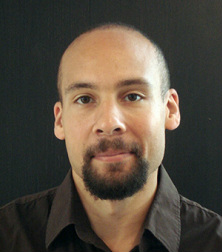
Shinya Yamanaka

The Center for iPS Cell Research and Application (CiRA) at Kyoto University in Japan is defending Nobel Prize winner Shinya Yamanaka against claims of  image manipulation in multiple studies on which he was an author. The institute says questioning Yamanaka’s integrity without sufficient evidence is “completely unacceptable.”

Yamanaka shared the Nobel Prize in Physiology or Medicine in 2012 and works at CiRA. 

On August 7, Gotham City Research LLC, a short-selling firm based in the United States, released a report alleging image manipulation in several papers by Yamanaka appearing between 2000 and 2020.

Continue reading Japan institute defends Nobel Prize winner amid allegations of image duplication

Cambridge researcher pulls Cell paper five years after Nature, Science retractions

A cancer researcher at the University of Cambridge in the UK has retracted a paper from Cell after commenters on PubPeer questioned aspects of 10 images in the article. 

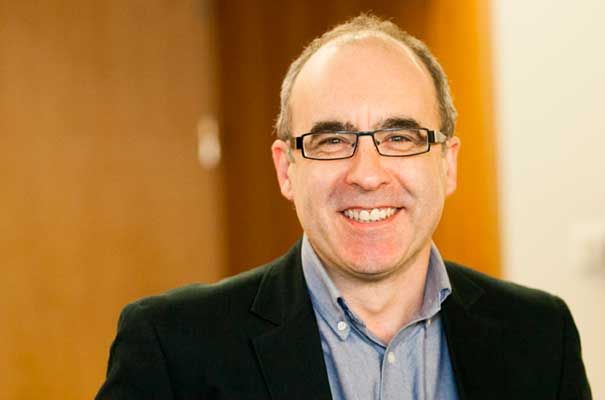
Steve Jackson

Though an institutional investigation found the figures were “not reliable,” another of the authors objected to the retraction as “an overreaction.”

Steve Jackson, the University of Cambridge biology professor and lab leader, previously retracted two papers – including one in Nature and one in Science posted on the same day – after a Cambridge investigation found a co-author, Abderrahmane Kaidi, had falsified data. 

Continue reading Cambridge researcher pulls Cell paper five years after Nature, Science retractions

Researcher loses battle with Cell over wording of retraction notice

For months, a researcher has wrestled with a journal over the wording of an upcoming retraction notice. It appears that she has lost.
Earlier this week, Cell retracted the paper, despite the protests of first author Shalon Babbitt Ledbetter. When Ledbetter learned the journal was planning to retract the biochemistry paper over image manipulations, but wouldn’t name the culprit in the notice, she shared her concerns on PubPeer. Although a 2015 letter sent to Cell from Saint Louis University identified last author Dorota Skowyra as responsible for multiple manipulations, the journal wasn’t planning to say Skowyra was responsible in the retraction notice. Which would leave all other authors — particularly Ledbetter — under a cloud of suspicion.

Now, Cell Press has finally retracted the paper, along with another paper in Molecular Cell that lists Skowyra as corresponding author. Both notices describe image manipulations that were investigated by Saint Louis University (SLU). Neither identifies who is responsible.

Continue reading Researcher loses battle with Cell over wording of retraction notice

Delays, arguing over upcoming Cell retraction leave first author “devastated”

After being “blindsided” a few months ago when she was told one of her 2005 papers was going to be retracted, a researcher scrambled to get information about why. And when she didn’t like the answers, she took to PubPeer.
Eight days ago, Shalon (Babbitt) Ledbetter, the first author of the 2005 paper published in Cell, posted a comment on the site announcing the paper was going to be retracted after the last author’s institution, Saint Louis University (SLU), determined that some figures had been manipulated by the last author, Dorota Skowrya. A letter dated September 2, 2015 sent by SLU to Cell describes the results of the investigation — namely, that the manipulations were “cosmetic,” and had no effect on the data or the conclusions. More than two years later, Ledbetter learned the journal was planning to retract the paper, and an initial draft of the notice wouldn’t identify who was responsible; she has since been pulled into a confusing web of blame-shifting and conflicting information that has been, in her words, “heartbreaking.”

Ledbetter wrote on PubPeer:

Continue reading Delays, arguing over upcoming Cell retraction leave first author “devastated”

Overlooked virus “generated a mess,” infected highly cited Cell, PNAS papers

When Alexander Harms arrived at the University of Copenhagen in August 2016, as a postdoc planning to study a type of antibiotic resistance in bacteria, he carried with him a warning from another lab who had recruited him:

People said, “If you go there, you have to deal with these weird articles that nobody believes.”

The papers in question had been published in the Proceedings of the National Academy of Sciences in 2011 and Cell in 2013. Led by Kenn Gerdes, Harms’s new lab director, the work laid out a complex chain of events that mapped out how an E. coli bacterium can go into a dormant state, called persistence, that allows it to survive while the rest of its colony is wiped out.

Despite some experts’ skepticism, each paper had been cited hundreds of times. And Harms told us:

I personally did believe in the published work. There had been papers from others that kind of attacked [the Gerdes lab’s theory], but that was not high-quality work.

But by November 2016, Harms figured out that the skeptics had been right.  Continue reading Overlooked virus “generated a mess,” infected highly cited Cell, PNAS papers

Author blamed for misconduct in Cell paper declines to sign retraction notice  

Researchers have retracted a 2015 paper in Cell after an investigation revealed the first author committed misconduct.

According to the retraction notice, which first author Ozgur Tataroglu declined to sign, the researchers realized there was an issue with the 2015 paper when they were unable to replicate the findings. Corresponding author Patrick Emery and his team at the University of Massachusetts Medical School in Worcester reviewed the data and found “clear evidence” that Tataroglu  — who had been a postdoc in Emery’s lab — “had repeatedly misrepresented and altered primary data,” the notice states.

UMass subsequently conducted an investigation in which it “concluded that the first author committed scientific misconduct.”  

Here’s the retraction notice for “Calcium and SOL Protease Mediate Temperature Resetting of Circadian Clocks:” Continue reading Author blamed for misconduct in Cell paper declines to sign retraction notice  

“We do not want to create false hope”: Authors retract Cell paper they can’t replicate

A few years ago, researchers in Sweden had something to celebrate: They thought they had discovered a chink in the armor of the most common type of malignant brain cancer.

In a 2014 Cell paper, the team — led by Patrik Ernfors at the Karolinska Institutet — reported that they had identified a small molecule that could target and kill glioblastoma cells — the cancer that U.S. Senator John McCain was just diagnosed with — and prolong survival in mice with the disease. 

Satish Srinivas Kitambi, the paper’s first author, who is also based at the Karolinska Institutet, said the results got the team “really excited:” Continue reading “We do not want to create false hope”: Authors retract Cell paper they can’t replicate

Dear journals: Clean up your act. Regards, Concerned Biostatistician

Romain-Daniel Gosselin

Recently, a biostatistician sent an open letter to editors of 10 major science journals, urging them to pay more attention to common statistical problems with papers. Specifically, Romain-Daniel Gosselin, Founder and CEO of Biotelligences, which trains researchers in biostatistics, counted how many of 10 recent papers in each of the 10 journals contained two common problems: omitting the sample size used in experiments, as well as the tests used as part of the statistical analyses. (Short answer: Too many.) Below, we have reproduced his letter.

Dear Editors and Colleagues,

I write this letter as a biologist and instructor of biostatistics, concerned about the disregard for statistical reporting that is threatening scientific reproducibility. I hereby urge you to spearhead the strict application of existing guidelines on statistical reporting. Continue reading Dear journals: Clean up your act. Regards, Concerned Biostatistician

Harvard biologist retracts diabetes breakthrough in Cell

2013 probably felt like it was going to be a great year for stem cell biologist Douglas Melton at Harvard. He had published a buzz-worthy paper in Cell about a new way to potentially boost insulin in diabetics, attracting significant media attention, and eventually gathering nearly 200 citations.

But 2016 is closing out on a less positive tone for Melton — today, he and his colleagues are retracting the paper, after multiple labs (including his own) couldn’t reproduce the findings.

Although the lab has itself already published two articles casting doubt on the original findings, Melton told Retraction Watch he chose to retract the paper to ensure there was no confusion about the original paper’s validity: Continue reading Harvard biologist retracts diabetes breakthrough in Cell

Cell Press won’t retract papers despite one author confessing to fraud

Screen Shot 2016-08-03 at 18.54.35Cell Press journals will not be retracting two papers that were flagged with expressions of concern (EOCs) in April after one author claimed to have manipulated some experiments.

In a strange turn of events, as we previously reported, the study’s corresponding author refuted the claims of the author who confessed to fraud, citing concerns about his “motives and credibility.” Since then, two independent labs repeated the authors’ experiments, and “largely confirm” the central conclusions of a Cell paper, but were inconclusive regarding a paper in Molecular Cell. Regardless, in both cases, the journals have decided to take no further action. 

Both expressions of concern (and their associated editorial notes) will remain online, as part of the “permanent record,” a Cell Press spokesperson told us.

The spokesperson added more about the investigation process: Continue reading Cell Press won’t retract papers despite one author confessing to fraud