Daniel Bar-Shalom, a pharmacist at the University of Copenhagen, was incensed.
He’d been asked to review a manuscript by Muhammad Imran Qadir, an associate professor at Bahauddin Zakariya University in Multan, Pakistan. According to his institution’s website, Qadir was the “top pharmaceutical scientist” in the country. But Bar-Shalom thought the introduction to the paper felt like it could have been written by a student. The real problems started in the middle of the article, however, in what Bar-Shalom came to think of as “the fill of a shit sandwich.”
There, sprinkled throughout the text, were several irrelevant and trivial sentences. “Novel drugs and vaccines are being made or designed by scientists,” read one. “Genomics and proteomics have been longstanding tools in the creation of novel drugs,” another stated.
When Bar-Shalom looked up the references that followed each of these bland sentences, Qadir’s name appeared on every article. Although mentioning one’s previous work is not necessarily inappropriate, excessive self-citation can be considered “a potential attempt to manipulate” an author’s h-index, according to the Committee on Publication Ethics. Qadir has a Google Scholar h-index of 70*, but his profile includes dozens of papers by another researcher named Muhammad Imran.
Disgusted, Bar-Shalom suggested rejecting the manuscript, which Qadir had submitted to Elsevier’s Journal of Drug Delivery Science and Technology in 2024. The journal agreed.
Bar-Shalom also looked up Qadir’s other work, some of which he found “ludicrous.” There was a paper postulating all human cancers were caused by viruses, for instance, and a study attempting to correlate urine protein with mouth shape (in both men and women, a negative result on a urine protein test apparently was associated with a “round shaped mouth”).
It also became clear Qadir had engaged in self-citation before: Six review articles he and his colleagues had published in Critical Reviews in Immunology and Critical Reviews in Eukaryotic Gene Expression referenced more than 100 of his own papers – each.
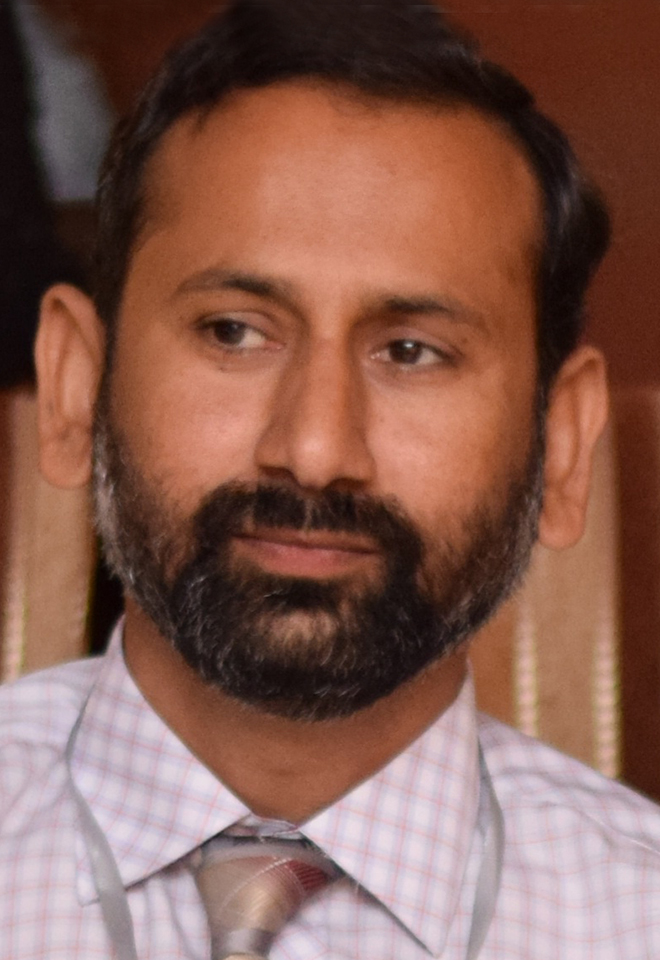
As with the article Bar-Shalom had been asked to review, the self-citations appeared in identical blocks across the six papers, which had been published in 2023 and 2024. Each block of references was tied to a version of the same irrelevant sentences that had first riled Bar-Shalom. For instance, the statement “Scientific workers are also trying to design new drugs and vaccines” in the paper “Human Oropharyngeal Candidiasis: From Etiology to Current Treatment” in Critical Reviews in Immunology cited the same five Qadir papers in the same order as did the statement “Novel drugs and vaccines are being made or designed by scientists” in the rejected article.
Bar-Shalom said Qadir had evidently “copy-pasted the shit sandwich from every article into the new ones.”
Qadir told us he would comment but then did not write back.
In October 2024, Bar-Shalom shared his concerns with the two journals, which are published by Begell House, a U.S. company. In correspondence seen by Retraction Watch, Gary Stein, executive editor of Critical Reviews in Eukaryotic Gene Expression, replied that Qadir had “been advised that all future manuscript submissions will be carefully scrutinized to ensure justification for literature citations in keeping with ‘good scientific practice.’”
Bar-Shalom was baffled: “No retractions? No expressions of concern?” he wrote back.
In an email to us, Stein reiterated Qadir had been “notified that excessive self-citation, without a compelling basis, is unacceptable to Critical Reviews in Eukaryotic Gene Expression. None of Dr. Qadir ‘s papers have subsequently been reviewed or published.” However, he did not address our question as to why Qadir’s papers had not been retracted despite the questionable self-citation.
We have not heard back from Begell House.
In an email from last year, Bar-Shalom also shared his findings with Renata Lopez, deputy editor of the Journal of Drug Delivery Science and Technology, which had initially asked him to review Qadir’s work.
“I’ve been feeling very discouraged and deeply concerned about the current state of science,” Lopez wrote in reply to Bar-Shalom in correspondence we have seen. “If only you knew how many reviews I receive where reviewers shamelessly ask authors to cite their own articles. As an editor, I can intervene in these reports, so I delete those ‘requests’ and add the reviewer to my blacklist. But if you look at their h-index, it’s sky-high, as if they were truly outstanding researchers with ‘brilliant’ work.”
*Update, May 13, 2026: Qadir’s Google Scholar profile has been removed. Here is an archived version captured before its removal.
Like Retraction Watch? You can make a tax-deductible contribution to support our work, follow us on X or Bluesky, like us on Facebook, follow us on LinkedIn, add us to your RSS reader, or subscribe to our daily digest. If you find a retraction that’s not in our database, you can let us know here. For comments or feedback, email us at [email protected].
All the papers published by Crit Rev Euk Gene Exp were peer reviewed. As per your observation, there is not a problem in the manuscripts. Your concern is about self-citations. Why these articles should be retracted? Will you kill a person whose fingure has a wound? Is it is justified?
Dr. M. Imran Qadir
“Retraction is like euthanasia” is certainly one of the takes of all time.
The problem with too many references to your own work is that the argument becomes recursive without an exit condition. This is why the number of self references should be limited by the author, ideally zero.
If I write a paper A that makes reference to Smith et al (2015). I then write paper B that references my own paper A that references Smith et al(2015), why not reference Smith et al(2015)
OK, let´s see. I steal from a company and the watchman doesn´t notice, the the police finds out and my defence is that “there was a (lousy?) watchman and that absolves me…
Not only is an inmoral claim, it also reflect on Begell House peer-reviews. Your article DOI: 10.1615/CritRevEukaryotGeneExpr.2017019494 is listed as being submitted on December 15, 2016 and published on December 15, 2016. They must have very efficient reviewers.
Another example: DOI: 10.1615/CritRevEukaryotGeneExpr.2017019712
Submitted: Jan 17 2017Accepted: Jan 20 2017Published online: Sep 29 2017 (copy/paste from the website) Those reviews (I assume they use at least 2 but I might be wrong) were remarkably fast, right?
UPS, forgot to comment on one of your comments.
I wouldn’t dream of spending 35$ to read each of your opuses and therefore I din’t state that there are problems with your manuscripts. That said, I bothered to download all the references, built an Excel sheet and realized that they follow a pattern of copy/paste of whole sections. If you make the papers available to me, I am willing to apologize if I find out that I cannot find “problems” (other than massive self-citation which, obviouly you regard as a trivial pecadillo)
Papers with exessive unnecessary self-citation are corrupted, should be retracted. It is obvious abuse. Red flag. Authors who unnecessarily cite to many of own papers are more likely to fabricate data, cheat, and present false results just to get higher h-index and become a ““top pharmaceutical scientist” in the country”.
“if you look at their h-index, it’s sky-high, as if they were truly outstanding researchers with ‘brilliant’ work.”
Two comments:
1- The h-index, invented 20 years ago, is now obsolete, victim of the Goodhart’s law. Unreasonable self-citation is only one simple way to game the index. For example, what does h = 1782 mean?
https://scholar.google.com/citations?hl=en&user=fm3iBmgAAAAJ&view_op=list_works&sortby=pubdate
2- At some point, a far-fetched h-index becomes harmful. One strategy is then to remove evidences. Perhaps this is why Muhammad Imran Qadir deleted his GS account. This account existed: a snapshot from 2019 is available on the Wayback Machine:
https://web.archive.org/web/20190515075932/https://scholar.google.com/citations?user=35XnlfEAAAAJ&hl=en
Unfortunately, excessive self citations is not a new phenomena that is unethical. Another recent example that I came across is https://link.springer.com/article/10.1007/s12055-024-01859-7, which effectively has only self-citations. The journals must take strict measures to prevent such practices which only promote gaming of useless metrics such as citation count and other indices and hardly contribute to advancing our understanding.