University finds Dutch economist guilty of misconduct; he responds

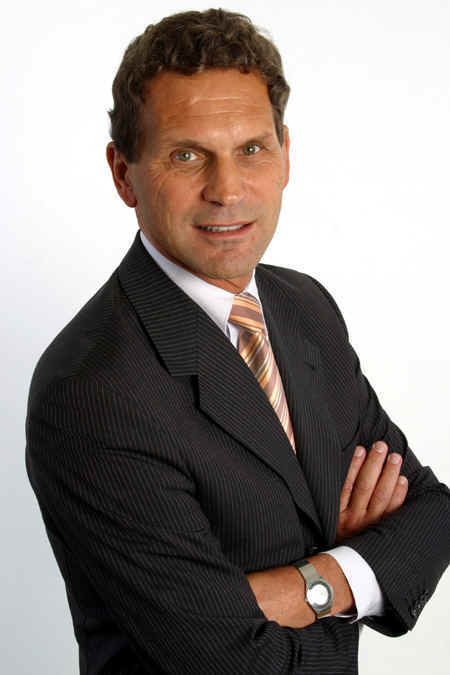
Peter Nijkamp

The Free University of Amsterdam found Peter Nijkamp, one of the nation’s leading economists who has lost several papers for self-plagiarism, has been found guilty of “questionable research practices,” according to the newly released results of an investigation.

Nijkamp has published a strongly worded criticism of the report (at least according to Google Translate, since his writing is in Dutch).

According to independent student publication Ad Valvas, the commission, led by Jaap Zwemmer, a professor emeritus at the University of Amsterdam, found Nijkamp was guilty of “questionable research practices.” University rector Frank van der Duyn Schouten, on the other hand, said in an official statement that there was “insufficient basis” to claim questionable research practices for each article.

Continue reading University finds Dutch economist guilty of misconduct; he responds

Judge tells PubPeer to hand over information about anonymous commenter; site weighing “options”

pubpeerA Michigan judge has ruled against a motion by PubPeer to protect the identity of an anonymous commenter, and asked the post-publication peer review site to give her any information they have about the commenter.

According to one of the lawyers present, the site said in court the only identifying information it has is an I.P. address. The judge will decide March 24 (Tuesday) whether or not to share the I.P. address with the lawyer representing a cancer researcher who has demanded PubPeer release information about those who have written anonymously about his work.

On March 5, PubPeer had a better day in court, when the judge agreed to allow the site to protect the identities of its other anonymous commenters. For the remaining commenter, the judge asked to hold another hearing yesterday.

During that meeting, the judge ordered PubPeer to produce “identifying information for that commenter,” said Alexander Abdo of the American Civil Liberties Union, who helped represent PubPeer in this case: Continue reading Judge tells PubPeer to hand over information about anonymous commenter; site weighing “options”

Two more retractions appear for prominent MIT cancer researcher Robert Weinberg

genes and developmentTwo identical retraction notices have popped up for MIT professor Robert Weinberg, a highly-cited cancer researcher who had a retraction and a correction in 2013, both in Cancer Cell. 

These two new retractions, in Genes and Development, stem directly from another paper by Weinberg and colleagues in Cell that will apparently be retracted, as the “same analytical methodology was used,” according to the notices [see bottom of the post for an update].

Weinberg is highly regarded, and at least 20 of his papers have been cited over a thousand times.

First author Scott Valastyan was a promising postdoc at the time of the paper’s publication. He was a 2011 Runyon Fellow at Harvard, a three-year, $156,000 award for outstanding cancer postdocs. He doesn’t seem to have published anything since 2012, though he is listed as a joint inventor with Weinberg on patents filed in 2009 and 2014.

Here are the notices for “Concomitant suppression of three target genes can explain the impact of a microRNA on metastasis” (cited 73 times, according to Thomson Scientific’s Web of Knowledge) and “Activation of miR-31 function in already-established metastases elicits metastatic regression” (cited 54 times), both paywalled: Continue reading Two more retractions appear for prominent MIT cancer researcher Robert Weinberg

Bielawski and Wiggins up retraction count to five with three in JACS

Journal of the American Chemical SocietyThe Journal of the American Chemical Society (JACS) has retracted three articles that had earned expressions of concern by chemistry researchers who were under investigation at the University of Texas, Austin.

Kelly Wiggins and Christopher Bielawski have already received two other retractions and several EoCs.

The newly retracted articles have each been cited more than 50 times, according to Thomson Scientific’s Web of Knowledge.

The three papers are: Continue reading Bielawski and Wiggins up retraction count to five with three in JACS

Researcher loses second bid to quash Diabetes expressions of concern

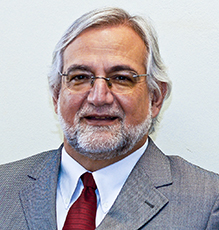
Mario Saad, via unicamp.br

It hasn’t been a good week for scientists going to court to silence criticism of their work.

Yesterday, PubPeer won a near-complete victory in a case seeking the identities of their commenters. And also yesterday, a Massachusetts judge struck down — for the second time — a request by Mario Saad to remove expressions of concern about four of his papers in Diabetes.

In his ruling, Judge Timothy Hillman wrote: Continue reading Researcher loses second bid to quash Diabetes expressions of concern

Judge rules most of PubPeer’s commenters can remain anonymous

Falzul Sarkar
Falzul Sarkar

PubPeer won a near-complete victory in a Michigan court today.

A judge has agreed to allow the site to protect the identities of all but one of its anonymous commenters, after a cancer researcher demanded the site release the names of those who have critiqued his papers.

For one of the comments on the site, the judge has asked to hold another hearing on March 19.

After the work of Fazlul Sarkar of Wayne State University appeared on the post-publication peer review site, he wasn’t happy about it. In October, he sued the site’s commenters, demanding that PubPeer release the names of his accusers. Sarkar, who has not been found to have committed research misconduct, claims he lost a lucrative job offer at the University of Mississippi as a result of the posts.

In December, PubPeer’s attorneys asked the judge to dismiss the motion; today, Hon. Sheila Ann Gibson of the Wayne County Circuit Court agreed to do so for all but one comment.

Alexander Abdo of the American Civil Liberties Union, who represented PubPeer in this case, told Retraction Watch: Continue reading Judge rules most of PubPeer’s commenters can remain anonymous

Diabetes researcher won’t give up court fight to quash expressions of concern

Mario Saad, via unicamp.br

Apparently, you can’t keep Mario Saad down.

The researcher, who had 12 figures in a paper corrected this week, was dealt a setback last week when a judge denied his motion to remove expressions of concern on four of his papers in the journal Diabetes, saying that would have amounted to prior restraint — essentially, censorship (a no-no, thanks to the First Amendment).

Saad and his attorneys, however, were undeterred. They filed a motion for reconsideration just four days later, along with a brief, arguing: Continue reading Diabetes researcher won’t give up court fight to quash expressions of concern

PLoS ONE mega-correction, but no retraction, for researcher who sued diabetes journal

Mario Saad, via unicamp.br

PLoS ONE has just issued a 12-figure correction on a paper by Mario A. Saad, who sued the American Diabetes Association unsuccessfully in an attempt to prevent it from retracting four papers in its flagship journal Diabetes.

The corrections include taking out Western blots copied from another Saad paper, as well as several figures where the bands were “misplaced.”

PubPeer commenters suggest this may not be enough, calling seven additional figures into question. Continue reading PLoS ONE mega-correction, but no retraction, for researcher who sued diabetes journal

Ob-gyn prof up to 7 retractions, latest due to “substantial data misrepresentation”

University of Florida

Two more retractions have popped up for Nasser Chegini, the former University of Florida professor currently under investigation by the Office of Research Integrity (ORI).

Both retractions appear in the Journal of Clinical Endocrinology & Metabolism. The notices indicate that an investigation report from the University of Florida “found substantial data misrepresentation” in two JCEM articles about Smads, signaling molecules that carry messages from TGF-beta receptors to the nucleus.

Here’s the notice for “The Expression of Smads in Human Endometrium and Regulation and Induction in Endometrial Epithelial and Stromal Cells by Transforming Growth Factor-Beta” (cited 28 times, according to Thomson Scientific’s Web of Knowledge):

Continue reading Ob-gyn prof up to 7 retractions, latest due to “substantial data misrepresentation”

Are retractions more frequent in stem cell research?

sci eng ethicsThere are a number of fields that seem to punch above their weight on Retraction Watch: Anesthesiology, home to the world record holder (and runner-up), and psychology, home to Diederik Stapel and others. But the red-hot field of stem cell research is another that makes frequent appearances, last year’s STAP controversy being particularly prominent.

There’s an interesting (but unfortunately paywalled) recent paper in Science and Engineering Ethics, “The Acid Test for Biological Science: STAP Cells, Trust, and Replication,” by Cheryl Lancaster, a small part of which tries to answer that question.

Lancaster applies the same methods Fang, Steen, and Casadevall used to broadly measure the causes of retractions in all life science and biomedicine to the specific field of stem cell research: Continue reading Are retractions more frequent in stem cell research?