Sage issues dozens of retractions from two journals it acquired

In recent weeks Sage has retracted batches of articles published in two journals it acquired from IOS Press in 2023. In each case, the retractions were for manipulation of, and concerns about, peer review.

The first tranche of papers was retracted July 15 from Journal of Intelligent and Fuzzy Systems (JIFS) and constituted 43 papers, some of which had been presented at a conference in Türkiye. According to the retraction notice, after an internal investigation, Sage “became aware that the submissions contain indicators of third-party involvement and attempts to manipulate the peer-review process” in the special issue.

The second batch of retractions applied to 34 papers in the International Journal of Knowledge-Based and Intelligent Engineering Systems from 2017 to 2025. The August 5 notice cites suspicion of third party involvement, peer review issues, citation manipulation and non-standard language, including tortured phrases, as reasons for retracting the articles. Tortured phrases can indicate plagiarism.

Continue reading Sage issues dozens of retractions from two journals it acquired

Biology journal pulls 100+ articles and counting from special issues for peer review manipulation

Elsevier’s International Journal of Biological Macromolecules has issued more than 100 retractions and counting for manipulated peer review in guest-edited special issues. The publisher has said one more retraction is coming. 

Since June the publisher has retracted 120 papers. According to the retraction notices, the journal identified “[s]ystematic, coordinated, and widespread manipulation of the peer-review process.”

A spokesperson for Elsevier told Retraction Watch the publisher “became aware of possible systematic manipulation and other issues such as plagiarism, image duplication, and authorship issues in a number of articles published in Special Issues” in 2025, which led them to conduct a wider investigation into more recent special issues. 

Continue reading Biology journal pulls 100+ articles and counting from special issues for peer review manipulation

Publisher investigating peer reviewer for alleged bribery scheme 

Deagreez/iStock

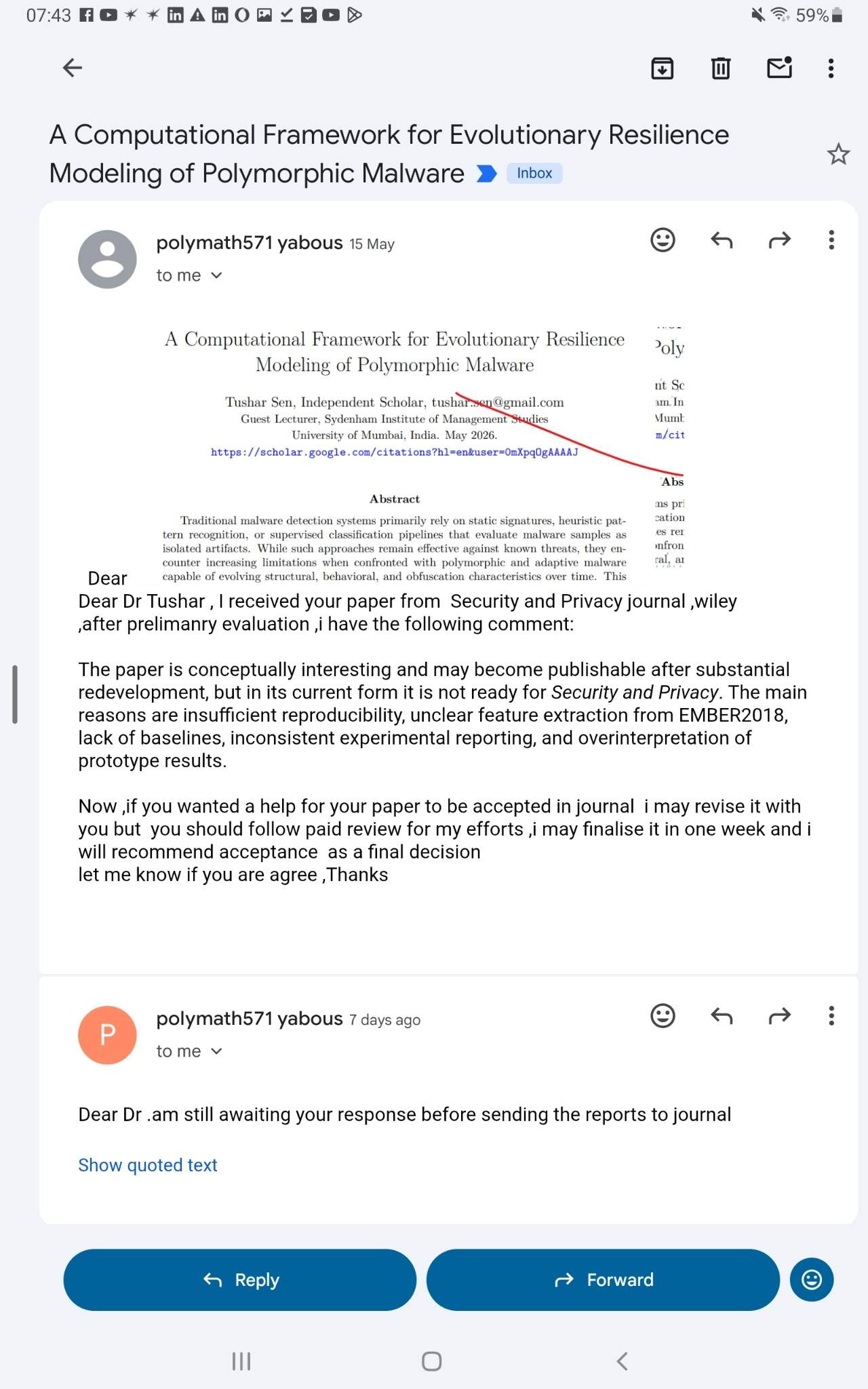
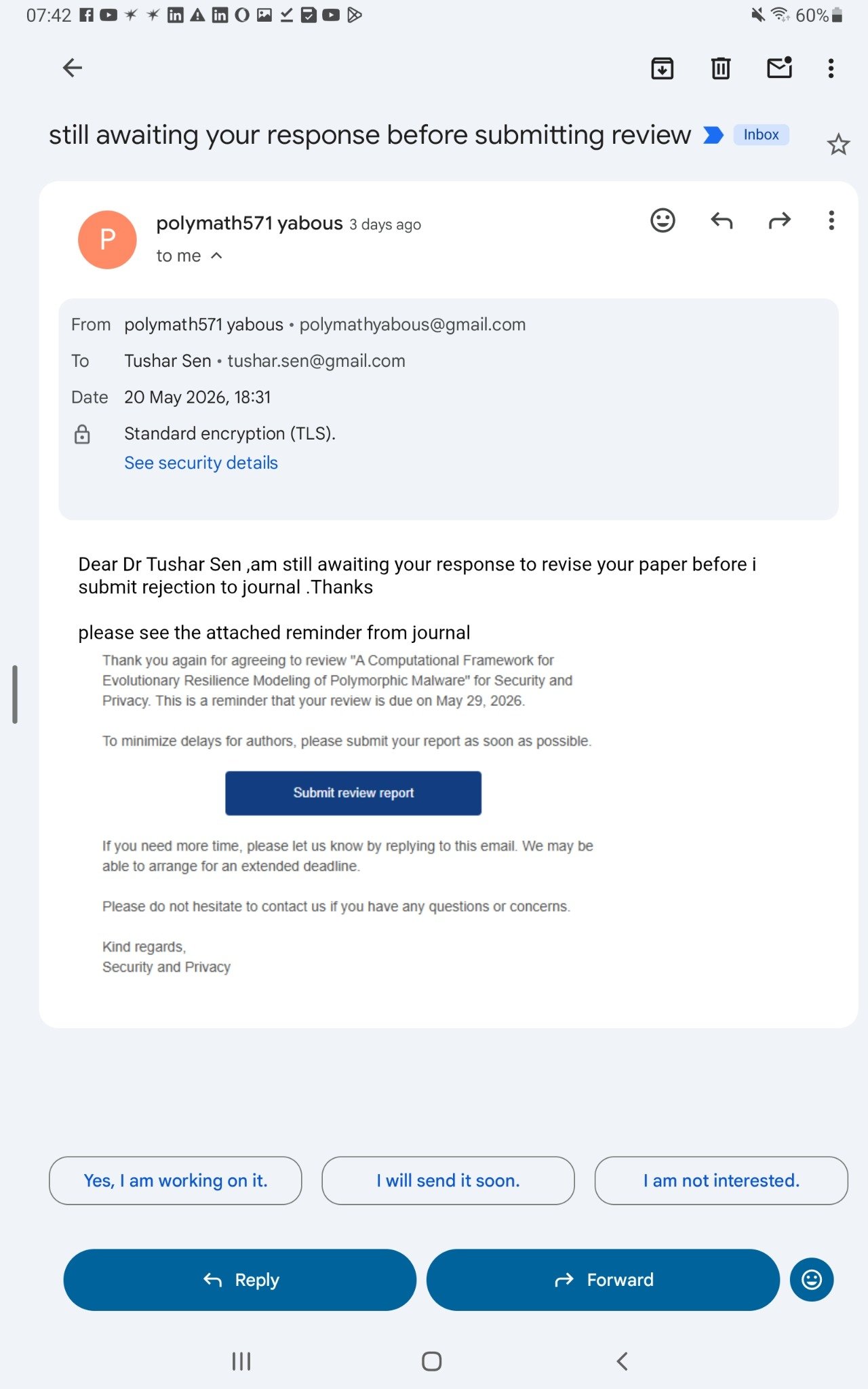
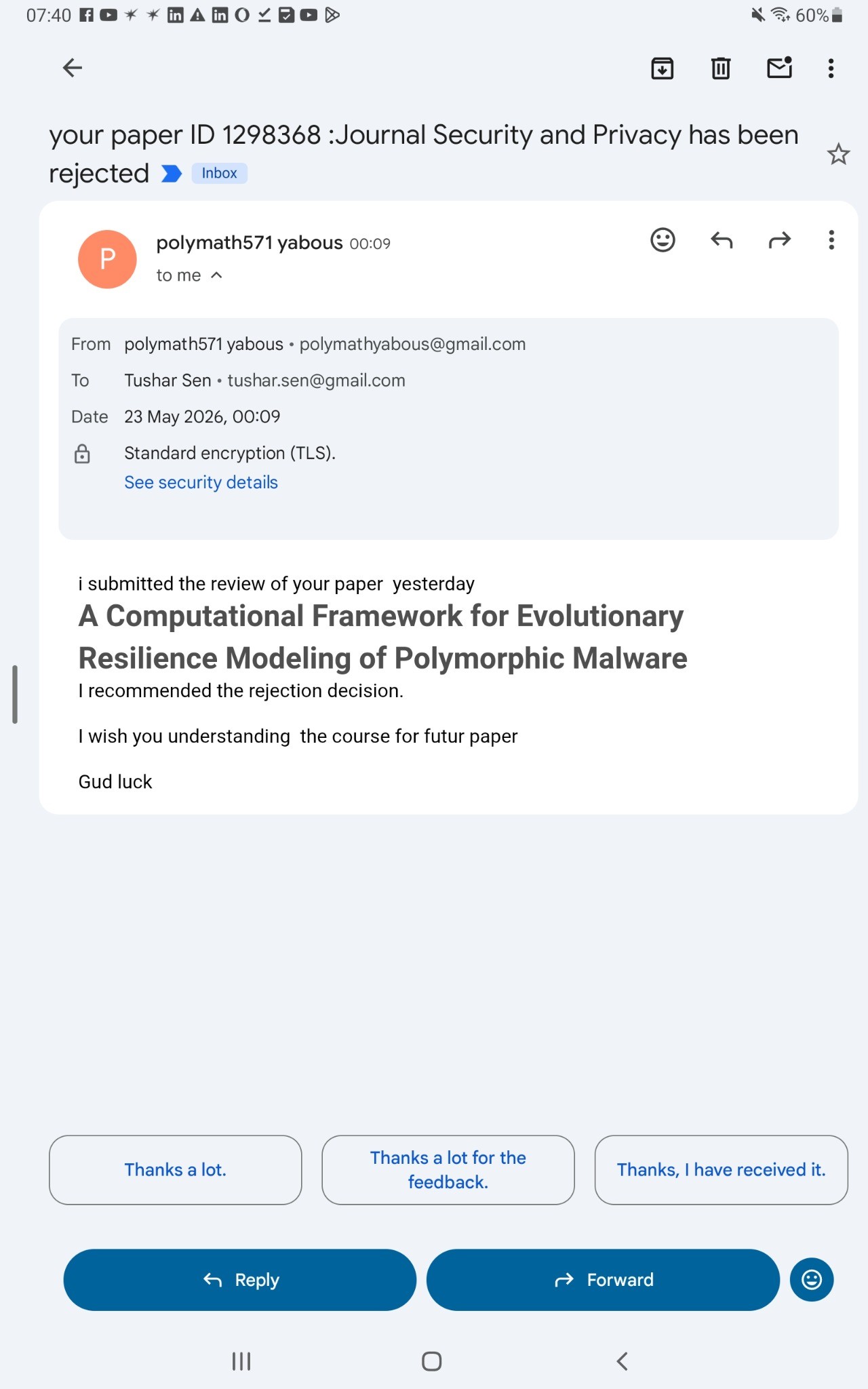
Earlier this year, Tushar Sen, an independent researcher based in New Delhi, submitted a manuscript to Security and Privacy about the modeling of polymorphic malware. On May 15, a purported reviewer for the journal wrote Sen indicating he received the article, but that it was not ready for publication.  

“i may revise it with you but you should follow paid review for my efforts,” the email read. “i may finalise it in one week and i will recommend acceptance as a final decision.”

Sen, a cybersecurity researcher, believed the writer was attempting to extort money from him in exchange for recommending acceptance of his submission. He did not respond, but continued to receive more emails from the individual about the proposal. In a May 20 email, the person wrote they were “still awaiting” Sen’s response before “i submit rejection to the journal.” On May 23, the purported reviewer wrote, “I recommended the rejection decision” and “Gud (sic) luck.” 

Continue reading Publisher investigating peer reviewer for alleged bribery scheme 

Ethics journal retracts paper by high school student for AI, peer review manipulation

The Journal of Medical Ethics has retracted a paper on the use of AI in the pharmaceutical industry for containing references that don’t exist. The article’s sole author: a high school student. 

The paper, which argues biased algorithms can exacerbate inequities in health care, was published in September. The author, Irfan Biswas, listed his affiliation as Shrewsbury Public Schools in Massachusetts.

According to the May 28 retraction notice, an investigation by the journal found Biswas used generative AI to “identify and understand referenced sources” and did not verify the references prior to submission. 

Continue reading Ethics journal retracts paper by high school student for AI, peer review manipulation

In what EIC calls an ‘honest mistake,’ journal approves paper without peer reviewing it

For most researchers, having an article accepted comes with constructive feedback from editors and reviewers. But when a sociology researcher learned his article was accepted at a Taylor & Francis journal, he was surprised to find the journal had skipped the peer review process altogether. 

Martino C. submitted his article on the effects of economic instability on political ideology in Slovakia to the journal Democracy and Security on October 15. (We’ve withheld the author’s last name at his request for digital privacy reasons.) He told Retraction Watch he was hoping peer reviews would help him improve his argument. 

But on January 13, the paper was marked “Accepted” in the journal’s submission portal without feedback.

Continue reading In what EIC calls an ‘honest mistake,’ journal approves paper without peer reviewing it

A researcher’s unusually high h-index gives a window into an expansive citation network

dem10/istock

With an h-index of 75, computer scientist Thippa Reddy Gadekallu ranks among the world’s most highly cited researchers. But the speed and means of his ascent to those lofty heights of scholarship has been as remarkable as the achievement itself. 

In less than a decade, Gadekallu, a professor at Zhejiang A&F University in China,  has managed to bootstrap himself from scientific obscurity by collaborating with colleagues around the world who cite each other’s work in ways that have raised questions. In some years, Gadekallu received more citations than Yoshua Bengio, a pioneer in artificial intelligence and the top-rated computer scientist on Google Scholar.

Earlier work uncovered a network of reviewers on papers Gadekallu edited who frequently suggested adding citations to his work. A closer look by Retraction Watch shows the impact of that strategy on Gadekallu’s h-index, and reveals additional possible collaborators in the network.

Continue reading A researcher’s unusually high h-index gives a window into an expansive citation network

BMJ retracts most of a special issue for ‘compromised’ peer review and ‘improbable device use’

BMJ’s Journal of Medical Genetics has retracted the bulk of a seven-year-old special issue for an “irreparably compromised” review process and “improbable device use.” 

Of the eight papers in the 2019 special issue, seven were retracted, including an editorial that “almost exclusively” referred to the other now-retracted papers, according to a statement from the journal. 

According to the retraction notice published today, the journal’s investigation found the guest editor for the issue selected the peer reviewers, the majority of whom were affiliated with Nanjing University in China. The guest editor is not named in the issue. The publisher’s investigation also found evidence of compromised peer review in almost all articles, the notice states.

Continue reading BMJ retracts most of a special issue for ‘compromised’ peer review and ‘improbable device use’

Most editors at math journal resign over multiple reviews, ‘cloak-and-dagger’ removal of EIC

Nearly two dozen editors of a mathematics journal have resigned after its publisher removed the top editor and implemented a multiple review system, “running roughshod over the standard practices of the refereeing process in mathematics.”

Of the 31 members of the Communications in Algebra editorial board, 23 signed a March 10 resignation letter sent to Taylor & Francis, which publishes the journal. In the letter, the editors said the publisher “unilaterally” implemented a system in which more than one reviewer would be expected to look over a paper. 

The peer review process in mathematics is more labor-intensive than for other topics, the editors said, including “not only an assessment of the impact and significance of the results but also a line-by-line painstaking check for correctness of the results. This process is often quite time-consuming and makes referees a valuable commodity.” The letter continues: “Doubling the number of expected reviews will quickly either deplete the pool of willing reviewers or vastly dilute the quality of their reviews, and both of these are unacceptable outcomes.”

Continue reading Most editors at math journal resign over multiple reviews, ‘cloak-and-dagger’ removal of EIC

As journal’s retraction count nears 170, it enhances vetting 

A journal is implementing tighter controls for guest editors and peer reviewers after an investigation led to the retraction of more than 160 articles. 

As we reported last month, the American Society For Testing And Materials (ASTM) International started an investigation into its Journal of Testing and Evaluation after an ASTM vendor noticed some “irregular patterns in the peer review” of a special issue. The investigation revealed the peer review process in four special sections or issues had been compromised, resulting in the retraction of 147 articles.

The journal has since pulled 19 more papers, this time from a special section on human-centered artificial intelligence published in 2021.

Continue reading As journal’s retraction count nears 170, it enhances vetting 

Journal retracts nearly 150 articles for compromised peer review   

A journal published by an organization that develops technical standards is retracting 147 papers for problematic peer review — and the publisher expects more to follow. 

The American Society For Testing And Materials  (ASTM) International started an investigation into its Journal of Testing and Evaluation after an ASTM vendor noticed some “irregular patterns in the peer review” in a special issue, spokesperson Gavin O’Reilly told Retraction Watch. When the publisher confirmed those patterns, ASTM decided to investigate several related issues, he said.  

The investigation revealed the peer review process in the special sections or issues had been compromised, each of the retraction notices says. 

Continue reading Journal retracts nearly 150 articles for compromised peer review