Concerns attached to three more papers by retraction-laden management researcher

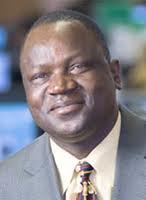
Fred Walumbwa
Fred Walumbwa

Fred Walumbwa, a management researcher with eight seven retractions, has received three expressions of concern from two journals after he failed to provide raw data following an investigation into potential errors.

In the past, Walumbwa has said he only keeps data until his papers are published, but a lack of raw data has become a common theme in his notices, which now also include four corrections, and one other EOC (making a new total of four). There are no standard rules about how long to store raw data, but one journal that issued two of the new EOCs has since updated its submission policy to require that authors keep data for at least five years.

Walumbwa currently works at Florida International University. When concerns about the statistics were raised about five of his papers in Personnel Psychology, the journal conducted an investigation that led to flagging two of those articles, the expression of concern explains:

Continue reading Concerns attached to three more papers by retraction-laden management researcher

Denmark court clears controversial psychologist of misconduct charges

helmuth-nyborg-180
Helmuth Nyborg

A Danish court has determined that psychologist Helmuth Nyborg did not commit misconduct in a controversial 2011 paper which predicted an influx of immigrants into Denmark would lower the population’s average IQ by the latter part of this century.

The ruling, reported by the Danish newspaper Politiken, overturns a previous finding of misconduct by the the Danish Committees for Scientific Dishonesty (DCSD). It’s yet another example of scientists bringing academic disputes to the courthouse — just last year, a Danish court overturned another misconduct ruling by the DCSD against physiologist Bente Klarlund Pedersen.

The 2011 paper by Nyborg, “The Decay of Western Civilization: Double Relaxed Darwinian Selection,” appeared in Personality and Individual Differences, and quickly aroused concerns in a group of Danish scientists. The main charges: That the article denied authorship to another author, and misused a reference.

As first reported in the Danish press, an inquiry by the Danish Committees for Scientific Dishonesty (DCSD) concluded in 2013 that: Continue reading Denmark court clears controversial psychologist of misconduct charges

Lawsuit couldn’t stop four retractions for diabetes researcher

Mario Saad
Mario Saad

Four expressions of concern in the journal Diabetes have turned into retractions for Mario Saad, a move which he had tried to stop with a lawsuit.

Last August, a judge dismissed Saad’s suit against the American Diabetes Association, which publishes Diabetes, concluding that the expressions of concerns on the papers were not defamation, but part of an “ongoing scientific discourse.” Now, after an investigation at the University of Campinas in Brazil, where Saad is based, and an assessment from an ADA ethics panel (which overturned some of Unicamp’s recommendations), the journal has added to that discourse by turning the EOCs into retractions — and flagging two more of Saad’s papers with EOCs.

Together, the retracted papers have been cited more than 600 times.

As the retraction notes explain, Continue reading Lawsuit couldn’t stop four retractions for diabetes researcher

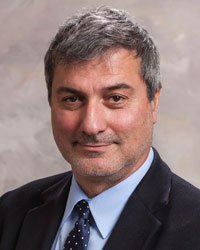
Macchiarini dismissed from Karolinska

Paolo Macchiarini
Paolo Macchiarini

The Karolinska Institutet has dismissed former rising star surgeon Paolo Macchiarini from his post, effective immediately.

A KI news release, dated today, states:

The Staff Disciplinary Board at Karolinska Institutet has today decided to relieve Paolo Macchiarini of his duties as a researcher at KI. He is to be informed immediately that his contract has been rescinded.

For a refresher on the story, check out our constantly updating timeline. As a brief recap: Continue reading Macchiarini dismissed from Karolinska

Shigeaki Kato up to 38 retractions

Shigeaki Kato
Shigeaki Kato

Our retraction notice count for Shigeaki Kato, number seven on our leaderboard, has grown to 38.

The former University of Tokyo endocrinologist recently earned another retraction, for a paper in Archives of Biochemistry and Biophysics that contained image manipulation. As we’ve noted before, Kato resigned from the university in 2012 as it investigated his work for misconduct; in 2013 a Japanese newspaper reported that the investigation had found 43 papers from his lab contained “likely altered or forged materials.”

In addition to the new retraction, we’ve dug up four others for Kato from the past few years, plus one correction. Two of the retraction notices mention an investigation at the University of Tokyo.

First, the retraction note for “Multiple co-activator complexes support ligand-induced transactivation function of VDR,” published in December:

Continue reading Shigeaki Kato up to 38 retractions

Researchers’ productivity hasn’t increased in a century, study suggests

Screen Shot 2016-01-19 at 10.50.25 AMAre individual scientists now more productive early in their careers than 100 years ago? No, according to a large analysis of publication records released by PLOS ONE today.

Despite concerns of rising “salami slicing” in research papers in line with the “publish or perish” philosophy of academic publishing, the study found that individual early career researchers’ productivity has not increased in the last century. The authors analyzed more than 760,000 papers of all disciplines published by 41,427 authors between 1900 and 2013, cataloged by Thomson Reuters Web of Science.

The authors summarize their conclusions in “Researchers’ individual publication rate has not increased in a century:”

Continue reading Researchers’ productivity hasn’t increased in a century, study suggests

Whistleblower removed from Macchiarini’s Lancet author list

Paolo Macchiarini
Paolo Macchiarini

Last week, The Lancet honored a co-author’s request to remove his name from Paolo Macchiarini’s seminal 2011 paper, which described the first transplant of an artificial trachea seeded with autologous stem cells but has since come under fire.

On March 3, the journal posted this notice:

The Lancet has been contacted by Dr KH Grinnemo who was an author on the paper. Dr Grinnemo no longer wishes to be an author and asks for his name to be removed. This correction has been made to the online version as of March 3, 2016.

The paper has been cited 187 times, designating it “highly cited” by Thomson Reuters Web of Science.

As The Scientist reports, Karl-Henrik Grinnemo is one of the four surgeons at Karolinska Hospital who filed a complaint against Macchiarini in 2014 — alleging, for instance, Continue reading Whistleblower removed from Macchiarini’s Lancet author list

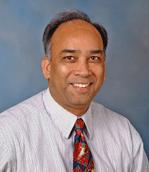
Author with seven retractions makes Thomson Reuters list of top scientists — plus another twist

aggarwal
Bharat Aggarwal

A cancer researcher who recently retired from MD Anderson Cancer Center —  and also recently lost seven papers from one journal following a multi-year investigation — is one of the world’s top scientists, according to a new ranking.

In Thomson Reuters Web of Science’s 2015 list of The World’s Most Influential Scientific Minds, Bharat Aggarwal’s name tops the section for Pharmacology and Toxicology (see p. 89). In all fairness, the list is presented in alphabetical order, and seven of Aggarwal’s papers have each been cited at least 1,000 times. But in addition to his recent seven retractions, he has has six corrections, two unexplained withdrawals, and two Expressions of Concern.

We contacted Thomson Reuters Web of Science to inquire, and a spokesperson told us: Continue reading Author with seven retractions makes Thomson Reuters list of top scientists — plus another twist

STAP stem cell researcher Obokata loses another paper

Nature protocols

The first author of two high-profile Nature retractions about a technique to easily create stem cells has lost another paper in Nature Protocols.

Haruko Obokata, once “a lab director’s dream,” according to The New Yorker, also had her PhD revoked from Waseda University last fall.

After learning of concerns that two figures are “very similar” and “some of the error bars look unevenly positioned,” the rest of the authors were unable to locate the raw data, according to the note. The journal could not reach Obokata for comment before publishing the retraction.

Reproducible subcutaneous transplantation of cell sheets into recipient mice” has been cited 21 times, according to Thomson Reuters Web of Science. It was published in June 2011, soon after Obokata earned her PhD. 

Here’s the note:

Continue reading STAP stem cell researcher Obokata loses another paper

Psychologist Jens Förster earns second and third retractions as part of settlement

forster-j-a
Jens Förster

High-profile social psychologist Jens Förster has earned two retractions following an investigation by his former workplace. He agreed to the retractions as part of a settlement with the German Society for Psychology (DGPs).

The papers are two of eight that were found to contain “strong statistical evidence for low veracity.” According to the report from an expert panel convened at the request of the board of the University of Amsterdam, following

an extensive statistical analysis, the experts conclude that many of the experiments described in the articles show an exceptionally linear link. This linearity is not only surprising, but often also too good to be true because it is at odds with the random variation within the experiments.

One of those eight papers was retracted in 2014. In November, the American Psychology Association received an appeal to keep two of the papers, and Förster agreed to the retractions of two more:

Continue reading Psychologist Jens Förster earns second and third retractions as part of settlement