Sage retracts eight papers by former Radboud ‘rising star’ for compromised peer-review process

The publisher Sage has retracted eight papers by a former “rising star” from a Dutch university for a “compromised” peer-review process at a journal he edited.

Last week, Retraction Watch obtained an email from an editor at Sage to the editorial board of Group & Organization Management, stating that, following a “thorough investigation,” the publisher would retract “a subset of articles” by the journal’s former editor-in-chief Yannick Griep. The retraction applies to eight of the 25 papers Griep coauthored in the journal, according to the July 14 retraction notice. The papers were retracted for a “compromised” peer-review process, the notice states. 

“As the peer-review process was administered by the former Editor in Chief, who is also the co-author of the articles, the objectivity of the peer-review process has been compromised,” reads a publisher’s note published alongside the retractions. The move “relates to the underlying review process and no determination has been made regarding the scientific content of the articles.”

Continue reading Sage retracts eight papers by former Radboud ‘rising star’ for compromised peer-review process


Exclusive: Sage to retract multiple articles by dismissed rising star for “compromised” peer-review process

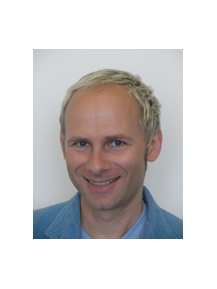
Yannick Griep, a former rising star in management research at Radboud University in the Netherlands, is set to lose an undisclosed number of articles from a journal he once edited, Retraction Watch has learned.

In an email we obtained, Sage’s Isabella Austin told editorial board members of Group & Organization Management that following “a thorough investigation into the concerns about peer-review on this journal,” the publisher found the “objectivity of the peer-review process administered by the former Editor in Chief on a subset of articles where they are co-author was compromised.” Those articles, wrote Austin, would be retracted.

Continue reading Exclusive: Sage to retract multiple articles by dismissed rising star for “compromised” peer-review process

Dutch university can revoke PhD for fake data, court rules

Kostadis J. Papaioannou

In 2018, a newly minted PhD made an uncomfortable discovery. 

At a conference, he saw other researchers presenting the results of their attempt to replicate the work of one of his fellow students at Wageningen University in the Netherlands who had found a relationship between heavy rainfall and the number of prisoners in Nigeria in the first half of the 20th century.

But they couldn’t replicate the findings. 

Continue reading Dutch university can revoke PhD for fake data, court rules

Psychologist’s paper retracted after Dutch national body affirms misconduct findings

Lorenza Calzato

A cognitive psychologist in Germany has lost one of two papers slated for retraction after her former institution found her guilty of misconduct

In a 2019 report, Leiden University found that Lorenza Colzato, now of TU Dresden, had failed to obtain ethics ethics approval for some of her studies, manipulated her data and fabricated results in grant applications. Although the institution did not identify Colzato by name, Retraction Watch confirmed her identity. 

The Leiden report — the conclusions of which were affirmed by the Netherlands Board on Research Integrity last month — called for the retraction of two papers by Colzato and her co-authors, three of whom acted as whistleblowers in the case. As the trio told us in an interview last December: 

Continue reading Psychologist’s paper retracted after Dutch national body affirms misconduct findings

Do the humanities need a replication drive? A debate rages on

Rik Peels

Since last year, a half-dozen researchers have been having a debate: Should the humanities focus on replication? No, said Sarah de Rijcke and Bart Penders in Nature last August: “Resist calls for replicability in the humanities.” In the most recent piece on this subject, de Rijcke and Penders were joined by J. Britt Holbrook to again say “no.” Here, Rik Peels, Lex Bouter, and René van Woudenberg, who have been in the “yes” camp, respond. Continue reading Do the humanities need a replication drive? A debate rages on

Caught Our Notice: Climate change leads to more…neurosurgery for polar bears?

Title: Internet Blogs, Polar Bears, and Climate-Change Denial by Proxy

What Caught Our Attention: There’s a lot going on here, so bear with us. (Ba-dum-bum.)

First, there was the paper itself, co-authored by, among others, Michael Mann and Stephan Lewandowsky. Both names may be familiar to Retraction Watch readers. Mann is a prominent climate scientist who has sued the National Review for defamation. A study by Lewandowsky and colleagues of “the role of conspiracist ideation in climate denial” was the subject of several Retraction Watch posts when it was retracted and then republished in a different form. And the conclusion of the new paper, in Bioscience, seemed likely to draw the ire of many who objected to the earlier work: Continue reading Caught Our Notice: Climate change leads to more…neurosurgery for polar bears?

University requests 4th retraction for psychologist under fire

Jens Förster

The University of Amsterdam has requested another retraction for a prominent social psychologist, after reviewing the dissertations he supervised while at the university.

The university made the announcement this week after reviewing the theses supervised by Jens Förster, whose own work has been subject to considerable scrutiny.

The results of this investigation come more than two years after an initial probe into Förster’s work, which found several of his papers likely contained unreliable data; three of these papers have been retracted and four have received expressions of concern. Förster, who recently left his position at Ruhr-Universität Bochum in Germany to start a private psychology practice, has always maintained that he did not manipulate his data. In 2015, he turned down a professorship, citing the toll the investigation had taken. Continue reading University requests 4th retraction for psychologist under fire

Obsessed with getting cited? You may have “Publiphilia Impactfactorius”

Joeri Tijdink

As a scientist, are you always focused on improving your metrics by such means as getting papers into prestigious journals? Do your funders and institutions add to that pressure to get ahead? If so, you may be at risk of a new psychiatric condition known as “Publiphilia Impactfactorius” — or, simply, PI, described in a PeerJ preprint. We talked to first author Joeri Tijdink at VU Medical Center (VUmc) in Amsterdam about this tongue-in-cheek take-down of the scientific condition, and whether there is any cure for the affliction.

Retraction Watch: You describe several new personality traits and clusters. Tell us more about this.

Continue reading Obsessed with getting cited? You may have “Publiphilia Impactfactorius”

What types of researchers are most likely to recycle text? The answers might surprise you

Willem Halffman

Serge Horbach

Historians, economists, biochemists, psychologists: Who reuses their own material most often? Does the rate depend on how many authors a paper has, and how far along a researcher is in his or her career? Serge Horbach and Willem Halffman at Radboud University Nijmegen in the Netherlands tried to answer these questions by reviewing more than 900 papers published by researchers based in The Netherlands. And they were surprised by their findings, published last month by Research Policy.

Retraction Watch: How does the amount of text recycling you identified among researchers at Dutch universities (6.1%) compare to what other studies have shown among other groups of researchers?

Continue reading What types of researchers are most likely to recycle text? The answers might surprise you

Journal adds concern notice to paper by psychologist Jens Förster

A social psychology journal has added an expression of concern to a paper by prominent social psychologist Jens Förster, whose work has been subject to much scrutiny.

This is the latest in a long-running saga involving Förster. The 2012 paper in the Journal of Experimental Social Psychology had been flagged by a 2015 report describing an investigation into Förster’s work, which had concluded the paper likely contained unreliable data. Several other papers that received similar designations in that report have either been retracted or received expressions of concern (EoC).

The (paywalled) notice provides a lengthy explanation for why the journal chose to add an EoC, rather than retract the paper, as the University of Amsterdam had recommended. Here is an excerpt:

Continue reading Journal adds concern notice to paper by psychologist Jens Förster