A researcher has pulled a paper about uranium oxide fuel pellets after notifying the journal the data had been falsified — and, what’s more, the publisher can’t verify the identities of the co-authors.
Originally, the Journal of the European Ceramic Society paper suggested a way to increase the compatibility of uranium oxide fuel pellets, which are usually used in nuclear reactors, at high temperatures.
A researcher banned from funding by a Canadian agency for misconduct has earned her second retraction, after a reanalysis uncovered problems with the paper’s conclusions.
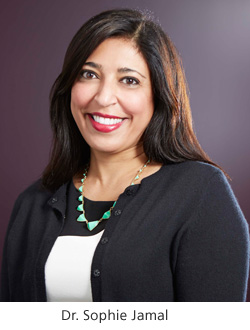
The retraction follows an investigation by Sophie Jamal‘s former workplace, the Women’s College Hospital in Toronto, which has led to a recent retraction of a JAMA paper due to data manipulation, and a lifetime funding ban from the Canadian Institutes of Health Research (CIHR).
The latest retraction stemmed from a re-analysis of the paper by the Canadian Multicentre Osteoporosis Study Group, of which the paper was a part; all authors but Jamal have requested the retraction. In the notice, the authors say that they believe no patients were harmed as a result of the “possibly invalid conclusions” in the paper, which showed patients with kidney problems were at higher risk of bone loss. A researcher told us a third paper by Jamal is also due to be retracted soon.
A prominent cancer researcher in England has been banned from practicing medicine and has lost his funding from a UK charity after being found to have fabricated data in grant applications.
The moves against the researcher, Thorsten Hagemann, come after investigations by the General Medical Council, akin to a U.S. state medical board, and Hagemann’s former institution, Queen Mary University of London (QMUL), turned up evidence of misconduct. In June, we reported on the retraction of a meeting abstract in The Journal of Pathology and the corrigendum of a Nature paper by Hagemann following the inquiry at QMUL.
A biologist in New Jersey has retracted two more papers, bringing his total to eight retractions, following a finding by the U.S. Office of Research Integrity (ORI).
The report flagged eight published papers (and an unpublished one), six of which had already received expressions of concern (EOCs). Nataly Shulga was a co-author on all eight papers. With these two new retractions in Biology Open and Biochimica et Biophysica Acta (BBA) – Bioenergetics, all of the flagged papers have now been retracted.
Here’s the retraction notice for the Biology Open paper, issued July 15:
Are some cases of research fraud fixable with a correction notice?
A chemistry journal thought so in 2014, when it issued a correction notice for a 2012 paper after the first author admitted to manipulating an image. After an investigation, the publisher agreed the manipulation was a “clear breach” of its ethical guidelines, but decided not to retract the paper since the overall conclusions remain valid.
The last author told us the first author had to repeat the experiments under supervision, and received a “serious warning.”
It’s an older notice, but one we thought interesting enough to cover now. Once you’ve read through the journal’s reasoning, tell us if you agree with the decision to correct (rather than retract) the paper in a poll at the bottom of this post.
A doctoral student at the University of Houston in Texas will not receive his PhD, following an institutional investigation into his work.
Mousa Abkhezr, the researcher in question, is no longer enrolled at the University of Houston, his former supervisor told us.
In June, the probe into papers co-authored by Abkhezr resulted in the retraction of a study in the American Journal of Physiology – Renal Physiology (AJP). Now, his ex-supervisor, Stuart Dryer, has pulled two more papers co-authored by the pair in Molecular Pharmacology.
A cancer researcher who sued PubPeer commenters for criticizing his work has lost six more papers, bringing his total to 13 retractions.
Four of the new retraction notices issued by the journal Cancer cite an investigation at Wayne State University in Michigan into the work of Fazlul Sarkar and some of his colleagues. All the new notices, including the other two in Breast Cancer Research and Treatment, are for image-related issues.
Retraction Watch readers will recognize the name Fazlul Sarkar, who took PubPeer to court to unmask the anonymous critics whose comments cost him a job at the University of Mississippi. According to this document, Sarkar retired from Wayne State this year.
A PhD student has been expelled from a university in China after publishing a paper in PLOS ONE without the permission of her co-authors, and using an external company to complete some of the work.
PLOS ONE has now retracted the paper, noting that they were tipped off to the problems by a reader who raised concerns about some of the figures. The notice states that the study’s first author, Zhenni Zhang, takes full responsibility.
The last author of the paper — Zongfang Li from the Xi’an Jiaotong University in China — told us Zhang was his PhD student who was close to completing her PhD, but has now been expelled.
The case had a lot of twists and turns, however. So for your convenience, we’ve compiled a timeline of everything you need to know about the events that led up to the lawsuit — where it all began, and how it ended last July, when the Ontario Superior Court of Justice ruled in favor of the CBC, and the apparent epilogue this June.
In the 1980s, Chandra was a highly regarded nutrition researcher; in 1989, he was made a member of the Order of Canada. He authored over 200 papers during his time at Memorial University of Newfoundland. He has referred to himself as the “father of nutritional immunology,” but the link to his website no longer appears to be active.