A college student had to retract her paper. The move was ‘the starting point for a better study’

Rishika Porandla published a paper based on research she did in high school. As a sophomore at Princeton, she revisited the work — and found errors in the methodology, leading her to retract the study.

As a sophomore at Princeton University, Rishika Porandla took a course called “The Curious Scientist,” where students practice disciplinary research skills and act as a “PI” on a project of their choosing.   

Porandla didn’t have to think twice about what subject to dive into. In high school, she had studied the biodegradability of polyvinyl chloride and discovered a new process to break down the plastic. The finding led to one of her proudest high school achievements — a published journal article. She was eager to use the Princeton class to advance her discovery. 

From the outset, Porandla’s project for the class seemed like “a slam dunk,” Andrea DiGiorgio, the course’s instructor, told Retraction Watch.   

Continue reading A college student had to retract her paper. The move was ‘the starting point for a better study’

After realizing a fungus contaminated their experiments, researchers retract and redo study

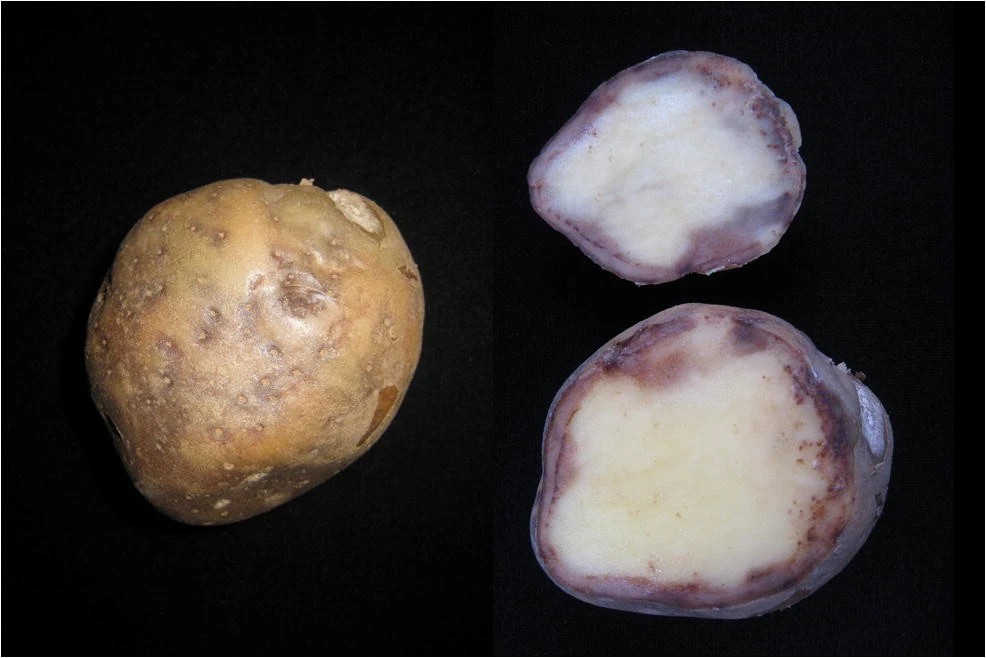
Late blight in potatoes
Source (CC BY 4.0)

A team of researchers in Belgium got more than they expected when they tried to study potato pathogens: an unwelcome contaminant, a retraction, and a new paper the authors say is “an improvement over the first.”

In a now-retracted paper in Metallomics originally published in January 2024, researchers at the University of Liège described how availability of nitrogen and iron changes how the bacterium responsible for potato common scab interacts with each of the two microorganisms responsible for early and late blight while infecting the same host. The results suggested the bacterium had antimicrobial properties against both microbes, with nearly all of the experiments focusing on the fungus that causes late blight. 

After publication, the authors realized their strain of the late blight-causing microorganism was not the one described in the paper. While the lab originally received the correct strain, “the plates became contaminated, and the fungal contaminant eventually overgrew the strain we intended to study,” Sébastien Rigali, corresponding author and professor at the University of Liège, told Retraction Watch. 

Continue reading After realizing a fungus contaminated their experiments, researchers retract and redo study
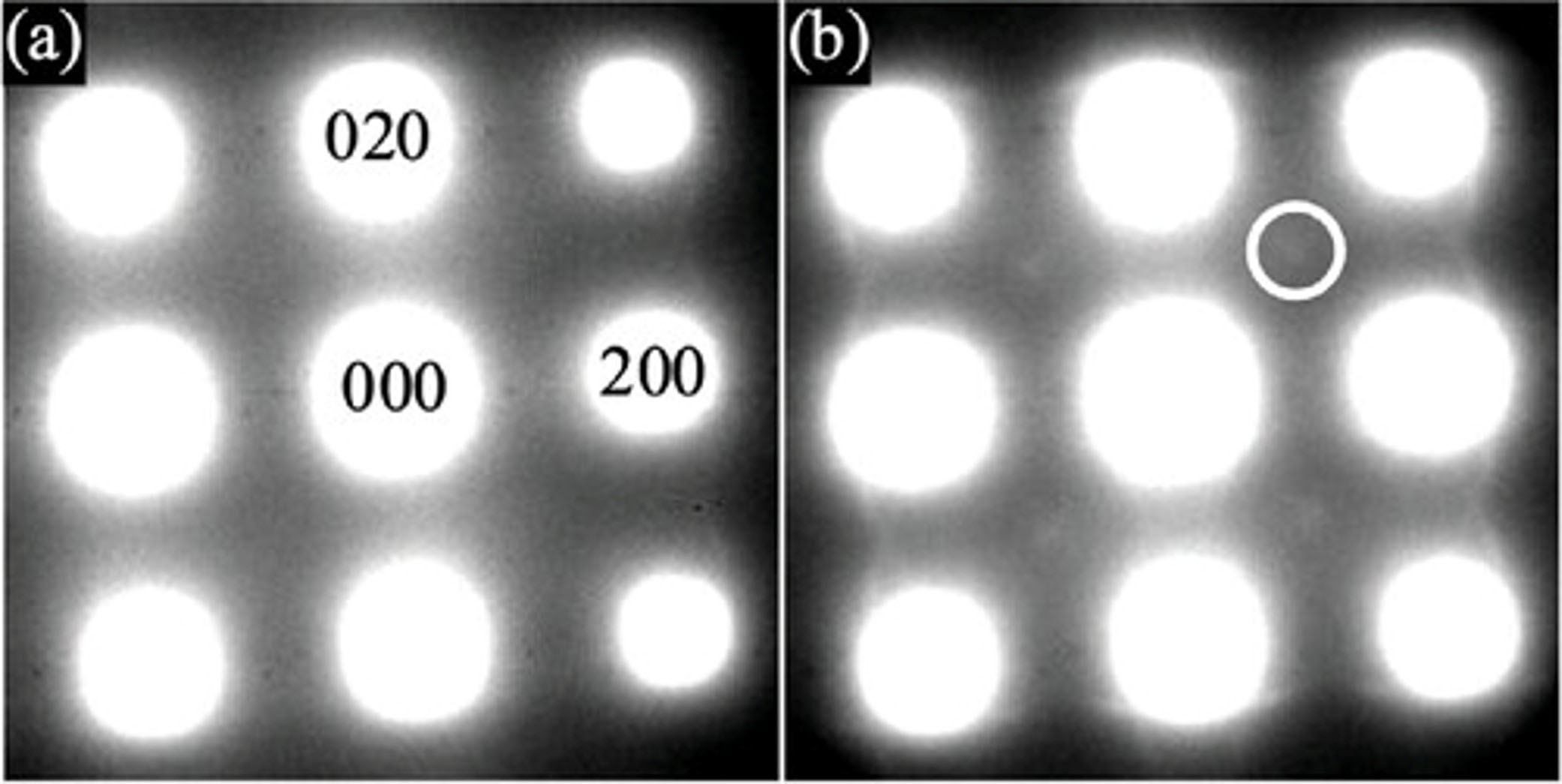

‘Cosmic magnet’ study retracted after cleaning agent wipes away results

Electron diffraction patterns of an alloy before (left) and after (right) cleaning revealed the cleaning agent was was responsible for reflections (circle, right) reported in the original study. O.S. Houghton et al/Adv. Sci. 2024

When measuring the properties of a particular material, you want to make sure your sample is as clean as possible. But sometimes a well-intentioned effort to purify can make things worse.

Just ask Lindsay Greer, a professor of materials science at the University of Cambridge. He and his colleagues discovered measurements they reported in 2022 were actually an artifact of a cleaning agent used to prepare their sample.

Greer became aware of the issue during unsuccessful attempts to replicate his lab’s discovery of magnetic properties in an alloy their collaborators had made. Instead, they found oxidation from a cleaning product had contaminated their original results. The error led to a retraction, a declined grant, a commentary describing their troubleshooting — and a story about science working as it should. 

Continue reading ‘Cosmic magnet’ study retracted after cleaning agent wipes away results

‘Relieved’: BMJ retracts and replaces article on unexpected weight loss as a sign of cancer

Brian Nicholson

The British Medical Journal has retracted an article examining when unexpected weight loss could be a warning sign of cancer after the authors found an error in their work. The journal published an updated version of the analysis with different conclusions, which the authors think could influence patient care. 

The retracted paper, “Prioritising primary care patients with unexpected weight loss for cancer investigation: diagnostic accuracy study,” appeared Aug. 13, 2020. The researchers, led by Brian D. Nicholson, a general practitioner and associate professor in the Nuffield Department of Primary Care Health Sciences at the University of Oxford, England, used electronic health records data to look for people diagnosed with cancer within six months after a recording of unexpected weight loss. 

The authors were attempting to replicate their results in another dataset when they found “some differences in the study findings and study population that we could not easily explain,” Nicholson told Retraction Watch. He continued: 

Continue reading ‘Relieved’: BMJ retracts and replaces article on unexpected weight loss as a sign of cancer

Authors retract quantum physics paper from Science after finding mistakes

A team of physicists has retracted a paper from Science after they discovered mistakes in their data and statistical analysis when following up on their work.

The paper “A room-temperature single-photon source based on strongly interacting Rydberg atoms” published in 2018, garnered 117 citations, according to Clarivate’s Web of Science. Of these, 97 citations came after the authors corrected the paper in 2020 to adjust for updated calibrations, which they said did not affect the conclusions of the article. 

This correction was unrelated to the reasons for retraction, said corresponding author Tilman Pfau, a professor of physics at the University of Stuttgart in Germany.

Continue reading Authors retract quantum physics paper from Science after finding mistakes

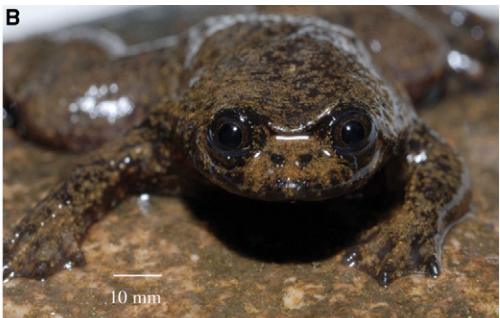
‘No animosity between us’: Lungless frog finding retracted after 16 years

The Bornean flat-headed frog, via Current Biology

In 2008, a group of researchers published a paper in Current Biology reporting on what they said was a lungless water-loving frog in Borneo. 

According to David Bickford, then of the National University of Singapore, and his colleagues, the Bornean flat-headed frog “breathed” the way most salamanders do:  by absorbing oxygen through their skin or, during earlier phases of life for some species, through gills. (We’re not salamander experts, so if this characterization is a bit crude, don’t come for us.) Because the frog lived in fast-moving streams, the researchers reasoned, it could obtain adequate oxygen to meet its needs.

For the last 15-odd years, that understanding held. But in May, another team of herpetologists, using more sophisticated tools, said they’ve found evidence of lungs – tiny but functional – in the creatures. As the New Scientist magazine reported earlier this year:

Continue reading ‘No animosity between us’: Lungless frog finding retracted after 16 years

Climate paper retracted from Science over miscalculations

The authors of a paper published in Science have retracted their article following the discovery of calculation errors.

The article,“Drought sensitivity in mesic forests heightens their vulnerability to climate change” by Robert Heilmayr of the University of California, Santa Barbara and colleagues found that in drier areas, trees are less sensitive to drought and in hotter regions with a wet climate, tree growth is expected to decrease.

It has been cited once, according to Clarivate’s Web of Science. Since its publication in December, the article has been downloaded 4,641 times, posted by 154 X users, and written about by 20 news outlets and press release sites.

Continue reading Climate paper retracted from Science over miscalculations

Veterinary journal retracts pet food company’s paper about copper in dog food

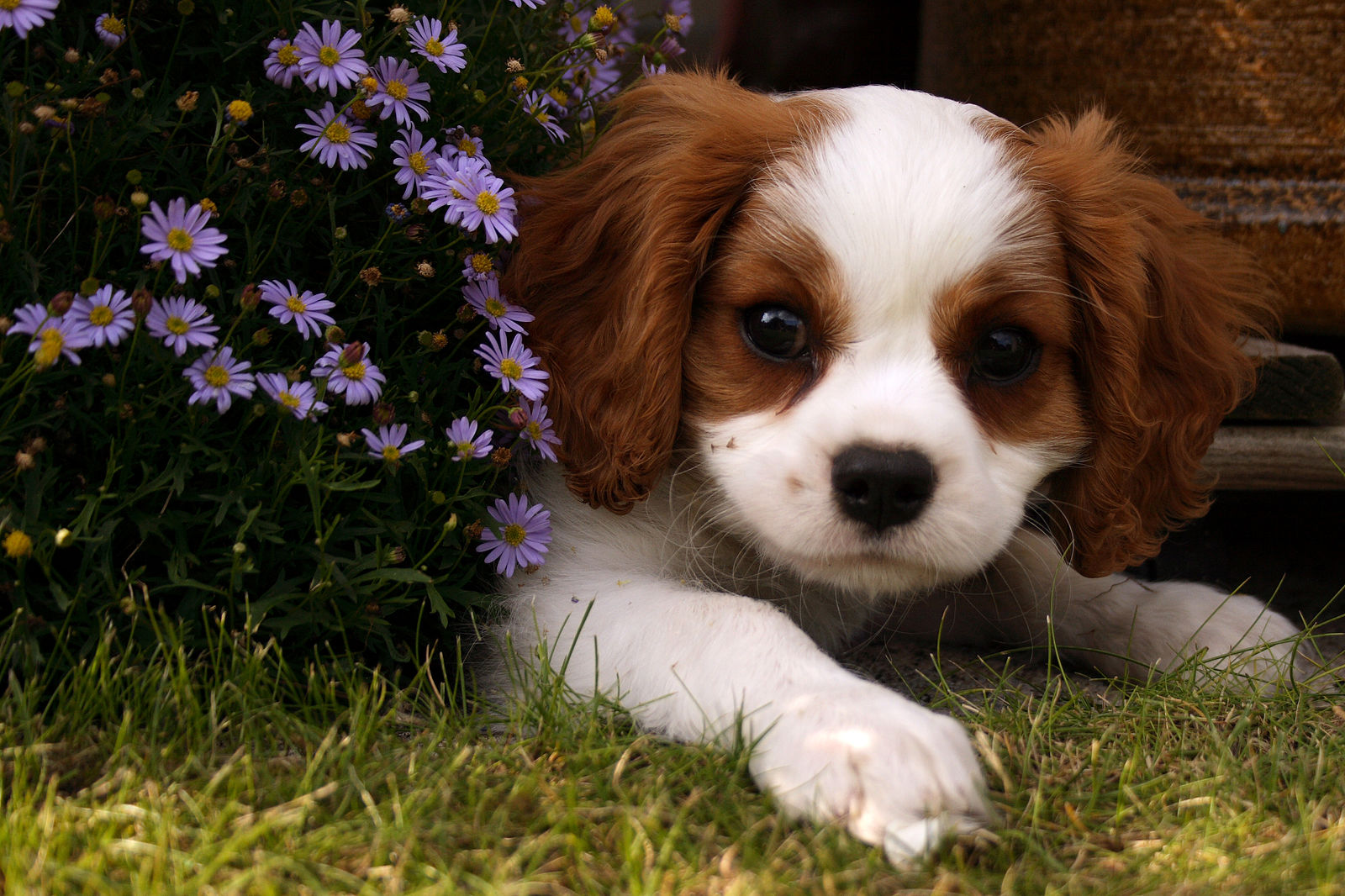
leisergu, CC BY 2.0, via Wikimedia Commons

A veterinary journal has retracted a paper from a major pet food company after criticism prompted the authors to re-examine their data. 

The retraction is the first in the Journal of the American Veterinary Medical Association’s 180 years of publication, Lisa Fortier, the journal’s editor in chief, told Retraction Watch. But veterinary researchers who wrote to the journal with concerns about the article say the retraction doesn’t address all the issues they raised. 

The article, “Sixteen years of canine hepatic copper concentrations within normal reference ranges in dogs fed a broad range of commercial diets,” appeared online March 7. Most of the authors are affiliated with Hill’s Pet Nutrition. 

Within weeks of the article’s publication, the journal got the first of seven letters “crying foul,” Fortier said. 

Continue reading Veterinary journal retracts pet food company’s paper about copper in dog food

Publisher donating author fees from retracted articles to charity

What should happen to the millions of dollars publishers rake in from authors whose work is later retracted? 

Guillaume Cabanac, one of the developers of the Problematic Paper Screener, has repeatedly suggested publishers donate such revenue to charity. 

And now one is doing just that.

Continue reading Publisher donating author fees from retracted articles to charity

‘I felt like a fraud’: A biologist goes public about a retraction

Andrew Anderson

Retractions are the stuff of nightmares for most academics. But they aren’t necessarily a career obstacle, and sometimes may be the only way forward, according to Andrew P. Anderson, a postdoctoral researcher in the biology department of Reed College, in Portland, Ore. Last month, the journal Evolution pulled and replaced a study Anderson had conducted as a PhD student under Adam G. Jones at the University of Idaho, in Moscow. The study’s findings suggested sexual selection shaped the responsiveness of the human genome to male sex hormones. Below is a lightly edited Q&A we did with Anderson about his experience.

Retraction Watch (RW): In the summer of 2022, shortly after your paper was first published, you realized it contained a significant error. What happened?

Continue reading ‘I felt like a fraud’: A biologist goes public about a retraction