Authors contest retractions for “high degrees of similarity” with previous papers

A group of researchers has lost two papers due to “high degrees of similarity with previously published works,” according to the notices.

The authors are objecting to the retractions, however, arguing the journal never gave them an opportunity to show their work is different from the previous papers.

Both papers were published in the International Journal of Plastics Technology, and share the same three authors, all based at Charan Singh University in India. They were retracted by the Editor in Chief, according to the notices.

Effect of dynamic cross-linking on melt rheological properties of isotactic polypropylene (iPP)/ethylene–propylene diene rubber (EPDM)/nitrile rubber (NBR) elastomeric blends” was published in 2011. Here’s the retraction notice:

Continue reading Authors contest retractions for “high degrees of similarity” with previous papers

Study about words’ effect on mood to be retracted after investigation finds evidence of data manipulation

A study examining whether the verb tense you use to describe a positive or negative experience influences your current mood will be retracted after a university investigation found the data had been manipulated.

By whom is the question — the notice cites an unnamed graduate student as the source of the manipulation, and says the only author, William Hart, was unaware of what had occurred.

We spoke with Hart, based at the University of Alabama, who declined to identify the student, nor say whether he or she was still working at the university. He did say the experience has been trying:

Continue reading Study about words’ effect on mood to be retracted after investigation finds evidence of data manipulation

Cancer researcher logs 6 retractions, bringing total to 10

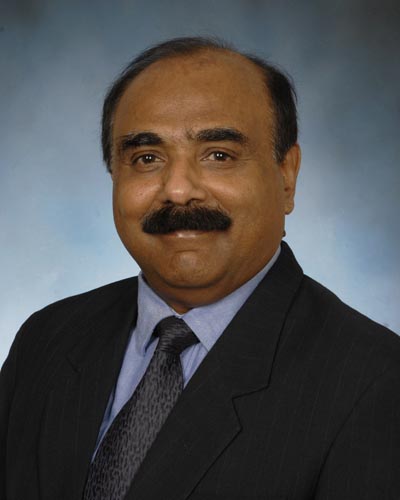
Anil Jaiswal

A journal has retracted six papers by a cancer researcher at the University of Maryland in Baltimore, bringing his total to 10.

The retractions cite an investigation by the university, and detail problems ranging from duplicated images, to tweaking an image to conceal particular bands, to including unreliable data.

Three of the papers had already been flagged by the journal with expressions of concern. The last author on all the papers is Anil Jaiswal, a professor in the pharmacology department. He has issued four previous retractions.

Bruce Jarrell, the Chief Academic and Research Officer and Senior Vice President at the University of Maryland, told us at least two more retractions are forthcoming:

Continue reading Cancer researcher logs 6 retractions, bringing total to 10

Researchers submit two similar papers 8 days apart; one is retracted

After a research group submitted two similar papers only days apart to different journals, one journal has retracted the paper — and told the other it should do the same.
The papers, by a group of authors based in Romania, describe a new polymer to stop the formation of biofilms. After a reader flagged the papers — which were submitted within eight days of each other in September, 2015 — as being similar, a journal has retracted one, and recommended the other journal retract the second. Although the second journal told us it planned to flag the paper with a notice alerting readers to the duplication, the notice has not yet appeared online.

The journal that issued the retraction — the International Journal of Polymer Analysis and Characterization (IJPAC) — called it a “a clear case of self-plagiarism,” according to the notice:

Continue reading Researchers submit two similar papers 8 days apart; one is retracted

Columbia University probe prompts retraction of cardiovascular paper

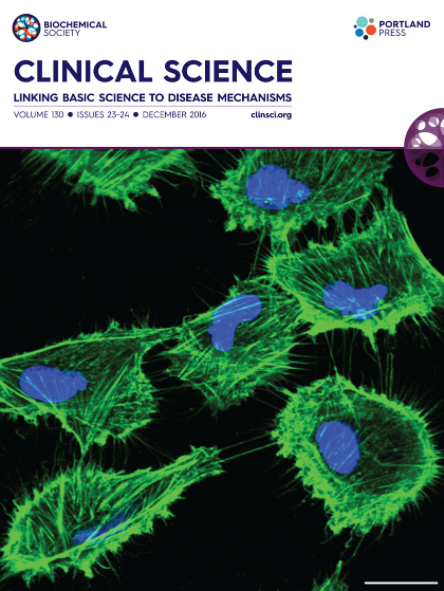
A journal has retracted a 2011 study at the request of Columbia University.

According to Jeanine D’Armiento, the study’s last author, the newly retracted paper in Clinical Science contained a figure from a Journal of Hypertension paper published by the same authors earlier that year. 

First and corresponding author Joseph George told Retraction Watch the error was unintentional. A Columbia spokesperson sent us this statement: Continue reading Columbia University probe prompts retraction of cardiovascular paper

Backlash prompts prominent nutrition researcher to reanalyze multiple papers

Brian Wansink

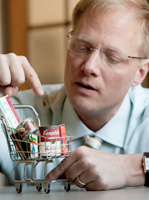
To Brian Wansink of Cornell University, a blog post he wrote in November, 2016, was a meant as a lesson in productivity: A graduate student who was willing to embrace every research opportunity submitted five papers within six months of arriving to his lab, while a postdoc who declined two chances to analyze a data set left after one year with a small fraction of the grad student’s publications.

But two months and nearly 50 comments on the post later, Wansink — known for so much high-profile nutrition research he’s been dubbed the “Sherlock Holmes of food” — has announced he’s now reanalyzing the data in the papers, and will correct any issues that arise. In the meantime, he had to decline requests to share his raw data, citing its proprietary nature.

As Wansink writes in the second addendum to the November blog post, “The Grad Student Who Never Said ‘No’:”

Continue reading Backlash prompts prominent nutrition researcher to reanalyze multiple papers

How did a book chapter end up with two authors who didn’t contribute to it?

An erratum for a book chapter about water pollution has removed two out of the three original authors. 

What’s more, the notice specifies that “any mistakes or omissions are the sole responsibility” of the remaining author, Michael Yodzis of the University of Guelph in Ontario, Canada. 

This isn’t something we see every day, but one of the removed authors told us he believes the paper is scientifically valid — he just didn’t have anything to do with it. Yodzis told us he included the two authors by mistake, after believing he had corresponded with them about the paper, which was an extension of their previous work together.

Here’s the erratum, issued in December: Continue reading How did a book chapter end up with two authors who didn’t contribute to it?

Welcome to the Journal of Alternative Facts. They’re the greatest! And winning!

Ever since Kellyanne Conway, counselor to U.S. President Donald Trump, used the term “alternative facts” on Meet The Press earlier this month, the term — an awful euphemism for falsehoods, as many have pointed out — has become a meme. And like every new field, alternative facts needs its own journal. Enter the Twitter feed for the Journal of Alternative Facts, featuring such gems as Scientistonce, I.A. (2017), “We Have All the Best Climates, Really, They’re Great.”

We spoke to the founding editor to find out more about how they became the greatest overnight: Continue reading Welcome to the Journal of Alternative Facts. They’re the greatest! And winning!

Author objects to retraction of paper suggesting fingerprints can predict facial features

A journal has pulled a paper about predicting people’s faces from their fingerprints due to “significant overlap” with a previous paper by the same authors.   

According to the retraction notice in Intelligent Automation & Soft Computing, the authors didn’t cite or acknowledge the other study in the Turkish Journal of Electrical Engineering & Computer Science.

First author of both papers, Şeref Sağıroğlu, who is based at Gazi University in Ankara, Turkey told Retraction Watch that he doesn’t believe the two papers have significant overlap. Still, the research is related, so when he learned the retracted paper didn’t reference the previous one:

Continue reading Author objects to retraction of paper suggesting fingerprints can predict facial features

High-profile book on North Korea earns 52 corrections

The author of a high-profile book about the history of North Korea is issuing 52 corrections to the next edition, scheduled to appear this spring. The changes follow heavy criticism of the book, alleging it contained material not supported by the list of references.

Last month, author Charles Armstrong, a professor at Columbia University, announced on his website that he was issuing the changes after reviewing the book in detail, especially the footnotes. He writes:

Continue reading High-profile book on North Korea earns 52 corrections