Ever been asked to remove a reference for libel concerns? These authors have

Last month, Nature Ecology & Evolution published a series of responses to a previous article recommending essential reading for all ecologists. In one response, the authors argue that the list is highly biased in favor of white male authors, and raises the problem of bullying and harassment in academia. But the letter is missing one key reference from its original submission: To a recent news story in Science reporting “disturbing” sexual harassment allegations against a prominent field researcher.

Why is the reference missing?

Because the editor at Nature Ecology & Evolution asked the authors to take it out, citing concerns about libel.

Here’s the note the authors received on their original submission:

Continue reading Ever been asked to remove a reference for libel concerns? These authors have

Caught Our Notice: “Ironically,” same error in same journal “was noted last year”

Via Wikimedia

Title: Sleep quality and body composition variations in obese male adults after 14 weeks of yoga intervention: A randomized controlled trial

What Caught Our Attention: Last year, researchers led by David Allison at the University of Alabama at Birmingham’s School of Public Health called for the retraction of an article linking weight loss and obese female yoga participants in the International Journal of Yoga, citing problems with randomization and baseline statistics. Despite the first author’s statement that he planned to retract the article, the journal refused to retract it.   Continue reading Caught Our Notice: “Ironically,” same error in same journal “was noted last year”

“A concerning – largely unrecognised – threat to patient safety:” Nursing reviews cite retracted trials

Richard Gray

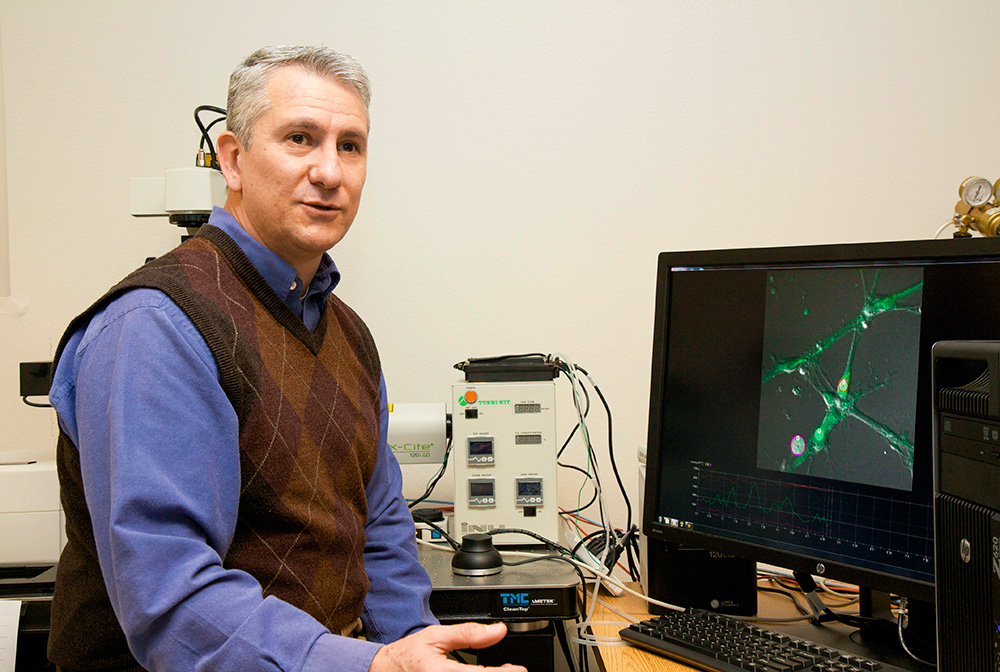
Too many papers cite retracted research — even after it’s been retracted. It’s a problem. It can be especially a problem in clinical fields, where patient care is at stake. Recently, Richard Gray at La Trobe University in Australia and his colleagues examined the scope of the problem in the nursing field, noting how many systematic reviews included findings from retracted clinical trials. We spoke with Gray about their findings, published in the International Journal of Nursing Studies — and what they might mean for the safety of patients.

Retraction Watch: Retractions are a concern in any field, but as you note, when clinical practice is at stake, it can be particularly worrisome. Do you think your findings raise any potential concerns about patient safety?

Continue reading “A concerning – largely unrecognised – threat to patient safety:” Nursing reviews cite retracted trials

They thought they might solve the world’s energy problems. Then they realized they were wrong.

Frederick MacDonnell

Researchers are retracting a 2016 PNAS paper that described a way to create gasoline-like fuels directly from carbon dioxide in the atmosphere.

Senior author Frederick MacDonnell, a professor at the University of Texas at Arlington (UTA), told us he originally thought his team had made a preliminary breakthrough that might “solve the world’s energy problems.” Instead, he said:

It was an elaborate trap we fell into.

In a retraction notice that contains more information than we usually see, MacDonnell and his co-authors wrote: Continue reading They thought they might solve the world’s energy problems. Then they realized they were wrong.

Caught Our Notice: Unusual — journal flags paper for concerns, then updates them

Via Wikimedia

Title: Filled and peptide-modified single-walled carbon nanotubes: synthesis, characterization, and in vitro test for cancer cell targeting

What Caught Our Attention: After an expression of concern (EOC) is published in a journal, the usual procedure is to either publish a subsequent correction or retraction — or, unfortunately, leave it sit ad infinitum. But apparently, there’s another option. Continue reading Caught Our Notice: Unusual — journal flags paper for concerns, then updates them

Caught Our Notice: After ORI flags a paper by former grad student, university flags another

Via Wikimedia

Title: The L3MBTL3 Methyl-Lysine Reader Domain Functions As a Dimer

What Caught Our Attention: Six months ago, the U.S. Office of Research Integrity (ORI) determined that former graduate student Brandi Baughman had doctored 11 figures in a PLOS ONE article, which was retracted shortly after.  The PLOS ONE paper listed two affiliations for Baughman — the National Institute of Environmental Health Sciences and the University of North Carolina, Chapel Hill (UNC); now UNC has triggered a second retraction of a paper co-authored by Baughman, also due to research misconduct. Although the ORI notice makes no mention of this additional paper, the agency recently took a “targeted approach” by not issuing comprehensive findings of misconduct for one researcher, in order to conserve resources. Of course, sometimes universities make findings that don’t meet the ORI’s bar, too. Continue reading Caught Our Notice: After ORI flags a paper by former grad student, university flags another

Caught Our Notice: Researcher who sued PubPeer commenter draws 19th retraction  

Via Wikimedia

Title: Increased Ras GTPase activity is regulated by miRNAs that can be attenuated by CDF treatment in pancreatic cancer cells

What Caught Our Attention: We’ve been following cancer scientist Fazlul Sarkar for years, as he (unsuccessfully) sought to expose the identity of a PubPeer commenter who he believes cost him a job offer. In November 2016, the ACLU released a copy of a misconduct investigation report compiled by Wayne State University, which concluded Sarkar ran a laboratory “culture” of “fabrication, falsification and/or plagiarism of data,” and recommended the retraction of 42 papers and correction of 10 papers. He’s now lodged his 19th retraction. Continue reading Caught Our Notice: Researcher who sued PubPeer commenter draws 19th retraction  

Paper retracted when co-author forgets he had published a figure before

A 2016 case study in Neurology exploring a “mystery case” has been retracted because four figures had already been published in a 2012 article.

The two papers have three authors in common, but according to the retraction notice, none could explain the duplicate publication. The notice states that Pierre Labauge, the corresponding author on the 2012 paper and the last author on the Neurology paper, said he “did not remember the first paper” when revising the recent one. Continue reading Paper retracted when co-author forgets he had published a figure before

One image was duplicated in eight papers. Yes, eight.

A cancer journal has retracted a 2014 paper after discovering one image had been duplicated in seven other papers. That’s right—the same image appeared in a total of eight papers.

For some of the papers, the issues went beyond the single image. According to the retraction notice, several papers contained other duplicated images, as well as “overlapping text.”  The notice, published in October 2017 in Asian Pacific Journal of Cancer Prevention (APJCP), is essentially a letter PLOS ONE wrote to several journals, informing them of the issues in the eight papers, all published between 2014 and 2016. The letter mentions that one of the papers—a 2016 analysis in Korean Journal of Physiology (KJPP)—had already been retracted earlier this year. One author of the retracted KJPP paper confessed to using a company to prepare and submit the manuscript. Continue reading One image was duplicated in eight papers. Yes, eight.

Caught Our Notice: Using this research tool? You’d better ask first

Via Wikimedia

Title: Patient Education After CABG: Are We Teaching the Wrong Information?

What Caught Our Attention: We’ve written about the controversy surrounding a commonly used tool to measure whether patients are sticking to their drug regimen, known as the Morisky Medication Adherence Scale (MMAS-8). It can cost thousands of dollars — and using it without payment/permission earns researchers a call from a collector, who has used legal threats to compel multiple teams to withdraw their papers (a phenomenon we wrote about in Science). The creator of the tool argues it’s copyrighted, and demanding fees ensures researchers use it properly, which avoids putting patients at risk. We’ve found a notice (paywalled, tsk-tsk) that reveals another group of authors used the tool without permission and, according to the notice, “incorrectly.”

Continue reading Caught Our Notice: Using this research tool? You’d better ask first