Nature corrects a correction on conflicts of interest in fish farming paper

Tim Schwab

Nature seems to be having a bit of trouble sorting out its policies regarding conflict of interest statements.

In late April, as we reported, the journal corrected a paper on fish farming after a journalist pointed out that the first author had undisclosed ties to the agribusiness giant Cargill. (The New York Times, which had covered the paper, also corrected a story.) At the time, the reporter, Tim Schwab, noted that several of the other authors also appeared to have undeclared conflicts of interest, but the journal had not taken steps to illuminate those.

Continue reading Nature corrects a correction on conflicts of interest in fish farming paper

Publisher retracts 20 of a researcher’s papers — then asks him to peer review

Marty Hinz
Marty Hinz

Fool me once, shame on you; fool me twice, shame on me. So the saying goes. 

What about fool me 20 times?

In December of last year, Dove Press — a unit of Taylor & Francis — retracted 14 papers by Marty Hinz, a Minnesota physician who has been sanctioned by the U.S. FDA as well as the Minnesota state medical board. In March, Dove retracted six more. A typical notice:

Continue reading Publisher retracts 20 of a researcher’s papers — then asks him to peer review

Reporter prompts corrections in Nature, New York Times after researcher fails to disclose ties to Cargill

Tim Schwab

A journalist in Washington, D.C. prompted a correction in both Nature and the New York Times after finding that the lead author of a paper on fish farming failed to disclose financial ties to one of the world’s largest aquaculture companies. 

The article, “A 20-year retrospective review of global aquaculture,” found that the practice of fish farming has become significantly more friendly to the environment than it was two decades ago. 

The paper caught the attention of the New York Times, which wrote about the findings. It also grabbed the attention of Tim Schwab, who noticed something a bit, well, fishy, about the study. 

Continue reading Reporter prompts corrections in Nature, New York Times after researcher fails to disclose ties to Cargill

Prominent Chinese scientist failed to disclose company ties in COVID-19 clinical trial paper

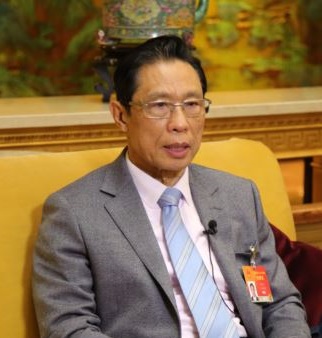
One of China’s leading scientists in the fight against COVID-19 failed to disclose ties to a pharmaceutical company in a paper stemming from a clinical trial, Retraction Watch has learned. A co-author on the paper is married to the daughter of that pharmaceutical company’s founder, who herself sits on the firm’s board of directors. 

Nanshan Zhong first rose to prominence during the 2003 SARS outbreak for developing “a controversial steroid treatment that cured many SARS patients but left some with debilitating bone issues,” according to NPR. In 2020, TIME named him to the magazine’s list of the world’s 100 most influential people. He was appointed to lead China’s National Health Commission investigation into COVID-19 early last year, and in February 2020 Harvard announced that Zhong would share in a $115 million effort with university scientists to develop therapies for COVID-19.

Last May, Zhong published results from a clinical trial that tested whether a traditional Chinese medicine could be used to treat COVID-19 patients. That paper, titled “Efficacy and safety of Lianhuaqingwen capsules, a repurposed Chinese herb, in patients with coronavirus disease 2019: A multicenter, prospective, randomized controlled trial,” was published in Phytomedicine. It has been cited 67 times, according to Clarivate Analytics’ Web of Science, and has two corresponding authors: Zhong, of the Guangzhou Institute of Respiratory Health, and Zhen-hua Jia of Hebei Yiling Hospital, in China. 

Continue reading Prominent Chinese scientist failed to disclose company ties in COVID-19 clinical trial paper

Eleven papers corrected after nutrition prof fails to disclose patent, company ties

Stuart Phillips

Eight journals have corrected a total of eleven papers after one of the authors failed to list potential financial conflicts of interest. Two additional journals have also told Retraction Watch that they plan to issue corrections, which will bring the total to 13 or more.

Stuart Phillips is a professor and director of the Centre for Nutrition, Exercise, and Health Research at McMaster University in Hamilton, Ontario. The corrected studies — which now reflect Phillips’ links to companies or patents — are all related to his research on nutritional supplements and exercise. 

One journal, Medicine & Science in Sports & Exercise, issued a single correction for four studies authored by Phillips:

Continue reading Eleven papers corrected after nutrition prof fails to disclose patent, company ties

PLOS ONE issues expression of concern for study of dog food and heart problems for failure to disclose conflicts of interest, other issues

via Southern California Golden Retriever Rescue

A group of veterinary researchers at the University of California, Davis, has received an expression of concern for their May 2020 study on heart disease in dogs, for failing to adequately disclose conflicts of interest and for other aspects of the article. 

The paper, “Development of plasma and whole blood taurine reference ranges and identification of dietary features associated with taurine deficiency and dilated cardiomyopathy in golden retrievers: A prospective, observational study,” appeared in PLOS ONE. The authors, from the lab of Joshua A. Stern, looked at the effects on the animals of “non-traditional” diets — those high in legumes but low in grains, which contain taurine, a key amino acid. Golden retrievers are known to be particularly vulnerable to cardiac problems associated with a lack of taurine. The FDA has been investigating the connection

According to the authors: 

Continue reading PLOS ONE issues expression of concern for study of dog food and heart problems for failure to disclose conflicts of interest, other issues

Duke engineering prof corrects seven papers for failures to disclose startup he co-founded

Tony Jun Huang

A chemistry journal has issued corrections for seven papers after learning that one of the authors failed to list his ownership of a company with a stake in the research.  

The articles, which appeared in Lab on a Chip — a journal “at the interface between physical technological advancements and high impact applications” from the Royal Society of Chemistry — came from the lab of Tony Jun Huang, of Duke University in Durham, N.C. Huang, who holds the William Bevan Distinguished Professor of Mechanical Engineering and Materials Science at Duke, is a prominent figure in the field. According to his bio: 

Continue reading Duke engineering prof corrects seven papers for failures to disclose startup he co-founded

Publisher slaps expressions of concern on 20 papers by nutrition supplement-selling doctor

Marty Hinz

More than two years after being made aware of undisclosed conflicts of interest by a Minnesota  physician who ran afoul of the U.S. FDA for health claims about supplements sold by his company, a publisher has added expressions of concern on 20 of the doctor’s papers.

As we reported in August 2019, on Feb. 23, 2018, Stephen Barrett — a U.S. physician and founder of Quackwatch — sent Dove Press a message about the 20 papers by Marty Hinz:

Continue reading Publisher slaps expressions of concern on 20 papers by nutrition supplement-selling doctor

Conflicts of disinterest: Why does it take a publisher 18 months, and counting, to correct papers?

Taylor & Francis

On February 23, 2018, Stephen Barrett — a physician in the United States perhaps best known for his work at Quackwatch — sent Dove Press this message:

I believe you have published 20 articles in 6 of your journals in which the lead author did not make a full conflict-of-interest disclosure. Please email me directly with the name and email address of an individual to whom I should report.

The lead author in question was Marty Hinz. As Barrett writes in a summary of the case

Continue reading Conflicts of disinterest: Why does it take a publisher 18 months, and counting, to correct papers?

In wake of media scrutiny, Sloan Kettering author adds financial disclosures

Michelle Bradbury, via MSKCC

A month after a journalism investigation that led to resignations and turmoil at Memorial Sloan Kettering Cancer Center in New York, researchers including a Sloan Kettering scientist have quietly corrected at least two papers to add disclosures of financial conflicts of interest.

The two corrections, in Chemistry of Materials, are dated October 8, 2018 and read: Continue reading In wake of media scrutiny, Sloan Kettering author adds financial disclosures