Researchers in Vietnam who fabricate data or plagiarize papers may be permanently barred from future scientific work, according to new guidance from the country’s Ministry of Science and Technology.
The new framework, announced May 25, requires science and technology organizations to implement rules against research misconduct, and it outlines a process for investigating and sanctioning violations. The recommended penalties include written warnings, correction or retraction requests, public apologies, role suspensions, returning research funding, and bans from scientific projects. Violations of scientific integrity must also be recorded in the National Digital Platform for Science, Technology, and Innovation Management, according to the framework.
Researchers who use artificial intelligence inappropriately may also be subject to stiff sanctions. The framework warns researchers should not use AI to create fake data, images, or references nor unverified AI-generated material used as a reference.
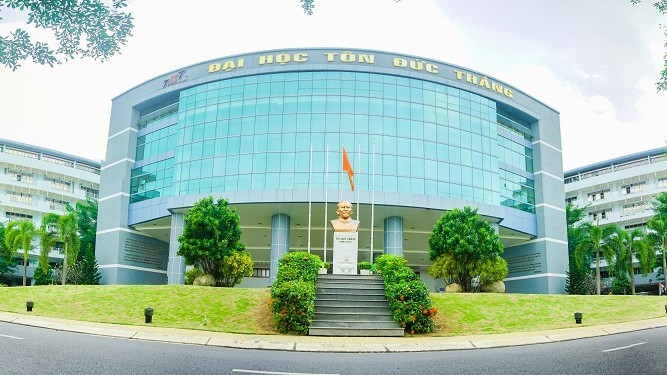
The Ministry’s guidance follows multiple high-profile cases of research misconduct in Vietnam and the exposure of deceptive practices at several universities. In 2020, a series of investigative articles by Thanh Nien newspaper exposed research misconduct at Ton Duc Thang University and Duy Tan University, showing foreign authors were paid high sums to falsely list affiliations with the institutions to boost research output and rankings. In 2022, an investigation by Vietnam’s Ministry of Education and Training found about 70% of publications affiliated with Ton Duc Thang University involved researchers outside the university.
Also in 2022, an investigation by sleuth Anna Abalkina identified a large Russian paper mill with links to Vietnamese researchers. (Abalkina partnered with Retraction Watch to create the Retraction Watch Hijacked Journal Checker.) Researchers in Vietnam were among the top 10 countries purchasing articles from the paper mill.
The new framework is an “important milestone” in the promotion of scientific integrity in Vietnam and marks the beginning of a new phase in which the core principles of research integrity are clearly defined, Tu Van Duong, a senior researcher at Purdue University in West Lafayette, Ind., told Retraction Watch. Duong is founder of a Facebook group dedicated to scientific integrity in Vietnam that now has more than 300,000 members.
“Previously, scientific integrity in Vietnam was promoted mainly through general principles and voluntary encouragement, without strong enforcement mechanisms.” Duong said. “Now, these principles have been incorporated into the regulatory framework and translated into concrete mandates, making compliance an explicit formal, binding obligation for researchers, research institutions and regulatory bodies alike.”
Although Vietnam previously had some penalties in place for research misconduct, the new framework provides much more detailed and clearer guidance than previous regulations, Duong said. The framework is “particularly important” because Vietnam’s research system has expanded rapidly in recent years and “strong pressure” to internationalize and increase publication output has, in some cases, “created incentives that prioritize publication quantity over research quality and integrity,” he said.
The new framework includes mandated measures and safeguards for researchers to prevent research integrity violations. These include conducting plagiarism checks on documents before submitting for publication; retaining raw data, research logs and draft versions in a retrievable manner; and disclosing all funding sources, potential conflicts of interest and the scope of artificial intelligence used, according to a machine translation of the guidance.
The framework also charges heads of organizations with conducting periodic inspections of the recommended code of ethics, monitoring retracted, withdrawn, or corrected articles to identify patterns of potential misconduct, and establishing procedures for receiving misconduct reports and issuing sanctions based on severity. Acts classified as the most serious violations are fabricating data, plagiarizing others’ work, and concealing conflicts of interest, as well as acts that distort the nature of research, according to the guidance.
“These guidelines are issued with the aim of ensuring compliance with scientific integrity and professional ethics in scientific research and technological development by agencies, organizations, and individuals throughout the entire process of scientific and technological activities,” the guidelines state. The framework is also intended to “contribute to safeguarding the value of knowledge, ensuring research quality, fostering a culture of scientific integrity and professional ethics, promoting social responsibility, and ensuring sustainability in research.”
The Ministry of Science and Technology did not return messages seeking comment.
Our database shows 251 retractions with at least one author affiliated with an institution in Vietnam, with Ton Duc Thang University and Duy Tan University having the most retractions. Several of those were from bulk retractions from Soft Computing, Environmental Science and Pollution Research, and the Journal of Intelligent and Fuzzy Systems, as well as from former Hindawi journals.
In recent years, we have reported on several cases linked to researchers in Vietnam, including a group of physicists accused of plagiarism that amassed seven retractions and an asthma study retracted for ethics problems. Earlier this month, we covered a group of middle and high school students in Vietnam embroiled in a science competition controversy involving allegations of cheating and plagiarism.
Vietnam joins several countries that have stepped up rules and regulation of scientific misconduct this year. In May, the Scottish Funding Council issued a new policy requiring Scottish universities to demonstrate robust research integrity systems and report outcomes of research misconduct investigations. In March, Peru passed new rules that bar research faculty at public universities there from receiving special bonuses if they’ve had one or more retractions in the last three years. And in India, the Anusandhan National Research Foundation made it required for researchers applying for its advanced research grants to disclose the details of article retractions within the past five years.
Principles-based frameworks, like the new guidelines for Vietnam, are “a great way” to support research integrity, given the diverse ways research is conducted across academic disciplines and places, said Daniel Barr, a principal research integrity advisor for research and innovation at Royal Melbourne Institute of Technology University in Australia.
Barr said another recently established research integrity system is Thailand’s Research Integrity Network (THRIN), which seeks to promote ethical research practices and connects academics, experts and administrators from across the country.
“It’s a good thing for governments to promote the importance of integrity in research via policy and to set clear expectations,” Barr told us. “Research integrity frameworks must aim to not only combat research misconduct but also support responsible research practice.”
Duong said the goals of Vietnam’s new framework will be achieved only if the regulations are implemented seriously and monitored rigorously, rather than “merely existing on paper.”
“I am not sure which is worse: having no regulations at all, or having regulations that are not respected and properly enforced,” he told us. “In practice, the serious implementation of these regulations amounts to rebuilding the value system and operational mechanisms of Vietnam’s research ecosystem. In many ways, this represents a profound institutional transformation that will require strong political commitment, persistence and sustained effort across the entire system.”
Like Retraction Watch? You can make a tax-deductible contribution to support our work, follow us on X or Bluesky, like us on Facebook, follow us on LinkedIn, add us to your RSS reader, or subscribe to our daily digest. If you find a retraction that’s not in our database, you can let us know here. For comments or feedback, email us at [email protected].
All universities hire international researchers.
Straw man much? It’s not exactly about “hiring” people from abroad according to the article. Rather, “foreign authors were paid high sums to falsely list affiliations with the institutions to boost research output and rankings.”
Vietnamese universities are essentially hacking the ranking system to climb the charts, even though it doesn’t reflect their true standing. It’s a distorted structure where they use metric management to prop up their rankings while their real academic substance is lacking. I’m sure there are others here who have encountered or know firsthand about this.