Sanction for Toronto researchers upheld despite court challenge

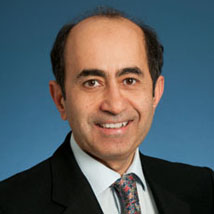
Shereen Ezzat
Sylvia Asa
Sylvia Asa

A Toronto hospital network is keeping two researchers’ labs closed even after an Ontario court quashed part of a misconduct finding by the institution.

Some background: After the University Health Network found evidence of falsified data, Sylvia Asa stepped down as Program Medical Director of the Laboratory Medicine Program, the largest hospital diagnostic laboratory in Canada. Due to the investigation, UHN suspended the labs of Asa and her husband Shereen Ezzat. In response, Asa and Ezzat asked an Ontario court to quash the misconduct findings; last month, the court overturned two out of three findings, and asked UHN to reconsider its sanction against the pair.

According to the Toronto Star, on February 4th the UHN notified the researchers that the sanction against them would be upheld, and it would not reopen the researchers’ labs.

The Star spoke to the researcher’s lawyer, Brian Moher who  Continue reading Sanction for Toronto researchers upheld despite court challenge

Why publishing negative findings is hard

Jean-Luc Margot
Jean-Luc Margot

When a researcher encountered two papers that suggested moonlight has biological effects — on both plants and humans — he took a second look at the data, and came to different conclusions. That was the easy part — getting the word out about his negative findings, however, was much more difficult.

When Jean-Luc Margot, a professor in the departments of Earth, Planetary & Space Sciences and Physics & Astronomy at the University of California, Los Angeles, tried to submit his reanalysis to the journals that published the original papers, both rejected it; after multiple attempts, his work ended up in different publications.

Disagreements are common but crucial in science; like they say, friction makes fire. Journals are inherently disinterested in negative findings — but should it take more than a year, in one instance, to publish an alternative interpretation to somewhat speculative findings that, at first glance, seem difficult to believe? Especially when they contain such obvious methodological issues such as presenting only a handful of data points linking biological activity to the full moon, or ignore significant confounders?

Margot did not expect to have such a difficult experience with the journals — including Biology Letters, which published the study suggesting that a plant relied on the full moon to survive: Continue reading Why publishing negative findings is hard

Court dismisses lawsuit by XMRV-chronic fatigue syndrome researcher

mikovitsA California court has dismissed virologist Judy Mikovits’s lawsuit against fourteen people and two Nevada corporations, in part because she failed to submit necessary documents on time.

Mikovits is the author on a now-retracted Science paper suggesting a link between a virus known as XMRV and chronic fatigue syndrome, which has no known cause. She alleged that she was fired from the Whittemore-Peterson Institute for blowing the whistle on her former colleague’s activities, and that the defendants then colluded to imprison and defame her.

The court dismissed her case last Wednesday. According to the court minutes,

Seralini paper released by predatory publisher is plagiarized by predatory journal

ijtra-logoA 2012 paper co-authored by Gilles Seralini, who has published controversial research showing the dangers of genetically modified foods, has been plagiarized by another researcher.

The 2016 paper, published in the International Journal of Technical Research and Applications, has not been retracted, but the text comparison is fairly obvious.

It’s a case of intra-predatory crime: the International Journal of Technical Research and Applications is on the list of predatory journals compiled by Jeffrey Beall, and the Seralini paper appeared in the Journal of Environmental Protection, which is published by Scientific Research Publishing, which Beall considers to be a predatory publisher.

Here’s the abstract from Seralini’s 2012 paper, “Glyphosate Exposure in a Farmer’s Family:” Continue reading Seralini paper released by predatory publisher is plagiarized by predatory journal

Journals retracts three bone papers for duplication by same author

1-s2.0-S0168365907X02700-cov150hA journal is Journals are retracting three papers after a biomaterials researcher duplicated his own work, sometimes using the same figures to describe different experiments.

Two of the papers are on bone regeneration; one is about targeting tumors. In addition to issues with figures, two one of the retraction notes explain that the papers contain “widespread plagiarism of text” from other papers by the researcher, Hossein Hosseinkhani.

Hosseinkhani is currently affiliated with the National Taiwan University of Science and Technology; when he did the work in the now retracted papers, published in 2004 and 2007, he was based at Kyoto University Hospital and then National Institute for Materials Science in Japan.

The Journal of Controlled Release published all three two of the papers. Here’s the retraction note for “Bone regeneration through controlled release of bone morphogenetic protein-2 from 3-D tissue engineered nano-scaffold,” which has been cited 118 times, according to Thomson Scientific’s Web of Knowledge.

Continue reading Journals retracts three bone papers for duplication by same author

Journal retracts nanoparticles paper for duplicating figures

no spine minimum. full size. Editor: Ann Meares JEM: Diane RTP: Jill Kessler

A paper on nanoparticles that target cancer cells has been retracted for duplicating figures from three other papers.

The articles all share a first author: Manasmita Das, based at the time of the research at the Indian Institute of Technology Kharagpur and the National Institute of Pharmaceutical Education and Research (NIPER). According to her LinkedIn profile, she is currently a postdoc at the University of North Carolina.

The abstract of the 2011 Bioconjugate Chemistry paper explains just what the new nanoparticles would be useful for:

Multifunctional nanoparticles, developed in the course of the study, could selectively target and induce apoptosis to folate-receptor (FR) overexpressing cancer cells with enhanced efficacy as compared to the free drug. In addition, the dual optical and magnetic properties of the synthesized nanoparticles aided in the real-time tracking of their intracellular pathways also as apoptotic events through dual fluorescence and MR-based imaging.

But according to the retraction note, figure duplications “seriously undermine the conclusions presented in the research article.” Here’s more about the source of those duplications from the full note: Continue reading Journal retracts nanoparticles paper for duplicating figures

Researchers plagiarized chapter of doctoral thesis in mol bio paper

mol cell biochemA journal has pulled a paper about the molecular details of different types of adipose tissues after learning the researchers had plagiarized much of a Ph.D. thesis.

The researchers copied from former Ph.D. student Bettina Meissburger’s doctoral thesis in a 2013 paper in Molecular and Cellular Biochemistry. The retraction note for “Adipose stromal-vascular fraction-derived paracrine factors regulate adipogenesis” provides the name of Meissburger’s thesis: Continue reading Researchers plagiarized chapter of doctoral thesis in mol bio paper

JACS imaging paper “under editorial review”

Screen Shot 2016-01-04 at 2.02.27 PM

The Journal of the American Chemical Society has issued an expression of concern over “the presentation of results” in a 2014 paper about a new probe for use in imaging.

We haven’t heard back from the journal nor the authors of the paper, so there’s not much we can officially say about what the journal is investigating.

Here’s the text from the expression of concern:
Continue reading JACS imaging paper “under editorial review”

2014 ORI finding results in retraction of cancer paper with manipulated images

Mol Can TherA paper flagged in an Office of Research Integrity notice more than one year ago has finally been retracted. According to the notice, the paper includes images manipulated by author H. Rosie Xing, a former University of Chicago cancer researcher.

The main conclusions of the paper are affected by the ORI finding, according to the retraction note from Molecular Cancer Therapeutics. But otherwise, the note contains information that was available in the ORI finding, published in December 2014.

Pharmacologic Inactivation of Kinase Suppressor of Ras1 Sensitizes Epidermal Growth Factor Receptor and Oncogenic Ras-Dependent Tumors to Ionizing Radiation Treatment” has been cited seven times, according to Thomson Scientific’s Web of Knowledge — twice since the ORI finding came out.

The retraction note explains which images were affected by the manipulation:

Continue reading 2014 ORI finding results in retraction of cancer paper with manipulated images

Investigation prompts 5th retraction for cancer researcher for “unresolvable concerns”

3.coverAn investigation at the University of New South Wales in Australia has led to a fifth retraction for a cancer researcher long accused of misconduct, due to “unresolvable concerns” with some images.

As we reported in December, UNSW cleared Levon Khachigian of misconduct, concluding that his previous issues stemmed from “genuine error or honest oversight.” Now, Circulation Research is retracting one of his papers after an investigation commissioned by UNSW was unable to find electronic records for two similar images from a 2009 paper, nor records of the images in original lab books.

Again, the retraction note affirms that this is not a sign of misconduct:

UNSW has not attributed any instance of research misconduct or responsibility for the unavailability of the original data to Professor Khachigian or to any of the authors of the publication.

Here’s the retraction note in full for “Angiotensin II-Inducible Smooth Muscle Cell Apoptosis Involves the Angiotensin II Type 2 Receptor, GATA-6 Activation, and FasL-Fas Engagement:” Continue reading Investigation prompts 5th retraction for cancer researcher for “unresolvable concerns”