Cancer research pioneer Robert Weinberg corrected Oncogene paper

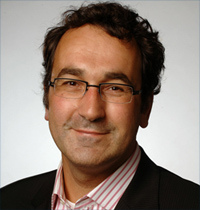
onc_cimageRobert Weinberg, a prominent cancer researcher at the Whitehead Institute, issued a correction to a paper in Oncogene in May, fixing two errors missed during proofing.

We found this one a little late, obviously. It also appears to be a relatively minor correction, not one that appears worthy of retraction. We’ve gotten feedback from readers asking why we cover corrections; we chose to flag this one because Weinberg has had such an impact on his field — he discovered the first tumor-causing gene in humans, as well as the first tumor-suppressor gene — and his papers are often highly cited. He also has issued five retractions in the past, most of which for papers whose first author was a member of his lab, who is not a co-author on the Oncogene paper.

Here’s the correction note for “Thrombospondin-1 repression is mediated via distinct mechanisms in fibroblasts and epithelial cells:”

Continue reading Cancer research pioneer Robert Weinberg corrected Oncogene paper

Five years after a retraction, company’s stock is up more than 500%

wntloggawntresearchwebny1Is ethical behavior good for business?

Five years ago this month, Swedish pharmaceutical company WntResearch immediately notified shareholders when authors retracted a 2009 Proceedings of the National Academy of Sciences (PNAS) paper on a potential cancer therapy that was key to the company’s business.

At the time, the company’s decision to disclose the retraction hurt its finances, as WntResearch delayed its planned initial public offering for three weeks. It also offered investors and shareholders the opportunity to withdraw their shares of WntResearch stock.

But, aside from one of the paper’s co-authors, “No one did that,” Nils Brünner, WntResearch’s CEO, told us. Since the company’s IPO on December 17, 2010, its stock price has increased from Continue reading Five years after a retraction, company’s stock is up more than 500%

Diederik Stapel now has 58 retractions

stapel_npcSocial psychologist Diederik Stapel has notched his 58th retraction, after admitting he fabricated data in yet another article.

He’s holding onto his 4th place spot on our leaderboard.

This latest retraction is for “Correction or comparison? The effects of prime awareness on social judgments,” published in the European Journal of Social Psychology. As usual for Stapel, this paper has been retracted because he fabricated data.

Here’s the note:

Continue reading Diederik Stapel now has 58 retractions

Voinnet retracts highly cited paper, bringing his total to 7

coverOlivier Voinnet, a well-known plant scientist at the ETH in Zurich, has notched his 7th retraction for a highly cited paper. The 2003 paper was pulled when “additional image manipulations” came to light after The Plant Journal issued a correction earlier this year.

The retraction follows an investigation into — and then retraction of — several other papers co-authored by Voinnet. The authors originally corrected the paper after they learned one image had been duplicated, and repeating the experiment found the “same interpretation and conclusions” held true. But when the corresponding author learned of additional “data manipulation,” they decided to retract the paper altogether.

Here’s the retraction notice for “An enhanced transient expression system in plants based on suppression of gene silencing by the p19 protein of tomato bushy stunt virus:”

Continue reading Voinnet retracts highly cited paper, bringing his total to 7

NEJM pulls letter by heart researcher who faked patient records

Screen Shot 2015-11-30 at 10.08.23 AMA heart researcher who fabricated patient records has notched retraction number six — this time, for a letter in the New England Journal of Medicine. She has two more retractions forthcoming.

The retraction comes at the request of Anna Ahimastos’s co-authors, following an investigation into her work by her former workplace, the Baker IDI Heart and Diabetes Institute. The investigation was not able to verify the data referenced in the letter, which includes a citation for a recently retracted JAMA paper.

The retraction note is similar to others for Ahimastos’s papers:

Continue reading NEJM pulls letter by heart researcher who faked patient records

After lawsuit, university releases misconduct report about nutrition researcher Chandra

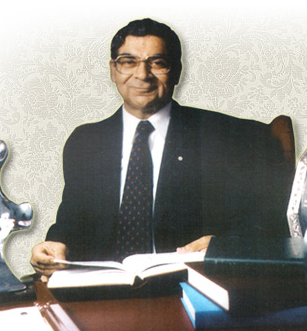
R K Chandra
R K Chandra, self-proclaimed father of nutritional immunology (from www.drrkchandra.com)

Memorial University in Canada has released a five-year-old report of an investigation, confirming a former nutrition professor had committed misconduct in a 2001 paper.

The 53-page report — about Ranjit Kumar Chandra, a prominent and once-lauded researcher — focuses on a Nutrition paper that examined the effectiveness of vitamins patented by Chandra. The report, authored by MUN professor emeritus William Pryse-Phillips, lists 41 problems with the paper, which it concludes:

…was not in full compliance with the scientific, ethical, and/or integrity standards of Memorial University at the time.

The paper was retracted in 2005; the report is dated 2009. We asked Pryse-Phillips why the university took so long to release it. He told us:

Continue reading After lawsuit, university releases misconduct report about nutrition researcher Chandra

Management researcher with 7 retractions issues “clarifications” to 2013 paper

home_cover

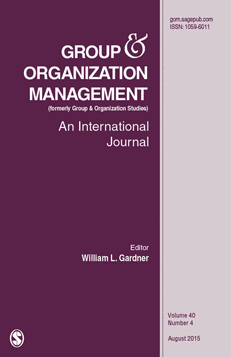
The authors of a paper on supportive supervisors just want readers to “better understand the reported findings,” and so have issued multiple “clarifications” in a corrigendum note.

Some of the issues addressed in the note have been raised on PubPeer.

The paper’s author list includes one Fred Walumbwa, formerly an Arizona State University management researcher, some of whose work has succumbed to scrutiny in the the past two years. His current list: seven retractions, a megacorrection, an expression of concern, and now this.

Unraveling the relationship between family-supportive supervisor and employee performance,” published in Group & Organization Management, has been cited twice, according to Thomson Scientific’s Web of Knowledge.

Here’s the note in full:

Continue reading Management researcher with 7 retractions issues “clarifications” to 2013 paper

JAMA retracts second paper by heart researcher

Screen-Shot-2015-10-27-at-10.53.53-AMA heart researcher who fabricated trial participants has notched a second JAMA retraction. The retraction comes at the request of her co-authors, after an investigation by her former employer wasn’t able to confirm that this study was valid.

In September, we learned that Anna Ahimastos, who used to work at Baker IDI Heart and Diabetes Institute in Melbourne, Australia, had “fabricated [records] for trial participants that did not exist” in a JAMA trial for a blood pressure drug, according to principal investigator Bronwyn Kingwell.  That trial was retracted, along with a sub analysis.

An investigation by the institute found problems or sufficient doubt in several more publications. This second JAMA retraction is number 5 for Ahimastos, of 8 total expected.

The paper, “Effect of perindopril on large artery stiffness and aortic root diameter in patients with Marfan syndrome: a randomized controlled trial” Continue reading JAMA retracts second paper by heart researcher
Scott Reuben notches 25th retraction, for a letter to the editor

Screen Shot 2015-11-18 at 11.08.26 AMAnother domino has fallen for the infamous and prolific former anesthesiologist Scott Reuben. This time it’s a retraction for a letter to the editor that cites one of his since-retracted papers.

The letter, published in 2001, argues that local anesthesia is a “safe, reliable, inexpensive, and practical alternative to the use of epidural, spinal, or general anesthesia” for outpatient knee surgery. But to support his point, he uses one of his papers that has since been retracted for data fabrication.

The note from Anesthesia & Analgesia explains:
Continue reading Scott Reuben notches 25th retraction, for a letter to the editor

MD Anderson researcher Aggarwal up to six corrections

cover (2)A highly cited cancer researcher at MD Anderson has notched three major corrections, all associated with problems in figures. One note cites “human error” as the cause.

Bharat Aggarwal is the last author on all three papers. He is now up to six corrections, two unexplained withdrawals, and two Expressions of Concern. He’s also threatened to sue us in the past, and has told us that his institution has been looking into his work.

Only one note specifies that the correction does not affect the paper’s conclusions.

First up: “Inhibition of growth and survival of human head and neck squamous cell carcinoma cells by curcumin via modulation of nuclear factor-κB signaling,” published in the International Journal of Cancer and cited 168 times, according to Thomson Scientific’s Web of Knowledge. The issues span two figures, according to the erratum note:

Continue reading MD Anderson researcher Aggarwal up to six corrections