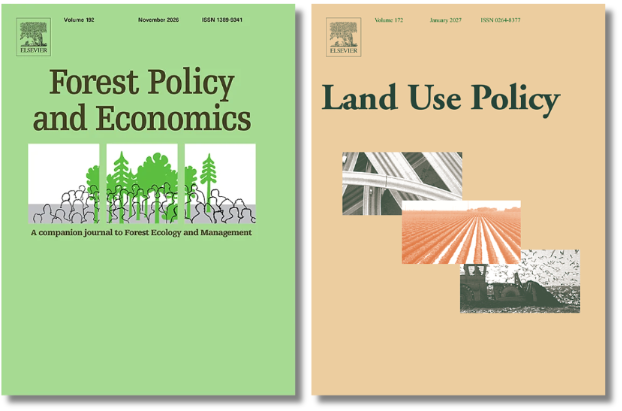
At a glance, the papers look completely different: One, published in 2023, describes forest co-management in Bangladesh. The other, published last year, is about soil conservation in China. But an author on the older paper could tell something was amiss.
“Once I read it and saw the figures and methods were very similar with just a change in location and context, alarm bells rang,” agricultural researcher Lisa Lobry de Bruyn, of the University of New England, in New South Wales, Australia, told Retraction Watch.
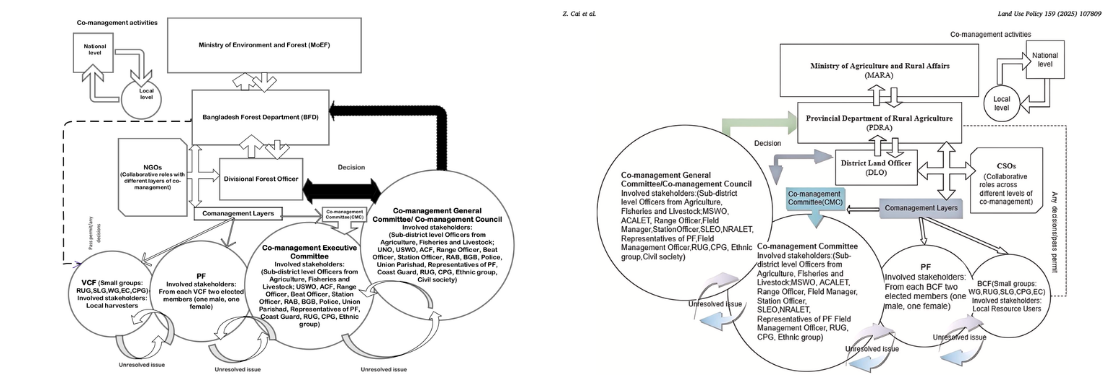
The October 2025 article in Land Use Policy cited the earlier paper, published in Forest Policy and Economics and coauthored by de Bruyn and then-Ph.D. student Flora Begum. But some areas were “remarkably” similar, “such as methods and data presentation with artful alteration of axis and repositioning of themes,” de Bruyn wrote in a Dec. 2 email to editors at both journals. “But for the most part I cannot see how it could be that similar, coming to the same conclusions and same weightings of themes,” she said, calling the situation “distressing.”
Days after de Bruyn flagged the similarities, the authors themselves requested the article be retracted. Nearly a year later, Elsevier, which publishes both journals, told us its investigation is “ongoing.”
Zheng Cai, first author of the 2025 paper in Land Use Policy, told us the paper “openly cites Begum et al.” and said they redrew the figures “entirely based on our own study sites, institutional actors and stakeholder data.” Cai and the other authors are at the Northeast Agricultural University in Harbin, China, and the last author, Yuheng Li, also lists an affiliation with the Chinese Academy of Sciences in Beijing.
Despite purportedly unique study sites and stakeholders, Table 1 of each paper lists identical mean incomes among identical participant groups, among other similar values.
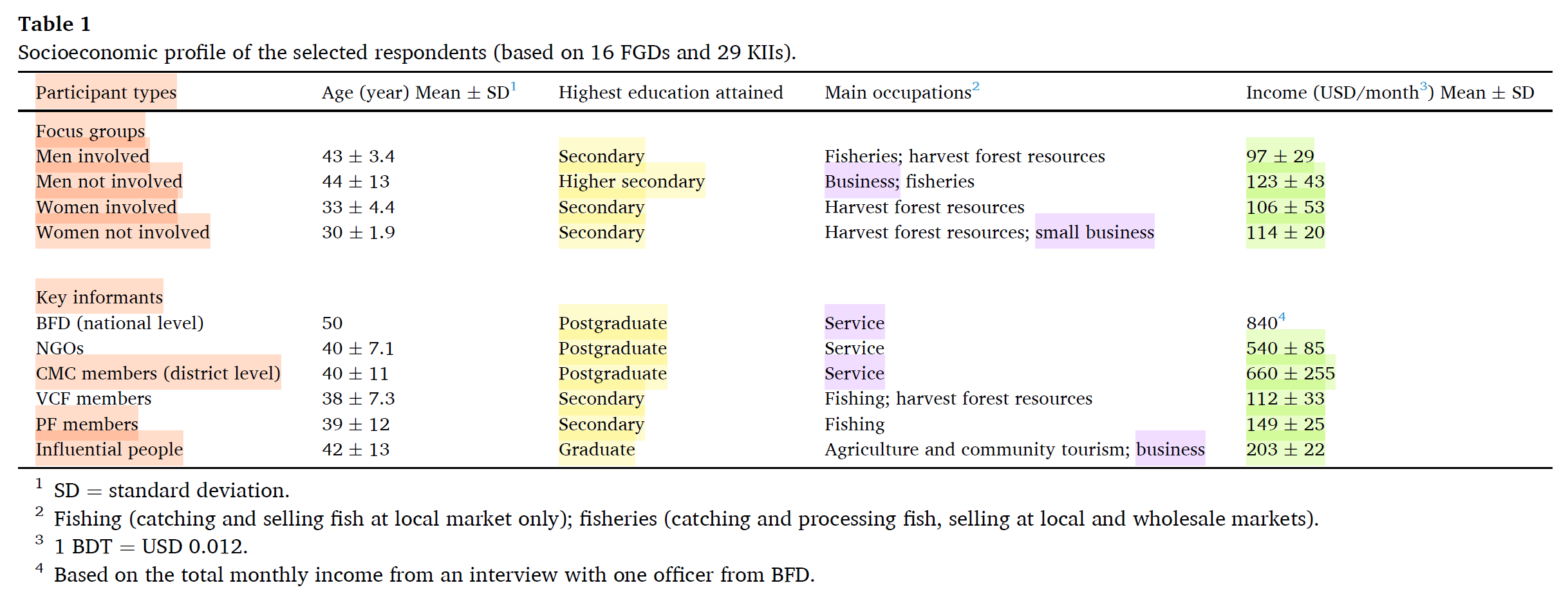
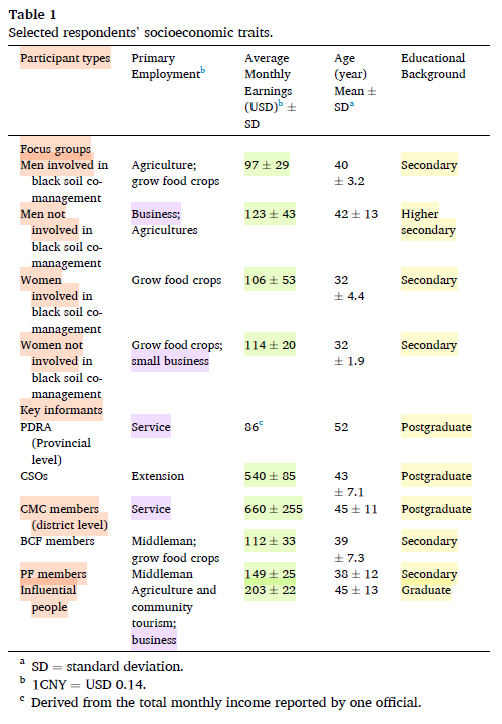
Several values in Table 1 in a 2023 paper in Forest Policy and Economics (left) appear to be duplicated in a table in a 2025 paper in Land Use Policy.
de Bruyn also said the authors reused two figures from the pair’s 2021 paper in Journal of Environmental Management without crediting their work.
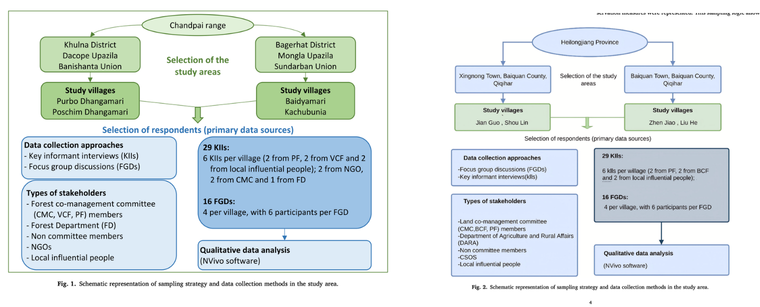
Begum, now at Bangladesh Agricultural University in Mymensingh, told us the similarities “raise serious concerns about potential plagiarism and warrant a thorough investigation by the journal.”
On December 2, de Bruyn wrote to Land Use Policy’s co-editor-in-chief Uchendu Chigbu of the Namibia University of Science and Technology in Windhoek, and Forest Policy and Economics editor-in-chief Lukas Giessen of the University of Göttingen in Germany, according to an email Retraction Watch has seen. The next day, Chigbu emailed Cai to ask for clarification regarding the “serious plagiarism allegations.” Chigbu also copied an Elsevier employee and wrote: “My attention has just been drawn to the unusual similarity of the two articles. Please retract, while I engage with the authors.”
The next day, Cai responded on behalf of the authors denying any wrongdoing, but requesting a retraction of the article to “uphold the highest standards of academic integrity and ensure the accuracy and robustness of our findings.”
He also wrote the authors “realised that the conceptual framework could be further improved and refined, and that certain empirical components require additional verification and supplementation to more rigorously support the main arguments of the study.”
In a December 5 email, Chigbu responded the authors “did not address the plagiarism concern. I can conform [sic] that we would not be able to retract the published article on the grounds you have stated (needing to improve framework and verify empirical components),” he said. Before they would initiate the retraction, Chigbu asked the authors to respond to the allegations specifically. Cai denied the allegations in an email sent the same day. The email was the last time de Bruyn heard from the journal.
“The research framework, fieldwork, empirical data, and conclusions were developed independently and are fully traceable through our project materials, interview records, NVivo coding files,’turnitin iThenticate ai’, and the timeline of our research activities,” he said. “Any resemblance between the two articles arises solely from the use of co-management theory, a widely applied and well-established analytical framework in natural resource governance, rather than from any copying of text, ideas, or data.”
They also wrote they were “prepared to formally request a retraction of the article, or, if the editorial team considers it more appropriate to submit a fully revised replacement manuscript that resolves all sources of confusion.”
Cai told us he had not heard from Land Use Policy or Elsevier since December. “Our request to the journal was a proactive step out of an abundance of caution and respect for publication standards, to address this citation detail and ensure full transparency,” Cai said. “It is not an admission of any research misconduct or plagiarism.”
A representative for Elsevier told us the investigation “is ongoing and we are unable to provide any further details at this stage.”
“I find it deeply concerning that a paper with such apparent similarities to previously published research could pass peer review in a reputable journal like Land Use Policy,” Begum said. “This raises serious questions about academic integrity and the rigour of the review process.”
Like Retraction Watch? You can make a tax-deductible contribution to support our work, follow us on X or Bluesky, like us on Facebook, follow us on LinkedIn, add us to your RSS reader, or subscribe to our daily digest. If you find a retraction that’s not in our database, you can let us know here. For comments or feedback, email us at [email protected].