Ontario court quashes part of misconduct finding for prominent pair

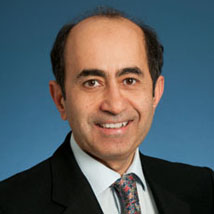
Sylvia Asa
Sylvia Asa
getpic (1)
Shereen Ezzat

An Ontario court has quashed part of a misconduct finding against a prominent husband and wife team by the University Health Network in Toronto.

Last year, we reported that Sylvia Asa had stepped down from her position as Program Medical Director of the Laboratory Medicine Program at the UHN — the largest hospital diagnostic laboratory in Canada — after an investigation uncovered evidence of falsified data in two papers co-authored with her husband, Shereen Ezzat. Both of their research labs were also suspended as a result. The researchers subsequently appealed the decision.

On Friday Sunday, the Toronto Star reported that the court had set aside the finding of falsification, but upheld a finding of misconduct in the form of material non-compliance. It asked UHN to review the sanctions against both researchers, and cover their legal fees of $20,000.

Here’s the conclusion from the decision:

Continue reading Ontario court quashes part of misconduct finding for prominent pair
Wound healing paper injured beyond repair

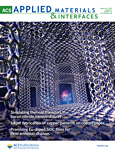
no spine minimum. full size. Editor: Jon JEM: Esther RTP: Bryan Nolte TOC image

Errors in the interpretation of some of the data — the result of “procedural flaws” —  are to blame for the retraction of a paper on a way to help skin grow back after injury.

The paper explores a method involving nanofibers. According to the abstract:

In this study, tilapia skin collagen sponge and electrospun nanofibers were developed for wound dressing…the collagen nanofibers stimulated the skin regeneration rapidly and effectively in vivo.

The paper was published January 19, 2015 by ACS Applied Materials and Interfaces, then retracted eight months later, in August. It has not been cited, according to Thomson Scientific’s Web of Knowledge.

Here’s the retraction note:

Continue reading Wound healing paper injured beyond repair

Want to keep up with Retraction Watch but get fewer emails? Try our new daily newsletter

RW logoWe’ve heard from a number of readers that our current volume of posts — three per day most weekdays, and sometimes four — makes an email per post a lot to wade through. We listened, and now you have another option.

For readers who like their retraction news in a digestible form, starting tomorrow morning, we will begin offering the option of a daily newsletter. Here’s a sample. Click here to subscribe.

Every morning, you’ll get links to everything we’ve covered in the last 24 hours, along with a few stories from around the web, much as you might find in Weekend Reads. Continue reading Want to keep up with Retraction Watch but get fewer emails? Try our new daily newsletter

Weekend reads: “Research parasites;” CRISPR controversy; access to PACE data denied

booksThe week at Retraction Watch featured a brewing case over GMO research, a 10-reason retraction. and a retraction and apology from the CBC.

Before we get to this week’s reads from elsewhere, we’re happy to announce that we’re launching a daily email newsletter that will include posts from the last 24 hours, as well as links to readings at other sites, much like those you’ll find on Weekend Reads. We know that some readers find an email for every post – which can be as many as four per day – too much, so we hope this will solve that. Here’s a sample. Sign up here!

And now to Weekend Reads: Continue reading Weekend reads: “Research parasites;” CRISPR controversy; access to PACE data denied

Science publishes Voinnet’s 19th, 20th, and 21st corrections

351-6271-coverProminent plant biologist Olivier Voinnet has issued three more corrections in this week’s issue of Science.

Collectively, the papers have earned more than 1400 citations, according to Thomson Scientific’s Web of Knowledge.

By our count, he’s now at 21 corrections and seven retractions, following months of questions about his work. He’s been the subject of an investigation that found he “breached his duty of care,” and another which found evidence of scientific misconduct.

One correction goes against the recommendation of the ETH Commission to retract the paper for “well documented intentional manipulations.” According to the correction note, the incorrect figures did not “alter the data in any material way that could be construed to benefit the results and their conclusions.” That correction is the only one of the three for which Voinnet takes full responsibility.

The other two corrections place the responsibility on  Continue reading Science publishes Voinnet’s 19th, 20th, and 21st corrections

You’ve been dupe’d: Meet authors who like their work so much, they publish it twice

fertility and sterility

When our co-founders launched the site in 2010, they wondered whether there would be enough retractions to write about on a regular basis. Five+ years and three full-time staffers later, and we simply don’t have the time to cover everything that comes across our desk.

In 2012, we covered a group of duplication retractions in a single post, simply because duplications happen so frequently (sadly) and often don’t tell an interesting story. So in the interest of bookkeeping, we’re picking up the practice again.

Here are five unrelated retractions for your perusal: all addressing duplications, in which the same – or mostly the same – authors published the same – or mostly the same – information in two different – or sometimes the same – journals.

So, on the buffet table we offer the following entrees: Continue reading You’ve been dupe’d: Meet authors who like their work so much, they publish it twice

“We gave you the wrong information.” An apology from the CBC

CBCWhenever we see someone step forward and admit their mistakes, along with a clear explanation so others can avoid the same, we applaud them.

Today, our digital hands are clapping for the Canadian Broadcasting Corporation (CBC), whose Marketplace has issued a lengthy explanation for why they reported incorrect results from tests of popular vitamins and supplements.

Since they do it so well, we’ll let them tell what happened: Continue reading “We gave you the wrong information.” An apology from the CBC

Can a journal retract its plan to retract? Science may

351-6270-cover

Science is reconsidering its plan to retract a paper about using RNA to make palladium nanoparticles after one of the authors submitted a last-minute correction.

Editor in chief Marcia McNutt told us that the journal will make a decision about whether to retract or correct the paper by February 5th.

We are not certain that what he submitted changes anything, but we wanted to consider this new information before acting.

In the meantime, today the journal issued an Expression of Concern for the paper.

The journal’s initial decision to retract the paper stemmed from an investigation at the National Science Foundation, which concluded that co-authors Bruce Eaton and Dan Feldheim — currently at the University of Colorado at Boulder — engaged in “a significant departure from standard research practices,” and cut them off from NSF funding unless they took specific actions. When the report on the investigation came to light earlier this month, Science editor in chief Marcia McNutt told us that she planned to issue a retraction:

We are checking to see how soon we can get it published.

McNutt explained what changed:  Continue reading Can a journal retract its plan to retract? Science may

So, pot may not be as harmless as a recent study suggested

adb-150

Researchers are correcting a widely covered study that suggested chronic use of pot might not put users at risk of problems later in life.

It turns out that initial, unexpected finding — covered by Newsweek, The Washington Post, Quartzand (of course) The Stoner’s Cookbook (now known as HERB) wasn’t quite right, and a reanalysis found users had a small uptick in risk for psychosis. The authors have issued a lengthy correction in Psychology of Addictive Behaviors that includes some supplemental analysis, too.

Not surprisingly, the study’s findings engendered some controversy, which prompted the authors to reanalyze their data, collected from 408 males with varying levels of marijuana use, who were followed from their teens into their 30s.

Now, an American Psychological Association press release that accompanied the initial findings in August contains an editors note explaining why those aren’t quite correct:

Continue reading So, pot may not be as harmless as a recent study suggested

Wiley published a biology paper in the wrong journal

Screen Shot 2016-01-04 at 2.47.07 PMWiley Periodicals is withdrawing a biochemistry paper after mistakenly publishing it in the wrong journal.

The mistake took a few months to sort out.  Wiley initially published “Protein Kinase C Is Involved in the Induction of ATP-Binding Cassette Transporter A1 Expression by Liver X Receptor/Retinoid X Receptor Agonist in Human Macrophages” online in Journal of Cellular Physiology in May of last year. The article was posted in the correct journal — Journal of Cellular Biochemistry — in July.

At the very end of 2015, the publisher officially withdrew the version it posted in the Journal of Cellular Physiology.

Here’s the withdrawal note (which is paywalled — tsk, tsk):

Continue reading Wiley published a biology paper in the wrong journal