Controversial gene-editing study flagged by Nature journal

nature-biotechnologyNature Biotechnology has issued an editorial expression of concern (EOC) for a widely criticized study describing a potentially invaluable new lab tool.

The EOC mentions the lack of reproducibility of the gene-editing technique, known as NgAgo. Alongside it, the journal has published a correspondence which includes data from three separate research groups that cast doubt on the original findings.

According to a spokesperson for the journal, some of the paper’s authors have objected to the decision to issue an EOC.

Earlier this month, we reported on a letter signed by 20 researchers which also raised concerns about the genome-editing activities of NgAgo — and alleged the lab that produced the initial results turned away investigators when they attempted to validate the tool in mammalian cells.

Here’s the EOC, published yesterday: Continue reading Controversial gene-editing study flagged by Nature journal

It’s Giving Tuesday: Consider supporting Retraction Watch

RW logoWithout you, we wouldn’t exist. Plain and simple.

From story tips, to encouragement, to comments that add more substance to a story, we thank you, and are forever grateful. With your help, we can continue to shine a spotlight on scientific misconduct and hopefully improve the process of self-correction.

And there’s another way in which you’ve supported us throughout the years: With generous donations. Now, on this Giving Tuesday, we’re hoping some of you will consider making tax-deductible charitable contributions to The Center For Scientific Integrity, the 501(c)3 parent organization of Retraction Watch. Please consider financially supporting our work — any amount helps. Continue reading It’s Giving Tuesday: Consider supporting Retraction Watch

Study linking vaccines to autism pulled following heavy criticism

Frontiers in Public HealthA study linking vaccines to autism and other neurological problems has been removed by a Frontiers journal after receiving heavy criticism since it was accepted last week. 

The abstract — published online in Frontiers in Public Health after being accepted November 21 — reported findings from anonymous online questionnaires completed by 415 mothers of home-schooled children 6-12 years old. Nearly 40 percent of children had not been vaccinated, and those that had were three times more likely to be diagnosed with neurodevelopmental disorders such as autism, the study found.

After receiving criticism on Twitter, Frontiers released a public statement, noting that the study was only “provisionally accepted but not published,” and is being re-reviewed. When asked for a comment, a Frontiers spokesperson referred us to the statement. Continue reading Study linking vaccines to autism pulled following heavy criticism

Authors retract paper linking nuclear power to slow action on climate change

climate-policyDo pro-nuclear energy countries act more slowly to curb the effects of climate change? That’s what a paper published in July in the journal Climate Policy claimed. But the hotly debated study was retracted last week after the authors came to understand that it included serious errors.

An August 22 press release about the original study has been retracted by the University of Sussex, and no longer appears on ScienceDaily. An archived version notes:   Continue reading Authors retract paper linking nuclear power to slow action on climate change

A new way to fake authorship: Submit under a prominent name, then say it was a mistake

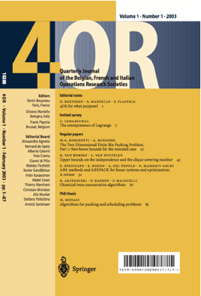
4orcoverRecently, the editors of a journal about management science received a submission from a prominent Dutch economist. But something didn’t feel right about it.
For one, the author submitted the paper using a Yahoo email address. So the editors contacted the author via his institutional email; immediately, the researcher denied having submitted the paper — and said it had happened before. And then things got really interesting.

The editors — Yves Crama, Michel Grabisch, and Silvano Martello — decided to run a “sting” operation, pretending to consider the paper, and even submitted their own fake reviews, posing as referees. They accepted the paper via the electronic submissions system, then lo and behold:

Continue reading A new way to fake authorship: Submit under a prominent name, then say it was a mistake

Weekend reads: Fake scientists; fake research; major evils of modern research

booksThe week at Retraction Watch featured the story of a graduate student who fought back after being caught in the middle of a fraud case, and the retraction of a hotly debated paper from Nature Cell Biology. Here’s what was happening elsewhere: Continue reading Weekend reads: Fake scientists; fake research; major evils of modern research

How a Cell journal weeds out the “bad apples”

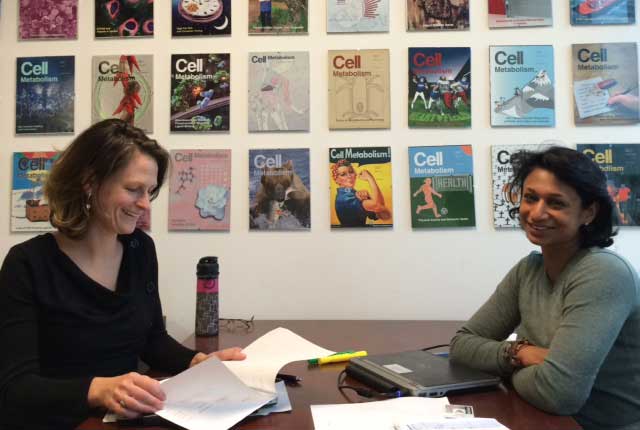
Anne Granger (left) and Nikla Emambokus (right)

There are a lot of accusations about research misconduct swirling around, and not every journal handles them the same. Recently, Cell Metabolism Scientific Editor Anne Granger and Cell Metabolism Editor-in-Chief Nikla Emambokus shared some details about their investigative procedure in “Weeding out the Bad Apples.” We talked to them about why they don’t necessarily trust accusations leveled on blogs (including ours), but will consider the concerns of anyone who approaches the journal directly – even anonymously.

Retraction Watch: What made you decide to write an editorial about research fraud now? Continue reading How a Cell journal weeds out the “bad apples”

Patient didn’t okay including her picture in plastic surgery paper

indian-journal-of-plastic-surgeryA plastic surgery journal in India has retracted an article about rehabilitation following removal of an eye after a patient contacted the editors to say she hadn’t consented to publish her picture.

Mukund Jagannathan, the journal’s editor-in-chief and a plastic surgeon in India, told Retraction Watch:

The patient wrote to the editor, mentioning that her photo was present in the article originally published, and politely asked us to remove her photos from public display on the Internet.

Asked whether the journal considered issuing a partial retraction to only hide the patient’s identity, Jagannathan said: Continue reading Patient didn’t okay including her picture in plastic surgery paper

Study errors “may have placed you or your child at a greater risk of harm”: 2014 letter to parents

Mani Pavuluri
Mani Pavuluri

Three psychiatric studies of children contained a myriad of problems that may have put participants at greater risk than was disclosed by consent forms, according to a 2014 letter sent to hundreds of the participants and their families.

Through a public records request, we’ve obtained a copy of the letter — which lists a host of problems in the studies, ranging from enrolling ineligible patients, not informing families of the risks associated with the studies, and skipping tests intended to minimize the risks associated with lithium.

In 2013, Mani Pavuluri told the University of Illinois at Chicago that one of her study participants had been hospitalized — an event which prompted the university to halt three of her studies, launch a misconduct probe, and send letters to approximately 350 families of children participating in the research, notifying them of what happened.

The letter concludes:

Continue reading Study errors “may have placed you or your child at a greater risk of harm”: 2014 letter to parents

Journal editor resigns over firestorm from circumcision article

10-5409-logoCircumcision is a hot topic. So hot, questions about a reviewer’s potential conflict with the author of an article promoting circumcision prompted a journal editor to resign, and one academic to call another a “fanatic.”

It began in August, when Brian Morris, professor emeritus of molecular medicine at the University of Sydney, published a critique of a paper that itself had critiqued the practice of circumcision. But the sole reviewer of Morris’s article was a frequent co-author of his, Aaron Tobian of the Johns Hopkins School of Medicine. In his reference section, Morris listed five papers on which he and Tobian were co-authors.

A tipster forwarded us emails from Eduardo Garin, editor in chief of the journal, saying he had resigned from the journal after it refused to retract the paper, despite the fact that its sole reviewer was a frequent collaborator of the author. However, Garin is still listed as editor in chief on the journal’s site.  

Garin confirmed to us that he resigned after the publisher refused to retract or correct the Morris article; however, Xiu-Xia Song, vice director of the editorial office at Baishideng, told us by email that Garin is still the journal’s editor.

Here are some specifics:

Continue reading Journal editor resigns over firestorm from circumcision article