How a researcher’s request to correct one paper turned into 19 retractions

jcheng
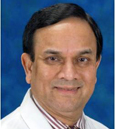
Jin Cheng

Last year, a cancer researcher wrote to the Journal of Biological Chemistry, asking to correct one of his papers. The journal responded by requesting the raw data used to prepare his figures. Then, in a follow-up request, it asked for raw data behind the figures in 20 additional published articles.

And when all was said and done six months later, Jin Cheng ended up with far more than just a single correction: Last month, the journal issued withdrawals for 19 of his papers — including the paper he originally asked to correct — along with one correction.

We’ve pieced together some clues about what happened after reviewing correspondence between representatives of JBC and Moffitt Cancer Center, where Cheng conducted his research. A spokesperson for Moffitt confirmed that the retractions did not initiate from an institutional investigation — but that the institution is now conducting one.

That’s not the way retractions typically happen: Often, journals don’t have the resources to conduct investigations themselves, so institutions mostly take the lead in double-checking papers and, if necessary, contacting the journal to initiate a retraction. Here, it seems the opposite took place.

The Moffitt spokesperson also told us that Continue reading How a researcher’s request to correct one paper turned into 19 retractions

How a Cell journal weeds out the “bad apples”

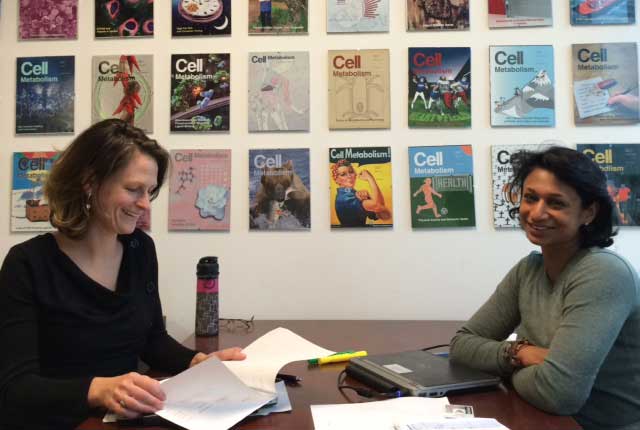
Anne Granger (left) and Nikla Emambokus (right)

There are a lot of accusations about research misconduct swirling around, and not every journal handles them the same. Recently, Cell Metabolism Scientific Editor Anne Granger and Cell Metabolism Editor-in-Chief Nikla Emambokus shared some details about their investigative procedure in “Weeding out the Bad Apples.” We talked to them about why they don’t necessarily trust accusations leveled on blogs (including ours), but will consider the concerns of anyone who approaches the journal directly – even anonymously.

Retraction Watch: What made you decide to write an editorial about research fraud now? Continue reading How a Cell journal weeds out the “bad apples”

Study errors “may have placed you or your child at a greater risk of harm”: 2014 letter to parents

Mani Pavuluri
Mani Pavuluri

Three psychiatric studies of children contained a myriad of problems that may have put participants at greater risk than was disclosed by consent forms, according to a 2014 letter sent to hundreds of the participants and their families.

Through a public records request, we’ve obtained a copy of the letter — which lists a host of problems in the studies, ranging from enrolling ineligible patients, not informing families of the risks associated with the studies, and skipping tests intended to minimize the risks associated with lithium.

In 2013, Mani Pavuluri told the University of Illinois at Chicago that one of her study participants had been hospitalized — an event which prompted the university to halt three of her studies, launch a misconduct probe, and send letters to approximately 350 families of children participating in the research, notifying them of what happened.

The letter concludes:

Continue reading Study errors “may have placed you or your child at a greater risk of harm”: 2014 letter to parents

A grad student was caught in the crossfire of fraud — and fought back

uqIn March, 2013, a graduate student joined the lab of a prominent researcher in Australia, investigating new therapies for Parkinson’s. A few months later, everything fell apart.
In September 2013, the University of Queensland (UQ) announced it was retracting one of the lab’s papers, returning the money used to fund the research and launching a fraud investigation.  Since then, the scandal has grown to the point where the lead researcher and his co-author have been convicted of fraud in an Australian court.  

Now, the graduate student is fighting back. After losing her research project and being escorted off campus for allegedly erratic behavior, she has appealed to UQ to reimburse her for tens of thousands of dollars in tuition, and is now awaiting a verdict from a government ombudsman. The graduate student goes by “Dominique,” which is not her real name; Retraction Watch is keeping her identity confidential to protect her privacy. Continue reading A grad student was caught in the crossfire of fraud — and fought back

Nature Cell Biology retracts hotly debated cancer paper

ncbLast week, we learned a 2016 paper heavily discussed on PubPeer might be retracted — today, we learned that Nature Cell Biology has indeed pulled the paper, citing inappropriate image modifications.

As we reported last week, a comment on PubPeer flagged as coming from an author said they had requested a retraction. A representative of National Taiwan University (NTU) told us the first author had resigned, and the paper was under investigation — an investigation which included the last author, a prominent researcher who is also a vice president at another institution in Taiwan.

Here’s Nature Cell Biology‘s official statement about the paper, in the form of a retraction notice that appears to be written by the authors:  Continue reading Nature Cell Biology retracts hotly debated cancer paper

Tomato study didn’t get co-author okays, includes unreliable data

scientia-horticulturaeA journal has retracted a paper examining the traits of drought-resistant tomatoes after an investigation at the first author’s institution in Italy found a number of problems.

For starters, the first author — Maria Riccardi of the National Research Council of Italy-Institute for Agricultural and Forest Systems in the Mediterranean (CNR-ISAFOM) in Ercolano, Naples, Italy — apparently submitted the paper without consulting the study’s four other listed co-authors. What’s more, according to the retraction notice in Scientia Horticulturae, the paper’s description of the experiment “does not reflect the real conditions under which the data was collected,” rendering the findings invalid.  

Riccardo d’Andria, CNR-ISAFOM’s former director who conducted an investigation into the case, said Continue reading Tomato study didn’t get co-author okays, includes unreliable data

Details of investigative report into Sarkar released by ACLU

Fazlul Sarkar
Fazlul Sarkar

We knew that Wayne State University had investigated allegations of misconduct against Fazlul Sarkar, the scientist who is suing PubPeer commenters over criticisms of his work. We knew The Scientist had obtained a copy of the report, which concluded he had engaged in widespread misconduct, and he should retract more than 40 papers.

And now, thanks to the American Civil Liberties Union, which is representing PubPeer in court and has filed a motion to include the report as evidence in the case, we have a copy.

It’s a long read, but here are some highlights:

Continue reading Details of investigative report into Sarkar released by ACLU

Nature Cell Bio paper may be headed for retraction

ncbA Nature Cell Biology paper published only a few months ago by prominent researchers in Taiwan has sparked a heated discussion on PubPeer, which now includes a comment allegedly from an author saying they have requested its retraction.

Although a representative of the journal wouldn’t confirm to us that the authors had requested a retraction, the comment on PubPeer says the paper contains several figures that were “inappropriately manipulated” by the first author.

Here’s the full comment on PubPeer, tagged as coming from one of the authors of the paper:

Continue reading Nature Cell Bio paper may be headed for retraction

New funding for researcher who sued to stop retractions (and now has 8)

Mario Saad
Mario Saad

A diabetes researcher with eight retractions — despite his attempts to block some in court — has received a new batch of research funding.

According to a release from public funding agency Fundacao de Amparo a Pesquisa do Estado de Sao Paulo (FAPESP), Mario Saad is among 33 researchers who will receive funding from partnerships between federal and state agencies, including FAPESP.

It’s unclear how much Saad’s project will individually receive, but the total for all projects exceeds 640 million Brazilian Real, equivalent to $185 million USD.

Saad’s name should be familiar to our readers.

Continue reading New funding for researcher who sued to stop retractions (and now has 8)

Prominent researcher in Scotland resigns after misconduct finding upheld

robert-ryan_0
Robert Ryan

A rising star in the field of infectious disease has resigned from the University of Dundee in Scotland after the university upheld the findings of an investigation concluding that he committed misconduct.

Earlier this year, Robert Ryan was suspended amidst the investigation, which focused on data doctoring in several publications. We’ve now been forwarded an internal email from Julian Blow, dean of the School of Life Sciences, which alerts staff that Ryan has resigned, and the institution has upheld its finding of misconduct, despite Ryan’s appeal.

In 2015, Ryan was selected to be an EMBO Young Investigator; yesterday, EMBO announced that it had withdrawn him from the program.

Blow’s email to staff, dated November 9, states:

Continue reading Prominent researcher in Scotland resigns after misconduct finding upheld