Guest post: Should universities investigate questionable papers students and faculty wrote elsewhere?

Be-Art/iStock

I am a research ethicist and often get asked by my university to investigate when potential concerns are raised about our staff or students. One example involved the recent case of the alleged paper mill and self-citation activities by Hitler Louis and Innocent Benjamin. The matter raised significant questions about who within the research community has the responsibility to act when concerns like this are raised.

Regular readers of Retraction Watch know that detecting alleged research misconduct is a haphazard affair. Frequently a university will find out about concerns after being notified by research integrity sleuths writing under pseudonyms. In this case, “Cisticola Tinniens” informed us that one of our current MSc students (Benjamin) had an unusually high number of publications for his early career stage, with some highlighted on the PubPeer website as potentially problematic.

The first thing we did was to check to see whether our university was named in any of these papers, as clearly institutions do have a responsibility for research attributed to our researchers or students. We found only one of the suspect papers named us directly, and since the work definitely had not occurred at our institution, it was relatively easy to get this affiliation corrected almost immediately.

Continue reading Guest post: Should universities investigate questionable papers students and faculty wrote elsewhere?

Jury to decide whether Duke retaliated against researcher who reported sexual harassment

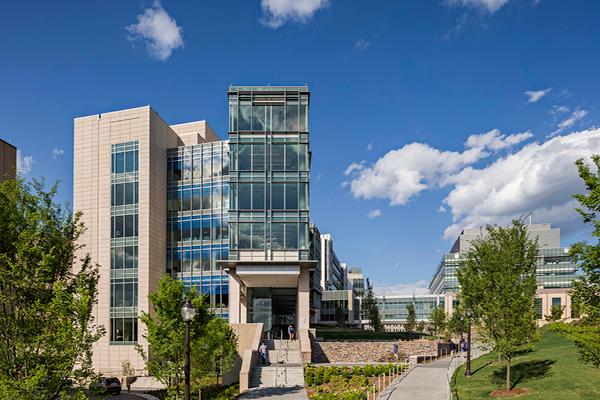
Duke University School of Medicine

A jury will soon decide whether leaders at Duke University accused a researcher of misconduct in retaliation for her reporting sexual harassment at the institution. 

U.S. Magistrate Judge Patrick Auld ruled Brahmajothi Mulugu provided enough evidence to show the timing of Duke’s misconduct investigation against her may have been retaliatory, allowing Mulugu’s legal challenge to proceed. In his Jan. 16 decision, Auld denied a motion by Duke to end the lawsuit, concluding a jury should weigh whether Mulugu’s sexual harassment report fueled the university’s misconduct actions against the scientist. 

Mulugu, an immunologist in Duke’s Department of Pharmacology and Cancer Biology, sued the university in 2023, alleging leaders conducted an “unjustified” research misconduct investigation after she reported sexual harassment by then-professor Mohamed Bahie Abou-Donia. The university’s Office of Institutional Equity (OIE) substantiated Mulugu’s harassment report in November 2020, and Abou-Donia resigned, according to a case summary in Auld’s decision. 

Continue reading Jury to decide whether Duke retaliated against researcher who reported sexual harassment

Heart researcher asked to attend remedial training after OSU misconduct finding, report reveals

In a move one research ethics expert called “odd,” a university asked one of its professors to attend a remedial integrity course — despite their “significant concerns” the training would have any impact following findings of misconduct.

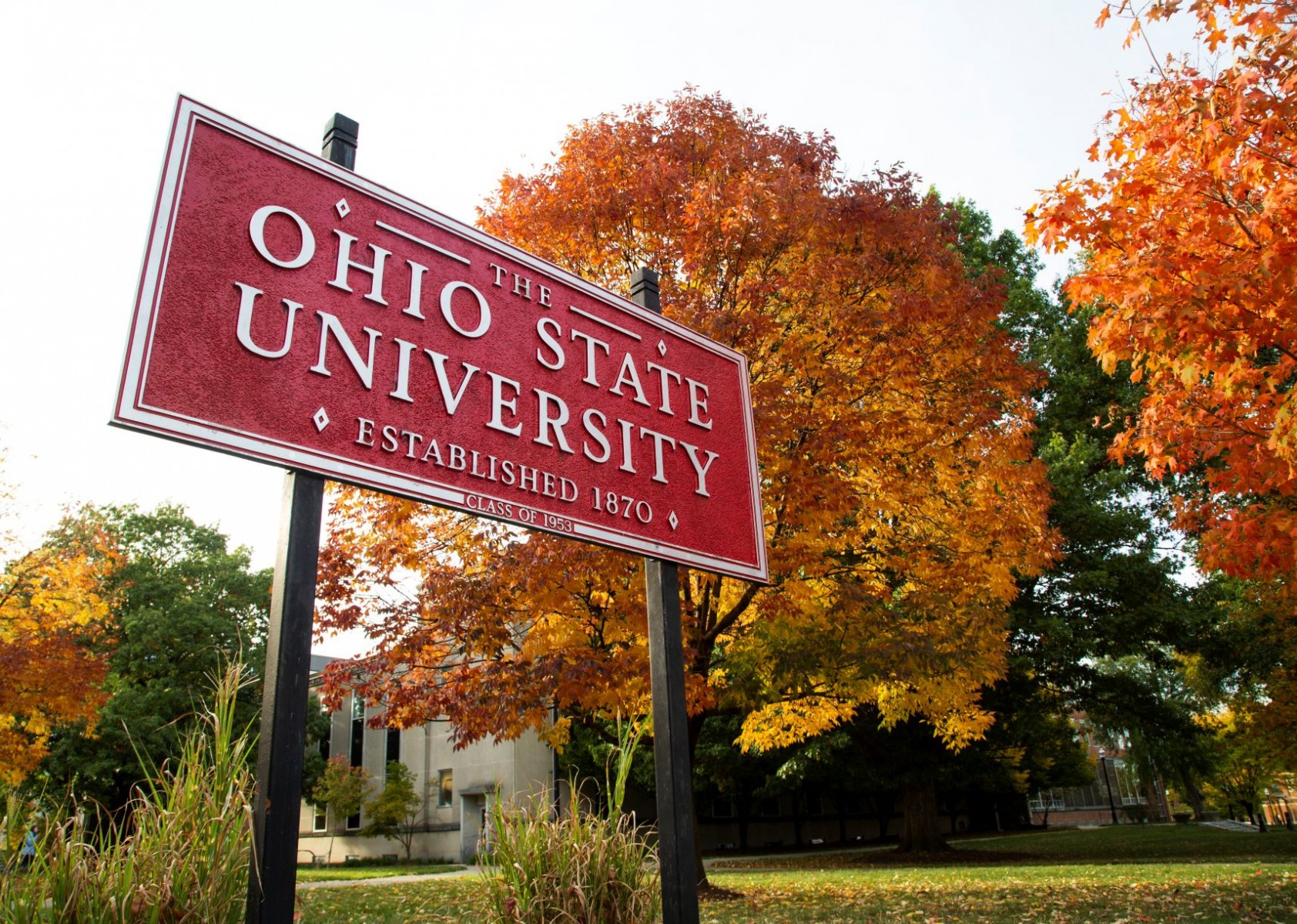
In 2024, Retraction Watch covered the case of Govindasamy Ilangovan, then an associate professor of cardiovascular medicine at The Ohio State University. We reported at that time two of his papers were retracted from Heart and Circulatory Physiology at the request of the university, and that university officials had requested a third retraction. Thanks to a public records request, we now have access to the university’s 2023 final investigation report, which provides us much more information. 

The released material shows a committee of the university’s research integrity officers found Ilangovan responsible for manipulating images in three papers. OSU redacted the total number of images in question, but the investigators deemed it “very concerning.” 

Continue reading Heart researcher asked to attend remedial training after OSU misconduct finding, report reveals

ORI has released just two misconduct findings this year

The U.S. Office of Research Integrity has been relatively quiet in 2025, releasing just two misconduct findings with only two weeks remaining in the year — the fewest the office has released since at least 2006. ORI typically releases an average of about 10 findings a year. 

The office, part of the Department of Health and Human Services, oversees research integrity and misconduct for the National Institutes of Health, the Centers for Disease Control and Prevention and other HHS agencies. Its team of scientist-investigators review institutional inquiries and investigate possible research misconduct for a portfolio of publicly funded biomedical research that totals tens of billions of dollars.

In response to questions on whether the office expects to release more rulings this year, an HHS spokesperson told us the office can’t comment on open cases or anticipated findings. “ORI’s Division of Investigative Oversight continues to carry out its oversight responsibilities, and staff actively engage in process improvements to increase the efficiency and effectiveness of responding to research misconduct allegations,” the spokesperson said.

Continue reading ORI has released just two misconduct findings this year

Math is back as Clarivate boosts integrity markers in Highly Cited Researchers list

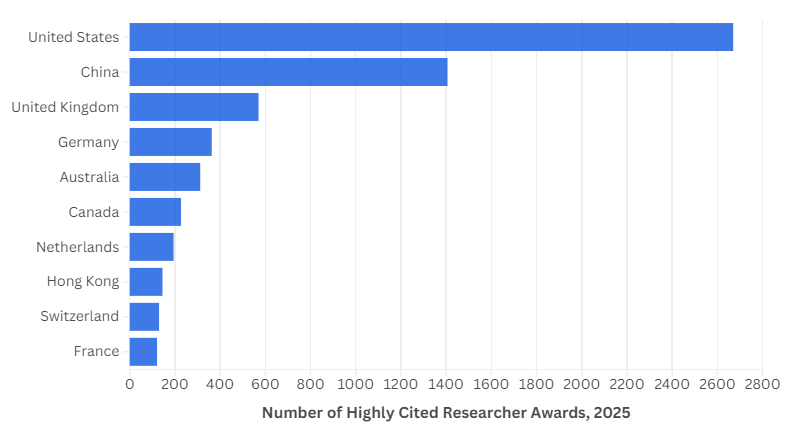
This year’s Highly Cited Researchers are from 61 countries and regions, but 86 percent of them work in the top 10.

The analysis behind this year’s Highly Cited Researchers list, released today by indexing giant Clarivate, includes several tweaks aimed at reducing attempts to game the metric and excluding researchers who engage in questionable publication practices.

Those changes include removing highly cited papers from the calculations authored by researchers excluded from last year’s list for integrity issues. The company also applied specific removal criteria — including excessive self-citation rates, papers retracted for integrity concerns, and prolific publication rates — more comprehensively this year. In past years, the company had done so manually for particular geographic areas or disciplines.

“We’re trying to make sure that the indicators are valid and reliable, which means we have to include these kinds of filters or screens and quantitative tests that indicate some kind of quality, qualitative character,” David Pendlebury, head of research analysis at the Institute for Scientific Information at Clarivate, told Retraction Watch.

Continue reading Math is back as Clarivate boosts integrity markers in Highly Cited Researchers list

Former lab tech earns federal funding ban years after leaving science

Ryan Evanoff

The U.S. Office of Research Integrity has barred a former lab technician at Washington State University from participating in federally funded research for three years after finding he had committed misconduct. 

The case dates back more than five years. Ryan Evanoff was a scientific assistant in the Department of Veterinary Microbiology and Pathology at the university’s Pullman campus. As we reported in 2020, colleagues in the department had discovered he had been fabricating gene sequence data. The falsified data led to the retraction of two papers

A draft of the university’s investigation obtained through a public records request stated Evanoff engaged in “a repeated and measurable pattern of research material manipulation, changing of data, omission of critical research procedures and findings in lab notebooks, and making up data and results” from at least 2015 through 2019, when he left the university. 

Continue reading Former lab tech earns federal funding ban years after leaving science

Chinese funding agency penalizes 25 researchers for misconduct 

In its second batch of misconduct findings this year, the organization responsible for allocating basic research funding in China has called out 25 researchers for paper mill activity and plagiarism. 

The National Natural Science Foundation of China, or NSFC, gives more than 20,000 grants annually in disciplines ranging from agriculture to cancer research. The NSFC publishes the reports periodically “in accordance with relevant regulations,” the first report, released in April, states. The organization awarded 31.9 billion yuan, or about US$4.5 billion, in project funds in 2023.

The NSFC published the results of its investigations on June 13. The reports listed 11 specific papers and 26 grant applications and approvals. 

Continue reading Chinese funding agency penalizes 25 researchers for misconduct 

Chinese funding agency sanctions 26 researchers in latest misconduct report

The organization responsible for allocating basic research funding in China has issued misconduct findings against 26 researchers for violations ranging from breach of confidentiality to image manipulation, plagiarism, and buying and selling authorship. 

The National Natural Science Foundation of China, or NSFC, released the results of 15 misconduct investigations on April 11. Several of the investigations involved teams of researchers and many included specific published papers, 53 in total. China has been taking steps to crack down on academic fraud, calling last year for a review of all retracted articles in English- and Chinese-language journals. 

Penalties for the researchers ranged from bans on applying for funding or serving as a reviewer, to having research funding revoked — which includes having to return funds already dispersed. In most cases, the restrictions on applying for funding were for three to seven years. 

Continue reading Chinese funding agency sanctions 26 researchers in latest misconduct report

Former VA physician admitted to altering images and deleting data, documents show

Alan Lichtenstein

A former cancer specialist sanctioned for “recklessly falsifying data” admitted during an investigation interview that he periodically altered images, documents obtained by Retraction Watch show. He also stated “he may have inadequately or improperly labeled and organized” image files, increasing the chances the images were confused or misidentified.

Alan Lichtenstein, previously a staff physician at the Veterans Affairs Greater Los Angeles Healthcare System and faculty member at UCLA, engaged in research misconduct, according to a November 2024 notice in the Federal Register. Documents we obtained through a public records request revealed his admissions, made during an inquiry that preceded the misconduct ruling.

The documents also reveal a relatively swift process: The initial inquiry by a joint UCLA-VA GLA committee took from June to August 2023 to determine a full investigation should follow. The investigation committee, formally tasked in October of that year, finished its assessment in March 2024. The inquiry committee looked at 18 allegations across 12 papers, and the investigation considered 31 allegations in 13 papers. 

Continue reading Former VA physician admitted to altering images and deleting data, documents show

More than three decades after misconduct ruling, researcher’s IQ test paper is retracted

A psychology journal has retracted an article on IQ tests nearly 50 years after publication — and more than 35 years after an investigation found the lead author had fabricated data in several other studies. 

Stephen Breuning, a former assistant professor of child psychiatry at the University of Pittsburgh, gained notoriety after a 1987 National Institute of Mental Health report found that he “knowingly, willfully, and repeatedly engaged in misleading and deceptive practices in reporting results of research.” The report concluded Breuning had “engaged in serious scientific misconduct” by fabricating results in 10 articles funded by NIMH grants. 

Five of Breuning’s articles published in the 1980s have been retracted; three in the 1980s, one in 2022, and another in 2023. Retraction Watch reported on one of them, “Effects of methylphenidate on the fixed-ratio performance of mentally retarded children,” published in 1983 in Pharmacology Biochemistry and Behavior (now published by Elsevier) and retracted in 2022. 

The newly retracted article predates those papers. Published in 1978 in the Journal of School Psychology,  “Effects of individualized incentives on norm-referenced IQ test performance of high school students in special education classes,” found record albums, sporting event tickets, portable radios, and other incentives boosted scores on IQ tests. 

Continue reading More than three decades after misconduct ruling, researcher’s IQ test paper is retracted