Authors have retracted papers from Cell Metabolism and the Journal of Biological Chemistry after an investigation in Singapore found issues, including falsified data. The investigation is ongoing, and two additional retractions, along with two corrections, are on the horizon.
The investigation looked into papers by first authors Sudarsanareddy Lokireddy, now a postdoc at Harvard, and Sandhya Sriram, a postdoc at the Agency for Science, Technology and Research in Singapore. Led by the Nanyang Technological University in Singapore, where some of the work was done, the investigation concluded that there were issues with six papers on which either Sriram or Lokireddy was first author.
All authors but Lokireddy have agreed to retractions or corrections. Ravi Kambadur of NTU, and Mridula Sharma at the National University of Singapore, are the last two authors on all the papers.
Robert Weinberg, a prominent cancer researcher at the Whitehead Institute, issued a correction to a paper in Oncogene in May, fixing two errors missed during proofing.
We found this one a little late, obviously. It also appears to be a relatively minor correction, not one that appears worthy of retraction. We’ve gotten feedback from readers asking why we cover corrections; we chose to flag this one because Weinberg has had such an impact on his field — he discovered the first tumor-causing gene in humans, as well as the first tumor-suppressor gene — and his papers are often highly cited. He also has issued five retractions in the past, most of which for papers whose first author was a member of his lab, who is not a co-author on the Oncogene paper.
In Latin America, retractions for plagiarism and other issues have increased markedly — which may be a positive sign that editors and authors are paying closer attention to publishing ethics, according to a small study published in Science and Engineering Ethics.
The authors examined two major Latin American/Caribbean databases, which mostly include journals from Brazil, and have been indexing articles for more than 15 years. They found only 31 retractions, all of which appeared in 2008 or later. (Roughly half of the retractions were from journals indexed in the Thomas Reuters’ Journal of Citations Report® (JCR).)
Authors of a paper on the origin and function of a family of transmembrane proteins have retracted it after an investigation at the University of Florida revealed that an author had falsified some results.
This is the third paper with falsifications that Chi Leung, a former UF postdoc, is responsible for; this summer, we reported on a retraction and a partial retraction of two other papers on which Leung was a co-author. The case is currently under investigation by the U.S. Office of Research Integrity National Science Foundation, a UF spokeswoman tells us.
The problems in the paper, “Phylogenetic, expression, and functional analyses of anoctamin homologs in Caenorhabditis elegans,”occur in a figure that compares mRNA levels in control and experimental populations of C. elegans. The paper was published in the American Journal of Physiology, and has been cited eight times, according to Thomson Scientific’s Web of Knowledge.
The retraction note explains that, according to the other authors, much of the data in the paper are valid:
At the time, the company’s decision to disclose the retraction hurt its finances, as WntResearch delayed its planned initial public offering for three weeks. It also offered investors and shareholders the opportunity to withdraw their shares of WntResearch stock.
A former cancer researcher has falsified data in 11 studies, according to the results of a investigation scheduled to be published in the Federal Register tomorrow.
The Office of Research Integrity’s findings are based on an inquiry at Virginia Commonwealth University, where Girija Dasmahapatra worked until July of this year, investigating possible therapies for cancer. The misconduct affected research funded by three grants from the National Institutes of Health. Steven Grant, a researcher at VCU, is the principal investigator on the grants, each of which total over $2 million in funding. All of the 11 affected papers will be corrected or retracted, according to the ORI notice.
If you could help reduce the waste of tens of billions of dollars per year in research spending, you’d do it, right?
This is the second in a series of two guest posts about the havoc misidentified cell lines can wreak on research, from Leonard P. Freedman, president of the Global Biological Standards Institute. Freedman who published a paper last summer detailing the financial costs of non-reproducible research — namely, tens of billions of dollars per year. Some of that non-reproducible research is due to the use of contaminated or misidentified cell lines. He writes about one key step to tackling the problem: Ask every scientist to use a relatively inexpensive technique to validate the identity of their cell lines.
Meanwhile, we have to deal with the issue of all the previously published papers that relied on problematic cell lines, now contaminating the scientific literature. Scroll down to the bottom of the post to take a poll on what you think should be done about those papers.
Leonard Freedman
As new frontiers of science emerge, from Pluto to proteins, the very cornerstone of the scientific process—reproducibility—has also reared its head as a huge problem. Estimates of irreproducibility rates of published peer-reviewed papers range from 51% to 89%. An analysis that two colleagues and I recently published in PLOS Biology suggests the U.S. spends $28 billion per year on non-reproducible preclinical research; global spending could be up to $60 billion per year. This lack of reproducibility typically results from cumulative errors or flaws in one or more of the following areas: biological reagents and reference materials, study design, laboratory protocols, and data analysis and reporting. Given the size, scale, and especially the complexity of reproducing preclinical research, there is no single magic bullet fix. This is a difficult issue for scientists to own up to, and for the public to grasp.
What if we told you that approximately 1 in 6 researchers working with human cells are using the wrong cell line? In other words, they believe they are studying the effects of a drug on breast cancer cells, for instance, but what they really have are cells from the bladder. That is the unfortunate reality in life science research today, affecting hundreds of labs. It’s a major source of problematic papers which cannot be replicated, wasting scientists’ time and funding.
We’re pleased to present a guest post from Amanda Capes-Davis, chair of the International Cell Line Authentication Committee (ICLAC), a voluntary scientific committee created to improve awareness of misidentified cell lines. She also collects news about cell line and culture contamination. This is the first in a series of two posts from guest authors about how problematic cell lines are contaminating the scientific literature, and how we can clean it up.
In 2010, I worked alongside Ian Freshney of Glasgow University and other colleagues to publish a list of cross-contaminated or otherwise misidentified cell lines in the International Journal of Cancer. This database of false cell lines is now curated by the International Cell Line Authentication Committee (ICLAC).
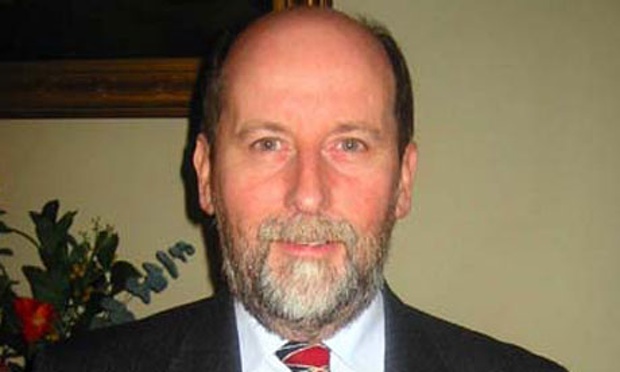
We’re presenting a Q&A session with Peter Wilmshurst, now a part-time consultant cardiologist who has spent decades embroiled in misconduct investigations as a whistleblower.
Peter Wilmshurst
Retraction Watch: A UK judge recently upheld two findings of dishonesty by the Medical Practitioners Tribunal Service against Andrew Dowson, director of headache services at King’s College Hospital and your former co-investigator. Were you pleased with the verdict? (Last week, Dowson also began a four-month suspension from practicing medicine in the UK.)
Peter Wilmshurst: In part, because I was pleased that he was shown to be dishonest, because I knew that he was, which was why I reported him. But I wasn’t pleased in the sense that I don’t think the investigation dealt with all the issues involved in the Migraine Intervention with STARflex Technology (MIST) Trial.