Should fraudsters be criminally prosecuted?

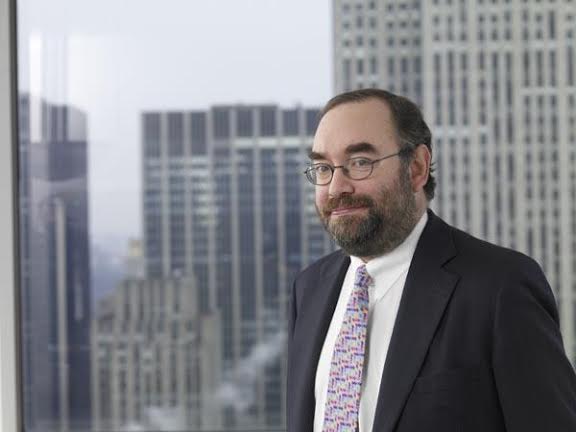
Michael Hadjiargyrou

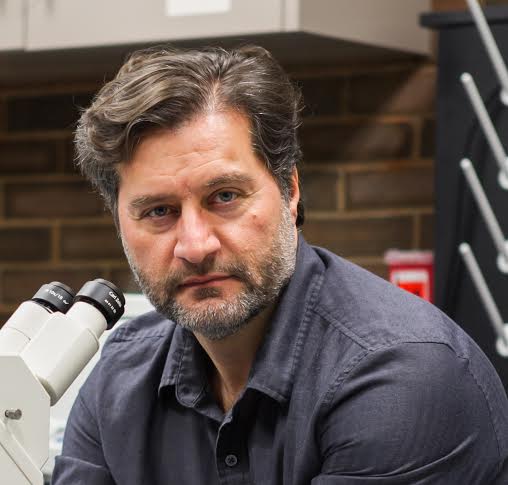
After an AIDS vaccine researcher was sentenced to five years in prison for spiking samples, our co-founders Ivan Oransky and Adam Marcus raised an important question: Should we criminally prosecute researchers who commit misconduct? (So has Richard Smith.) In last fall’s special issue of the Journal of Information Ethics, Michael Hadjiargyrou at New York Institute of Technology, said: yes. Tell us what you think in a poll at the end of our discussion.

Retraction Watch: Did any particular event prompt this article? Continue reading Should fraudsters be criminally prosecuted?
Patients did not okay publishing brain surgery details

Screen Shot 2016-05-03 at 2.37.02 PM

BioMed Central has retracted a paper after realizing it shared details on the brain surgeries of four patients without their consent.

Darlene Lobel, a neurosurgeon at the Cleveland Clinic in Ohio, agreed to the retraction, and told us she didn’t know that she needed consent from the patients since all identifying details had been removed. The paper describes a technique for craniotomy — opening up the skull to access the brain — and included CT scans of hemorrhaging and swelling that the patients experienced, as well as other details such as their gender and age.

Here’s the retraction notice:

Continue reading Patients did not okay publishing brain surgery details

1st retraction for biologist who doctored 40+ images, received funding ban

JBC CoverThe Journal of Biological Chemistry has retracted a paper that was one of eight flagged in a recent investigation by the Office of Research Integrity (ORI). The investigation — which concluded that a biologist had falsified or fabricated more than 40 images — resulted in a five-year funding ban. 

In May, the ORI announced that John Pastorino, an erstwhile cell biologist at Rowan University in New Jersey, falsified and/or fabricated eight of his published papers (and one unpublished one). Nataly Shulga is a co-author on all eight papers. Six of those eight papers had already received expressions of concern (EOC).

The first retraction to result from the investigation is one of the two published papers that had not been tagged by an EOC. Here’s the retraction notice: Continue reading 1st retraction for biologist who doctored 40+ images, received funding ban

Here’s why this lawyer defends scientists accused of misconduct

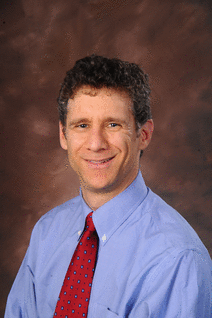
Paul S. Thaler
Paul S. Thaler

More scientists are trying to settle accusations of misconduct in court, a trend very familiar to Washington, DC-based lawyer Paul Thaler. Regular readers may recall the name of one of Thaler’s clients — Rakesh Kumar, a scientist at George Washington University who filed an $8 million lawsuit for how the school handled an investigation into his work. He’s also representing Bharat Aggarwal, the subject of an investigation at MD Anderson who has threatened to sue us (and logged his ninth retraction this week). For 25 years, Thaler has been representing scientists embroiled in misconduct proceedings. He spoke to us about his family’s highly pedigreed background in science, and why everyone deserves an advocate.  

Some of your clients have committed misconduct, but you still work to protect their reputations and even help them continue to do research. Why? 

Continue reading Here’s why this lawyer defends scientists accused of misconduct

Genotyping mistake costs lab two papers and year of work

PNASResearchers are retracting two papers about molecular signalling in plants — including one from the Proceedings of the National Academy of Sciences (PNAS) — after discovering some inadvertent genotyping errors. But that was only after they used the problematic plants for an entire year without realizing they’d made a mistake.

In a pair of refreshingly transparent and detailed notices, the authors explain that the transgenic plants used in the papers included genotyping errors, which invalidated their findings. According to the notices, first author Man-Ho Oh generated the problematic transgenic plants, while corresponding author Steven C. Huber, based at University of Illinois, Urbana-Champaign (UIUC), took responsibility for omitting some critical oversight.

Huber told us that there were only two papers that used the transgenic plants in question, so no other retractions will be forthcoming.

Here’s the notice in PNAS for “Autophosphorylation of Tyr-610 in the receptor kinase BAK1 plays a role in brassinosteroid signaling and basal defense gene expression:”  Continue reading Genotyping mistake costs lab two papers and year of work

Researcher committed misconduct “recklessly,” says investigation

American Journal of Physiology Renal PhsyiologyA physiology journal has retracted a paper after an institutional investigation found that portions of the work had been falsified by the first author.

According to the notice issued by the American Journal of Physiology – Renal Physiology (AJP), the last author initiated the investigation at the University of Houston in Texas, which found the first author — Mousa Abkhezr — to be guilty of falsifying and duplicating images. 

We’ve obtained a copy of the investigation report, which concluded that Abkhezr committed misconduct “recklessly,” and the paper must be retracted. Although the report noted that Abkhezr argued that the problems stemmed from an honest error, the investigation committee ruled that data from the retracted paper cannot be included in his doctoral thesis.

The last author told us there is a separate ongoing “academic honesty enquiry” into Abkhezr’s dissertation. 

Here’s the retraction notice: Continue reading Researcher committed misconduct “recklessly,” says investigation

Trump vs. trump: Does the candidate affect the use of trump cards in Bridge?

Jonathan
Jonathan Falk
Andrew Gelman
Andrew Gelman

Did that headline make sense? It isn’t really supposed to – it’s a sum-up of a recent satirical paper by Columbia statistician Andrew Gelman and Jonathan Falk of NERA Economic Consulting, entitled “NO TRUMP!: A statistical exercise in priming.” The paper – which they are presenting today during the International Conference on Machine Learning in New York City – estimates the effect of the Donald Trump candidacy on the use of no wild cards (known as trump cards) in the game of bridge. But, as they told us in an interview, the paper is about more than just that.

Retraction Watch: You have a remarkable hypothesis: “Many studies have demonstrated that people can be unconsciously goaded into different behavior through subtle psychological priming. We investigate the effect of the prospect of a Donald Trump presidency on the behavior of the top level of American bridge players.” Can you briefly explain your methodology, results and conclusions?  Continue reading Trump vs. trump: Does the candidate affect the use of trump cards in Bridge?

Authors retract PNAS paper suggesting silk stabilizes vaccines

PNASA PNAS paper that caught the media’s attention for suggesting that adding silk could stabilize vaccines and antibiotics has been pulled after the authors realized there were significant errors in the data analysis. 

According to the notice, the authors agreed to retract the 2012 paper; however, the corresponding author told us the authors did not think a retraction was required as, according to him, the conclusions remained valid.

The paper presented a solution to the long-standing problem that sensitive biological compounds such as vaccines and antibiotics begin to lose their effectiveness outside the recommended temperature range, and naturally biodegrade over time. The degradation process cannot be reversed, and may even speed up during transport or storage under less ideal temperatures.

Here’s the retraction notice: Continue reading Authors retract PNAS paper suggesting silk stabilizes vaccines

Authors pull Nature paper about DEET and flies

Nature CoverAuthors have retracted a Nature paper which identified neurons that render flies sensitive to a potent insect repellent, after losing confidence in the findings. The first author, however, said she does not agree with the retraction, noting that she continues to believe the data are correct.

According to the notice, the remaining authors say they no longer support the claim that certain neurons in the antennae of fruit flies are repelled by DEET, the active ingredient in many insect repellents. The last author told us some of the paper’s results are not in doubt; nevertheless, he added, the paper would not have been published in Nature without the key conclusion, so he and most of his co-authors have pulled the paper in its entirety.

Alongside the retraction, the journal has also published a Brief Communications Arising article by scientists who were unable to reproduce the paper’s findings.

Here’s the retraction notice, published today:
Continue reading Authors pull Nature paper about DEET and flies

JAMA: No plan to pull elephant-cancer risk paper after PETA protest

JAMAJAMA has decided not to retract an article about cancer risk in elephants after receiving a request to do so from an animal rights group.

People for the Ethical Treatment of Animals (PETA) recently protested the 2015 paper, which found that higher levels of a tumor suppressor gene could explain why elephants have a lower risk of cancer. According to PETA, the paper contained inaccurate information that could be used to justify inhumane treatment of elephants. At the time, the journal told us it considers all calls for retraction.

In an email sent to a representative of PETA over the weekend, Howard Bauchner, Editor in Chief at JAMA and The JAMA Network, wrote: Continue reading JAMA: No plan to pull elephant-cancer risk paper after PETA protest