Scientist who alleged COVID cover-up circulated a faked NIH email, agency says

Ariel Fernández

A scientist charged with research misconduct used a fake email communication with an NIH researcher’s address to support his claims of governmental retaliation, Retraction Watch has learned.  

Last month, we reported on the upholding of a proposed 15-year debarment by a U.S. Department of Health and Human Services appeals judge against Argentine chemist Ariel Fernández for falsifying research while a professor at Rice University in Houston. Administrative law judge Margaret G. Brakebusch based that May 2025 decision on findings by Rice sent to the Office of Research Integrity in 2010 and conclusions from ORI’s independent review completed in 2022. 

Fernández denied the misconduct allegations and told us the findings were retaliation by the government for a 2021 paper he wrote supporting a lab origin of SARS-CoV-2. As evidence of the contention, Fernández showed us an email purportedly from National Institutes of Health researcher Joshua Cherry dated June 2021. The email, which appeared to be from Cherry’s NIH address, threatened to resurrect Fernández’s ORI case if he didn’t remove the paper. We could not independently verify the email’s authenticity at the time.  
Continue reading Scientist who alleged COVID cover-up circulated a faked NIH email, agency says

Could a national database of scientific misconduct rulings stop repeat offenders?

Mark Barnes (courtesy of Ropes and Gray LLC)

In an editorial published today in Science, Michael Lauer and Mark Barnes call for greater transparency in investigations of scientific misconduct with an aim toward making sure prospective academic employers know of applicants’ past misdeeds. As we’ve reported, in the absence of transparency around findings of misconduct, some universities have discovered too late they hired someone who has turned out to be a serial offender.

Lauer, who served as Deputy Director for Extramural Research at the National Institutes of Health from 2015-2025, and Barnes, a partner at Ropes and Gray LLC in Boston who has served as acting research integrity officer at several U.S. institutions, propose a tracking system similar to the National Practitioner Data Bank (NPDB). That database logs adverse actions and malpractice payments as a way to inform decisions about individual physicians by hospitals. As Lauer and Barnes note, federal law “requires a hospital to query the NPDB whenever it is considering a new applicant for medical privileges, as well as to conduct repeat queries every 2 years to make sure information on staff is up to date.” We asked Barnes to elaborate on the ideas presented in the op-ed. (He notes he is speaking only for himself here.)

Retraction Watch: You write in your op-ed universities may avoid sharing personal information — presumably including results of misconduct investigations — for fear of legal claims of defamation or violations of privacy. Are those fears valid? 

Continue reading Could a national database of scientific misconduct rulings stop repeat offenders?

Lawsuit fails to block retraction of paper claiming to link heart-related deaths to COVID-19 vaccines

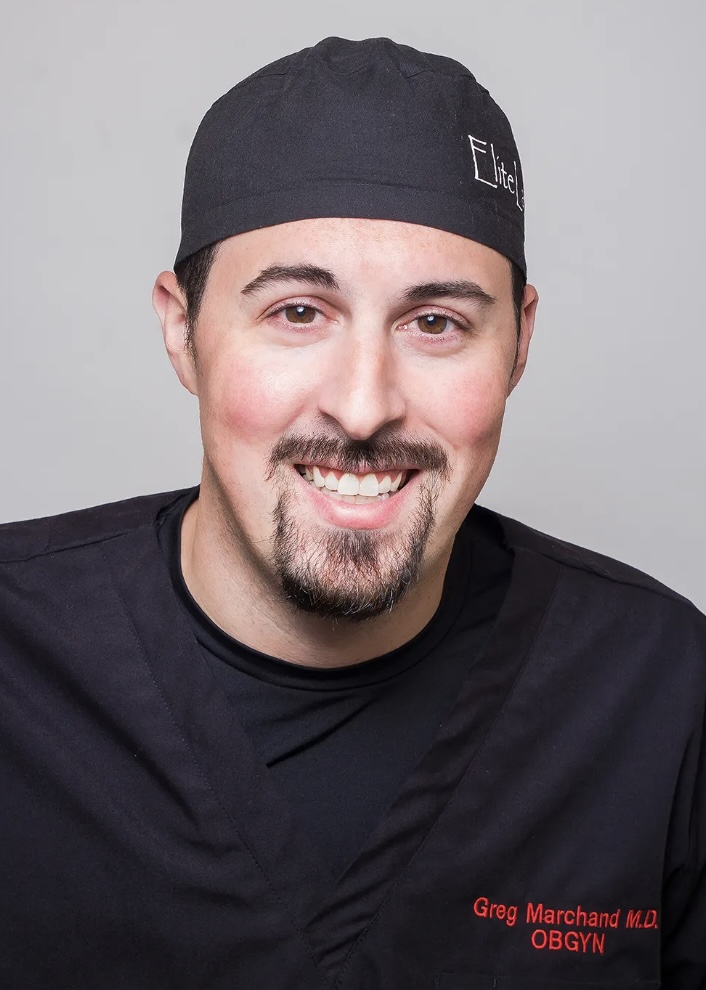
Greg J. Marchand in a photo from his research institute’s website.

A Taylor & Francis journal has retracted a widely-read paper linking cardiac-related mortality to COVID-19 vaccines after an unsuccessful legal attempt by the lead author to block the withdrawal. That author says he is considering further legal action against the publisher.

The article, “Risk of all-cause and cardiac-related mortality after vaccination against COVID-19: A meta-analysis of self-controlled case series studies,” drew swift criticism when it was published in Human Vaccines & Immunotherapeutics in August 2023. At the time, critics and sleuths were quick to challenge the data and methods used in the paper, which now has more than 143,000 views on the Taylor & Francis website and has been cited 15 times, including by two letters to the editor of the journal and a response from the authors, according to Clarivate’s Web of Science. 

The retraction notice, posted online January 16, states the retraction resulted from concerns that arose about the methodology of the study and the integrity and availability of the data. The authors provided a full response to the queries; however, the publisher determined the validity of the findings remained in question, the notice states. It continues:

Continue reading Lawsuit fails to block retraction of paper claiming to link heart-related deaths to COVID-19 vaccines

Exclusive: Researcher who received settlement to leave University of Iowa won’t be starting new job

Kaikobad Irani

A cardiology researcher who left the University of Iowa with a six-figure settlement earlier this year won’t be starting the new job he’d lined up at the Providence VA Medical Center, Retraction Watch has learned. 

Justyn Charon, a spokesperson for the Providence VA, previously told us the researcher, Kaikobad Irani, would begin his new position “around November.” When we followed up, Charon confirmed, “there is currently no plan for Dr. Irani to be employed by VA Providence.” 

In the meantime, the University of Iowa in Iowa City has launched an investigation about the leak of a report regarding Irani to Retraction Watch that appears to be an attempt to identify the source of the document.

Continue reading Exclusive: Researcher who received settlement to leave University of Iowa won’t be starting new job

Cancer specialist faked data in at least ten papers, VA and UCLA find

Alan Lichtenstein

A multiple myeloma specialist “recklessly“ falsified data in at least 10 published articles, according to a joint investigation by the University of California, Los Angeles David Geffen School of Medicine and Veterans Affairs Greater Los Angeles Healthcare System. 

The institutions found Alan Lichtenstein, a former staff physician at the VA, committed research misconduct by reusing images “to falsely represent the results” related to 26 pairs of experiments, according to a notice published in the Federal Register. 

At least one of the sets of images in each of the pairs “is inaccurate,” the notice stated. The institutions found Lichtenstein had falsified data in “at least ten” of the 13 articles in which the images appeared, perhaps because the investigators could not determine which images, if any, were original. 

Continue reading Cancer specialist faked data in at least ten papers, VA and UCLA find

Penn State barred embattled professor from doing research

Deborah Kelly

The Pennsylvania State University in May blocked a prominent professor at the school from doing research and making presentations on its behalf, Retraction Watch has learned. 

The professor, Deborah Kelly, has faced mounting scrutiny over her work since a researcher in the United Kingdom noticed apparent data manipulation in a now-retracted article she published in 2017. Kelly earned her third retraction last week following a university probe that found “serious data integrity concerns” in another paper, as we reported at the time. 

In comments she made via her legal counsel for that story, Kelly, a biomedical engineer and an expert in electron microscopy, told us:

Continue reading Penn State barred embattled professor from doing research

Nobel prize-winner tallies two more retractions, bringing total to 13

Gregg Semenza

A Nobel prize-winning genetics researcher has retracted two more papers, bringing his total to 13. 

Gregg Semenza, a professor of genetic medicine and director of the vascular program at Johns Hopkins’ Institute for Cell Engineering in Baltimore, shared the 2019 Nobel prize in physiology or medicine for “discoveries of how cells sense and adapt to oxygen availability.” 

Since pseudonymous sleuth Claire Francis and others began using PubPeer to point out potential duplicated or manipulated images in Semenza’s work in 2019, the researcher has retracted 12 papers. A previous retraction from 2011 for a paper co-authored with Naoki Mori – who with 31 retractions sits at No. 25 on our leaderboard – brings the total to 13. 

Continue reading Nobel prize-winner tallies two more retractions, bringing total to 13

Penn State prof earns second retraction, faces third following university probe

Deborah Kelly

A professor of biomedical engineering at the Pennsylvania State University today lost a government-funded study in Science Advances, marking her second retraction. 

The researcher, Deborah Kelly, is also facing retraction of a paper in Current Opinion in Structural Biology after a review undertaken by her institution found “serious data integrity concerns” in the work, according to emails obtained by Retraction Watch. Kelly has hired a lawyer to fight the retraction, apparently without success. (Update on Sept. 12: The paper has now been retracted.)

Today’s retraction of “Structural analysis of BRCA1 reveals modification hotspot” cites “unresolved concerns in the integrity of the data presented,” including what appears to be alterations of cryogenic electron microscopy (cryo-EM) maps using an “eraser tool.” The study was funded in part through a National Institutes of Health (NIH) grant for US$353,386 to Kelly.

In a statement to Retraction Watch sent via her legal counsel, Kelly stood by her work. 

Continue reading Penn State prof earns second retraction, faces third following university probe

Faked heart papers retracted following Ohio State investigation

A physiology journal has retracted two papers after an institutional investigation found a heart researcher falsified data and figures in the articles.

A committee at the Ohio State University found Govindasamy Ilangovan, an associate professor of cardiovascular medicine at the school, falsified figures and reused data, according to the retraction notices published in Heart and Circulatory Physiology, a journal of the American Physiological Society. 

The two papers, “Heat shock protects cardiac cells from doxorubicin-induced toxicity by activating p38 MAPK and phosphorylation of small heat shock protein 27,” and “HSP27 regulates p53 transcriptional activity in doxorubicin-treated fibroblasts and cardiac H9c2 cells: p21 upregulation and G2/M phase cell cycle arrest,” first appeared nearly 20 years ago. They have received 132 citations in total, according to Clarivate’s Web of Science.

The notices detail how Ilangovan repurposed and relabelled Western blots from both published and unpublished works. One of the figures also was “inaccurate” due to “addition of false bands” in a Western blot, but the notice did not explicitly attribute the problems with the figure to Ilangovan.

Continue reading Faked heart papers retracted following Ohio State investigation

Brain tumor researchers lose second paper as UCSF investigates

Russell Pieper

A research group at the University of California, San Francisco, under investigation for potential misconduct has had a second paper retracted.

The group, led by Russell O. Pieper, director of basic science at the UCSF Brain Tumor Center and vice-chairman of the UCSF Department of Neurological Surgery, previously lost a 2021 paper in Science Translational Medicine after Elisabeth Bik and other commenters on PubPeer posted concerns about some of the images in the article. 

The newly retracted paper, “Phosphoglycerate Mutase 1 Activates DNA Damage Repair via Regulation of WIP1 Activity,” appeared in Cell Reports in 2020. It has been cited 25 times, according to Clarivate’s Web of Science. 

Continue reading Brain tumor researchers lose second paper as UCSF investigates