Chem paper “the product of intentional, knowing, or reckless falsification, fabrication, and plagiarism”


rsc-advancesA journal has retracted a study after an institutional investigation concluded that it was riddled with misconduct.

According to the retraction notice in RSC Advances, the first author submitted the paper without the knowledge of the other two co-authors, and the paper was falsified, fabricated, and plagiarized. The notice cites a probe at the University of Tennessee (UT) at Knoxville — where all three listed authors are based — that concluded the study’s findings were invalid.

We asked a UT spokesperson if the first author, Sammy Eni Eni, was still based at the institution, and received this response: Continue reading Chem paper “the product of intentional, knowing, or reckless falsification, fabrication, and plagiarism”

Scientist embroiled with PubPeer engaged in “widespread research misconduct,” investigation finds

Fazlul Sarkar
Fazlul Sarkar

An investigation into a scientist suing PubPeer commenters over criticisms of his work has concluded that the researcher engaged in widespread misconduct and should retract 42 papers.

The investigation report by Wayne State University, obtained by The Scientist, reveals that Fazlul Sarkar created a research environment that encouraged productivity but cut corners when it came to integrity: Continue reading Scientist embroiled with PubPeer engaged in “widespread research misconduct,” investigation finds

Ohio State, CrossFit gym make six-figure settlement over corrected paper’s injury claims

Mitch Potterf
Mitch Potterf

The Ohio State University (OSU) has settled a lawsuit with a CrossFit affiliate over allegations that a study had defamed the gym.

As first reported by Columbus Underground, the university has agreed to pay Mitchell Potterf, owner of Fit Club in Columbus, Ohio, $145,000 to settle claims that a 2013 paper by OSU researchers included false data about injuries suffered by 11 athletes who took part in a fitness challenge. According to a statement filed by Potterf and his attorney, Ken Donchatz, in the Ohio Court of Claims, based on depositions, Continue reading Ohio State, CrossFit gym make six-figure settlement over corrected paper’s injury claims

“Bats are really cool animals!” How a 7-year-old published a paper in a journal

a_martin1-200x240
Alexandre Martin

The scientific literature has seen its share of child prodigies – such as a nine-year-old who published a study in JAMA, and a group of eight-year-olds who reported on bumblebees in Biology Letters. But Alexandre Martin of the University of Kentucky sought to help his seven-year-old son get published in a non-traditional way – by submitting his school report to a journal on Jeffrey Beall’s predatory list, the (now-defunct) International Journal of Comprehensive Research in Biological Sciences. They recount the story in a recent paper in Learned Publishing, giving young Martin his first taste of academic publishing, and helping his father expose its flaws.

Retraction Watch: As part of your experiment, you reformatted a booklet written by your seven-year-old about bats. In an excerpt in your paper, one line says “Bats are really cool animals!” The entire paper was only 153 words, according to The Times Higher Education. Did you think the paper would be accepted by the journal? Continue reading “Bats are really cool animals!” How a 7-year-old published a paper in a journal

Authors retract (and replace) cardiac rehab study in JAMA journal

jama-internal-medicine

Researchers have retracted and replaced a 2014 paper in JAMA Internal Medicine after realizing a number of errors had affected the findings.

The authors note the mistakes do not have a significant impact on the overall proportion of heart patients who participated in cardiac rehab. However, a number of findings were affected, such as the difference in participation in cardiac rehab defined by race, and how the overall participation has changed throughout the years.

Therefore, JAMA Internal Medicine has published a lengthy notice of retraction and replacement, which explains the errors made in the original paper, and updated the first paper with a new version of the study.

The retraction and replacement notice, issued this week, starts: Continue reading Authors retract (and replace) cardiac rehab study in JAMA journal

Cancer researcher earns 5th retraction after misconduct finding

oncoimmunologyA cancer researcher has logged her fifth retraction following an investigation that concluded she had committed scientific misconduct.

We’ve previously reported on four retractions of papers by Stephanie Watkins, a researcher at Loyola Medicine. The previously issued notices — in The Journal of Clinical Investigation and Cancer Research — note that an investigation committee appointed by the National Institutes of Health (NIH) found Watkins to be solely responsible for the misconduct, with none of the co-authors aware of it.

The editor of OncoImmunology previously informed us that the journal was investigating another one of Watkins’ papers; the journal has now pulled that paper, citing “fabrication and falsification of data” in the original studies referenced in the paper.

Here’s the retraction notice, published online earlier this year: Continue reading Cancer researcher earns 5th retraction after misconduct finding

Criticism swirls around high-profile history book about North Korea

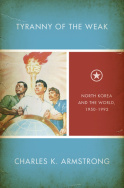
80140100484410mAn award-winning account of North Korea during the Cold War has fallen under criticism, claiming the author included material not supported by the list of references.

One historian has uploaded a series of what he calls “noteworthy problems” with Tyranny of the Weak, winner of the John K. Fairbank Prize in East Asian History in 2014. Balazs Szalontai of Korea University primarily accuses author Charles Armstrong of citing either irrelevant or non-existent sources to support his claims.

Armstrong, a professor at Columbia University, told us: Continue reading Criticism swirls around high-profile history book about North Korea

Gov’t researchers lose three papers for data doctoring

Eukaryotic Cell A researcher in New Mexico has retracted three papers tainted by fraud.

Lead author Samuel Lee, who works at the New Mexico Veterans Affairs (VA) Healthcare System and the University of New Mexico (UNM), requested Eukaryotic Cell retract two papers after identifying multiple instances of fabricated or falsified data. He requested the retraction of a review article based on those papers as well.

In addition, the research is subject to an investigation, Ellie Ghatineh, a production editor at the journal, told us:

Continue reading Gov’t researchers lose three papers for data doctoring

Pfizer fires employee, requests five retractions

pfizerPharmaceutical giant Pfizer has announced it plans to retract five papers by a former employee, after an investigation found duplicated images.

As first reported today by Leonid Schneider, Pfizer has asked to retract five papers from the lab of Min-Jean Yin, a cancer researcher. A spokesperson for the company confirmed to us that Yin had been fired:

…Min-Jean Yin’s employment has been terminated as a result of our investigation.

The five papers to be retracted are: Continue reading Pfizer fires employee, requests five retractions

CrossFit can sue over error in paper it claims cost the brand millions

court-caseA California court ruled that fitness empire CrossFit can proceed to trial with its lawsuit against a competitor, alleging it published falsified data that hurt the company’s reputation, according to recently released court documents.

The case pits the popular for-profit CrossFit brand against the non-profit National Strength and Conditioning Association (NSCA), which published the 2013 study in question.

CrossFit claims it lost upwards of $8 million afer researchers concluded that 16 percent of CrossFit participants in a small study left the exercise program because of injury. However, in a 2015 erratum, the authors – led by Steven T. Devor, director of the Exercise Science Laboratory at The Ohio State University — noted that follow up showed only 2 participants out of the 11 drop-outs mentioned their health as a reason.

The study appeared in the Journal of Strength & Conditioning Research, published by CrossFit competitor NSCA, which also promotes fitness programs.  CrossFit claims the results in the paper cost it revenues from people paying for seminars at CrossFit, Inc. affiliate gyms.

“CrossFit is now eager to go to trial. More eager than ever,” a CrossFit spokesperson told Retraction Watch: Continue reading CrossFit can sue over error in paper it claims cost the brand millions