Aussie university halts trials of skin cancer drug whose developer has four retractions

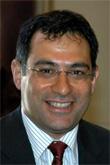
khachigian
Khachigian

An Australian university has put a hold on trials of an experimental drug for skin cancer whose main developer has been dogged by charges of research misconduct for several years.

The Australian Broadcasting Corporation is reporting that the University of New South Wales has suspended trials of the drug, DZ13, while it investigates the work of Levon Khachigian, who is leading the studies.

According to the news organization, Khachigian and his group were cleared by the school in two prior inquiries. However, additional accusations of misconduct — specifically involving image manipulation and misuse — prompted a third investigation.

We’ve found four retractions of Khachigian’s studies, from the Journal of Biological Chemistry and Biochemical and Biophysical Research Communications, between 2009 and 2010 (before the launch of Retraction Watch).

They are: Continue reading Aussie university halts trials of skin cancer drug whose developer has four retractions

Penkowa notches fourth retraction, in Experimental Neurology

exp neuroMilena Penkowa, the Danish neuroscientist who resigned from the University of Copenhagen in December 2010 amid suspicions of misconduct, has had another paper retracted.

The new retraction appears in Experimental Neurology. Here’s the notice for “M-CSF deficiency leads to reduced metallothioneins I and II expression and increased tissue damage in the brain stem after 6-aminonicotinamide treatment”: Continue reading Penkowa notches fourth retraction, in Experimental Neurology

University, funding agency clear researcher Rui Curi of fraud charges

Rui Curi
Rui Curi

The University of São Paulo and Brazil’s National Council of Technological and Scientific Development funding agency (CNPq) have cleared a researcher of fraud following a six-month investigation.

The CNPq’s Commission on Integrity in Scientific Activity noted, however, that “there was failure to exercise rigor in the conduct and dissemination of results [in Rui Curi’s work], essential to quality research.” Continue reading University, funding agency clear researcher Rui Curi of fraud charges

Measure by measure: Diederik Stapel count rises again, to 54

stapel_npcDiederik Stapel is up to 54 retractions.

Here’s the notice from Self and Identity: Continue reading Measure by measure: Diederik Stapel count rises again, to 54

Imperial clears Jatinder Ahluwalia of misconduct, blames “protracted negotiation” with Novartis for delay

logo_imperial_college_londonImperial College London has found that a former graduate student there — who had been found guilty of misconduct in two other institutions — did not commit fraud while at Imperial.

As first reported in the Times Higher Education today: Continue reading Imperial clears Jatinder Ahluwalia of misconduct, blames “protracted negotiation” with Novartis for delay

Melendez Science paper retracted, making 13

alirio_melendezAlirio Melendez, who has already had 12 papers retracted from various journals and been found guilty of scientific misconduct by a former employer, has had a Science paper retracted.

Here’s the notice (which is behind a paywall): Continue reading Melendez Science paper retracted, making 13

Tokyo panel calls for retraction of 43 Kato papers

katoThe University of Tokyo panel investigating the work of a former professor there, Shigeaki Kato, has recommended the retraction of 43 of his group’s articles, according to a report in the Asahi Shimbun newspaper.

If the papers are indeed retracted, Kato, who already has at least five articles subject to an expression of concern and five retractions, would be fifth on the list of most retractions for a single author, by our unofficial tally. His fellow countryman, Yoshitaka Fujii, continues to hold the lead at what appears to be 183, followed by Joachim Boldt (~89), John Darsee (~83), and Diederik Stapel, at 53. [See note at end.]

The Asahi report quotes Kato — who has received some $20 million in government funding for his work  — as acknowledging problems with the data in his studies: Continue reading Tokyo panel calls for retraction of 43 Kato papers

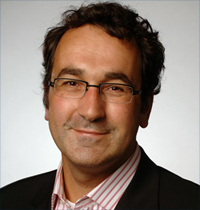
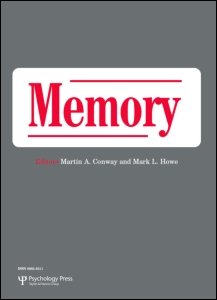
Bad Memory? Repressed sexual abuse memory paper retracted for data inconsistencies

memoryThe journal Memory has retracted a paper on repressed sexual abuse after a protracted dispute between the authors and an institutional investigation in The Netherlands that led to no findings of misconduct against the first author, Elke Geraerts  — a rising star in the field of social psychology. (The title of hers TEDx talk, by the way, is “Resilience as a key to success.”)

The article, titled “Linking thought suppression and recovered memories of childhood sexual abuse,” was published in 2008 and has been cited 10 times, according to Thomson Scientific’s Web of Knowledge. Here’s the retraction notice: Continue reading Bad Memory? Repressed sexual abuse memory paper retracted for data inconsistencies

Second retraction for Czech fraudster Bezouska, who broke into lab

bmc biotechEarlier this month we wrote about the retraction by Nature of a 19-year-old paper by Karel Bezouska, a former star researcher at Prague’s Charles University whose “dangerous and irresponsible deviations” from acceptable practice went as far as tampering with refrigerated samples to cover his tracks.

BMC Biotechnology has retracted another Bezouska paper, this one from 2011. He’s the second author on the article, titled “Heterologous expression, purification and characterization of nitrilase from Aspergillus niger K10.”

Continue reading Second retraction for Czech fraudster Bezouska, who broke into lab

“Why Has the Number of Scientific Retractions Increased?” New study tries to answer

plos oneThe title of this post is the title of a new study in PLOS ONE by three researchers whose names Retraction Watch readers may find familiar: Grant Steen, Arturo Casadevall, and Ferric Fang. Together and separately, they’ve examined retraction trends in a number of papers we’ve covered.

Their new paper tries to answer a question we’re almost always asked as a follow-up to data showing the number of retractions grew ten-fold over the first decade in the 21st century. As the authors write: Continue reading “Why Has the Number of Scientific Retractions Increased?” New study tries to answer