Western University materials scientist committed misconduct, according to investigation

Bernd Grohe

An investigation into the work of a researcher at Western University “resulted in a clear determination of research misconduct,” according to a retraction notice, but details are scant.

Here’s the notice for “Synthetic peptides derived from salivary proteins and the control of surface charge densities of dental surfaces improve the inhibition of dental calculus formation,” published in Materials Science and Engineering: C in 2017 by Bernd Grohe:

Continue reading Western University materials scientist committed misconduct, according to investigation

Study claiming broader spread of aerosolized coronavirus is retracted

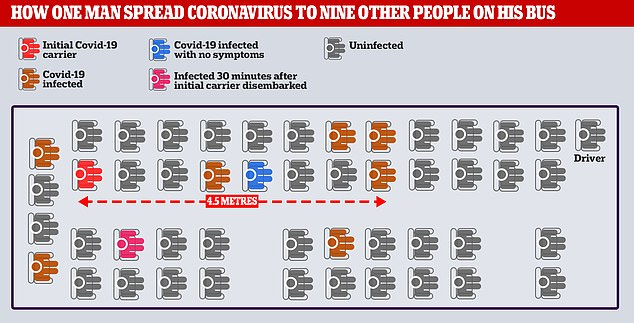
A schematic based on the now-retracted findings, as published in newspapers

A study which found that aerosolized novel coronavirus could be spread nearly 15 feet — twice what health officials had believed — has been retracted, but the journal isn’t saying why.

Practical Preventive Medicine published the paper in early March. Titled “An epidemiological investigation of 2019 novel coronavirus diseases through aerosol-borne transmission by public transport,” the authors, from institutions in China, looked at the spread of the virus on a bus linked to one infected passenger.  

According to the abstract: 

Continue reading Study claiming broader spread of aerosolized coronavirus is retracted

“With great pity,” author retracts paper for “severe problems” including references that “are not allowed to be cited” and “severe law issues”

Fair warning: We’re really not sure what’s going on here.

The authors of “Effect of total flavonoids on expression of collagen, TGF-β1, and Smad 7 in hypertrophic scars,” a 2018 paper in the International Journal of Clinical and Experimental Medicine, have retracted it for, well, lots of reasons.

None of them is exactly clear.

Here’s the notice:

Continue reading “With great pity,” author retracts paper for “severe problems” including references that “are not allowed to be cited” and “severe law issues”

Journal editors still don’t like talking about misconduct. And that’s a problem.

by Chris Richmond, via Flickr

In early 2011, less than six months after we launched Retraction Watch, we came across a retraction from a surgery journal. The notice was scant on details, so co-founder Adam Marcus called the editor to ask why the paper had been retracted.

The answer: “It’s none of your damn business.”

It turns out that’s still the answer from some journal editors. In a recent paper, Mark Bolland, of the University of Auckland, and colleagues — including one journalist — found that when they contacted a dozen journals that had published nearly two dozen clinical trials “about which concerns had been previously raised,” “none of the 10 responses was considered very useful.” (The trials were all co-authored by the late Yoshihiro Sato, who is now up to 42 retractions.)

Unbeknownst to the authors, a Retraction Watch reporter was also contacting the same journals. How did we fare? Continue reading Journal editors still don’t like talking about misconduct. And that’s a problem.

Fecal transplant paper pulled for “personal issue”

Last month, the Journal of Pediatric Gastroenterology and Nutrition pulled an article on fecal transplantation for a reason that, well, doesn’t pass the sniff test.

The paper, by Sonia Michail of Children’s Hospital Los Angeles, appeared online in October 2017 and described a randomized controlled trial of fecal transplants to treat kids with ulcerative colitis. (If you’re interested, here’s an overview of how fecal transplantation works.) The trial, or one awfully like it, is listed on ClinicalTrials.gov, and shows Michail as the lone investigator on the study, which is aiming to gather more than 100 participants.

But the journal retracted the article — which was the subject of a laudatory editorial in the journal pointing readers to the findings — with an entirely opaque statement, saying that the work   

Continue reading Fecal transplant paper pulled for “personal issue”

Authors retract heart disease paper for “nonscientific reason”

Researchers have retracted a 2018 paper about the genetic underpinnings of heart disease from the FASEB Journal — and it’s not entirely clear why.

The paywalled retraction notice simply cites a “nonscientific reason.” Cody Mooneyhan, the director of publications at the journal, declined to provide further details, and the authors have provided different accounts of what happened: The paper’s corresponding author, John Yu, told Retraction Watch that he requested the retraction because the first author, Chia‐Ti Tsai, refused to sign the journal’s copyright agreement. Tsai, a professor in the Department of Internal Medicine at National Taiwan University in Taipei, told us he was “not notified before the paper was submitted.” Continue reading Authors retract heart disease paper for “nonscientific reason”

For the second time, researchers retract — then republish — a vaccine paper

Photo credit: Blake Patterson

Two researchers with a troubled publication history about vaccine safety have withdrawn their third paper.

Along with several other co-authors, Christopher Shaw, of the University of British Columbia, and Lucija Tomljenovic, of the Neural Dynamics Research Group, recently withdrew a 2017 paper about a controversy over a tetanus vaccination program in Kenya.  

The paper has been republished in the same journal, adding another chapter to Shaw and Tomljenovic’s confusing record of publishing and withdrawing papers. The journal did not respond to our request for comment, but Shaw told Retraction Watch:

Continue reading For the second time, researchers retract — then republish — a vaccine paper

“GOOD NEWS!…we were able to retract your article:” Journal

A paleontology journal has retracted a recent paper after discovering it had published the uncorrected version of the manuscript.

The mistake occurred after the authors submitted revisions to the manuscript without tracking the changes, prompting the publisher to believe nothing had been changed and publishing the previous version. The journal initially told the authors it planned to publish an erratum that described the mistake as a production error, but then retracted the paper—seemingly without consulting the authors. However, the authors said they were happy with the outcome.

Glenn Brock, an author on the Journal of Paleontology paper, told Retraction Watch: Continue reading “GOOD NEWS!…we were able to retract your article:” Journal

A paper about eye damage in astronauts got pulled for “security concerns.” Huh?

Here’s a head-scratcher: A 2017 paper examining why long space flights can cause eye damage has been taken down, with a brief note saying NASA, which sponsored the research, asked for the retraction because of “security concerns.”

According to the first author, the paper included information that could identify some of the astronauts that took part in the study — namely, their flight information. Although the author said he removed the identifying information after the paper was online, NASA still opted to retract it. But a spokesperson at NASA told us the agency did not supply the language for the retraction notice. The journal editor confirmed the paper was retracted for “research subject confidentiality issues,” but referred a question about who supplied the language of the notice back to NASA.

Now lawyers are involved.

So we still have some questions about this one. Here’s what we do know.

Continue reading A paper about eye damage in astronauts got pulled for “security concerns.” Huh?

Unnamed institution makes baffling retraction requests, journals comply

Two journals are retracting papers published by researchers affiliated with Children’s Hospital Los Angeles (CHLA).

To be frank, we’re baffled by most of this story. The retraction notices say “the institution” requested the retractions, but don’t name it; the first and last authors are also affiliated with the University of Southern California, as well as CHLA. Neither journal will say which institution sent the request, and USC and CHLA have each declined to comment on the retractions.

Here’s what we do know: Continue reading Unnamed institution makes baffling retraction requests, journals comply