HIV vaccine researcher who confessed to fraud files appeal of 57-month prison sentence

court caseDong-Pyou Han, who was sentenced earlier this month to nearly five years in prison for faking the results of HIV vaccine experiments, has appealed the decision.

According to Report on Research Compliance, which first reported the news, the appeal was filed on July 15. In addition to the prison sentence, Han had been ordered on July 1 to repay more than $7 million to the U.S. National Institutes of Health, and to serve three years of supervised release following his prison term.

Former ORI director David Wright told Report on Research Compliance (paywalled) that Continue reading HIV vaccine researcher who confessed to fraud files appeal of 57-month prison sentence

Gynecologic cancer researcher up to 13 retractions

13277Noriyuki Takai, a gynecologic cancer researcher at Oita University in Japan, has lost another five papers. With a new total of 13, that means he’s now on our leaderboard.

Three of the retractions are from the journal Tumor Biology, one is from the International Journal of Gynecological Cancer, and one from Anticancer Research.

Takai is the first author on all 5 papers.

As has been the case with Takai’s retractions, and there’s evidence that all were felled by issues with figures. In all, according to the retraction notices, “original data were processed inappropriately.” Four end with the following sentence (or some close variation thereof):

Continue reading Gynecologic cancer researcher up to 13 retractions

Half of anesthesiology fraudster’s papers continue to be cited years after retractions

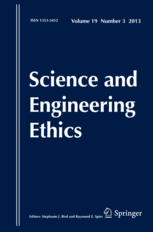
ethicsIn yet more evidence that retracted studies continue to accrue citations, a new paper has shown that nearly half of anesthesiologist Scott Reuben’s papers have been cited five years after being retracted, and only one-fourth of citations correctly note the retraction.

According to the new paper, in Science and Engineering Ethics: Continue reading Half of anesthesiology fraudster’s papers continue to be cited years after retractions

Weekend reads: California universities battle in court for research dollars; fake conferences; fake impact factors

booksThis week at Retraction Watch featured a look at the nuances of replication efforts, aka “the replication paradox,” as well as yet another story of fake peer reviews, this time at Hindawi. Here’s what was happening elsewhere: Continue reading Weekend reads: California universities battle in court for research dollars; fake conferences; fake impact factors

High-profile biologist is suspended after two investigations found he “breached his duty of care”, committed “misconduct”

Olivier Voinnet
Olivier Voinnet

High-profile plant biologist Olivier Voinnet has been suspended for two years from the Centre national de la recherche scientifique (CNRS) following the results of two investigations that revealed a number of issues in his publication record.

An investigation at ETH Zurich found that the scientist “breached his duty of care in the handling of figures as well as in his supervisory duties as a research director.”

Another investigation at CNRS, where Voinnet also works as a researcher, also found “the existence of deliberate chart/diagram manipulations” — while not “fabrication,” these breaches “amount to scientific misconduct,” according to a press release about the report.

The ETH committee uncovered multiple errors, from the “mere confusion of correct and incorrect figures” to “the ‘beautification’ of figures,” but said that it was not scientific misconduct, according to ETH guidelines:

Continue reading High-profile biologist is suspended after two investigations found he “breached his duty of care”, committed “misconduct”

Cancer Research retraction is fifth for Robert Weinberg; fourth for his former student

13.coverAnother domino has fallen in a chain of retractions for Robert Weinberg, the man who discovered the first tumor-causing gene in humans, along with the first tumor suppressor gene: Cancer Research just retracted a paper of his on some of the molecular steps to metastasis.

The paper, “Concurrent Suppression of Integrin α5, Radixin, and RhoA Phenocopies the Effects of miR-31 on Metastasis,” has been cited 70 times, according to Thomson Scientific’s Web of Knowledge. As we have noted before, Weinberg’s papers are frequently highly cited. His bio at the Whitehead Institute bills him as “a pioneer in cancer research.”

Four of Weinberg’s retracted papers — including this latest — share a first author: Scott Valastyan, once a very promising grad student in Weinberg’s lab. 

This retraction, like Valastyan’s others, is linked to his retracted 2009 Cell paper. (That paper was cited 482 times, and there’s even a video from the Cell press office to go with it). Continue reading Cancer Research retraction is fifth for Robert Weinberg; fourth for his former student

Weekend reads: Is failing to share data misconduct?; worst journal ever; Elsevier boycott

booksThe big news this week at Retraction Watch was the release of more than two dozen retractions for accounting researcher James Hunton, and the sentencing of Dong-Pyou Han for scientific fraud (see more below). Here’s what was happening elsewhere: Continue reading Weekend reads: Is failing to share data misconduct?; worst journal ever; Elsevier boycott

Corrections (and one EoC) propagate for distinguished plant biologist, Olivier Voinnet

Olivier Voinnet
Olivier Voinnet

There may be some deeply rooted issues in the work of high-profile plant biologist Olivier Voinnet, biology department research director at ETH in Zurich. Corrections have continued to pile up months after his work was hit with a barrage of criticism on PubPeer. We’ve tracked a total of seven corrections over the past five months (not including the April retraction of a 2004 paper in The Plant Cell). One of the corrected papers also received an Expression of Concern this week.

Collectively, the corrected papers have accumulated more than 1200 citations.

In January, Voinnet said he planned to correct multiple papers, after receiving “an anonymous email.”

One of the recent corrections we found is for a 2003 article in The Plant Journal, “An enhanced transient expression system in plants based on suppression of gene silencing by the p19 protein of tomato bushy stunt virus,” which details using proteins from a tomato virus to help alter gene expression. The study has been cited 862 times, according to Thomson Scientific’s Web of Knowledge. Here’s the correction notice, posted June 8:

Continue reading Corrections (and one EoC) propagate for distinguished plant biologist, Olivier Voinnet

AIDS vaccine fraudster sentenced to nearly 5 years in prison and to pay back $7 million

court case

A researcher who confessed to spiking rabbit blood samples to make the results of an HIV vaccine experiment look better has been sentenced to 57 months of prison time, according to The Des Moines Register.

Dong-Pyou Han has also been ordered to repay more than $7 million to the U.S. National Institutes of Health, and will have three years of supervised release following his prison term.

In December, 2013, the U.S. Office of Research Integrity announced that Han, formerly at Iowa State University (ISU), had faked his results to make an HIV vaccine look more powerful. The faulty data made their way into seven national and international symposia between 2010 and 2012 (resulting in a retracted poster in 2014), along with three grant applications and multiple progress reports. Han agreed to a three-year research ban, and resigned from ISU in October the following year.

The NIH never sent the final $1.38 million grant payment of more than $10 million awarded to Han’s boss, Michael Cho, and ISU returned nearly $500,000 it had received for Han’s salary and other costs.

However, Continue reading AIDS vaccine fraudster sentenced to nearly 5 years in prison and to pay back $7 million

Macchiarini co-author objects to investigation’s misconduct verdict

dr-paolo-macchiarini
Paolo Macchiarini

One of Paolo Macchiarini’s co-authors on a 2011 Lancet paper describing an allegedly groundbreaking procedure to transplant an artificial trachea seeded with stem cells is objecting to a recent investigation that concluded Macchiarini had committed misconduct.

Ola Hermanson, who studies neural stem cells at Karolinska Institutet, argued in a report dated June 29 that the investigation contained “serious flaws and formal errors.”

Hermanson’s lengthy response (uploaded here except for supporting emails) is to the findings of an external review of allegations about Macchiarini’s work, conducted by Bengt Gerdin, of Uppsala University. In regards to the 2011 Lancet paper, Gerdin’s investigation found:

Continue reading Macchiarini co-author objects to investigation’s misconduct verdict