 The week at Retraction Watch featured news that a religion journal wouldn’t be retracting a paper despite evidence of forgery in the evidence it relied on, and also news that we’re hiring. Here’s what was happening elsewhere: Continue reading Weekend reads: Open data’s downsides; do journals serve a purpose?; fraud allegations down in China
Category: by author
Highly cited cancer researcher logs 8th, 9th retractions

Bharat Aggarwal, a highly cited cancer researcher who retired last year from MD Anderson, has logged two retractions following an investigation into his work, bringing his total to nine.
Aggarwal has threatened to sue us in the past, and told us that MD Anderson has been investigating his work. Earlier this year, Biochemical Pharmacology retracted seven studies of which he is the only common author, noting the “data integrity has become questionable.” Now, he’s earned two more retractions in Molecular Pharmacology, both for “inappropriate” or “unacceptable” image manipulation.
Both of the notices are paywalled (tsk, tsk). Here’s one for “Flavopiridol suppresses tumor necrosis factor-induced activation of activator protein-1, c-Jun N-terminal kinase, p38 mitogen-activated protein kinase (MAPK), p44/p42 MAPK, and Akt, inhibits expression of antiapoptotic gene products, and enhances apoptosis through cytochrome c release and caspase activation in human myeloid cells:” Continue reading Highly cited cancer researcher logs 8th, 9th retractions
Seventh retraction appears for cancer researcher who sued PubPeer commenters

Fazlul Sarkar, who sued PubPeer commenters for criticizing his work, has logged two more retractions, bringing his total to seven.
The two retractions appear in the Journal of Cellular Physiology, and follow five others released last week by another Wiley journal, Journal of Cellular Biochemistry. All notices mention an investigation at Wayne State University, where Sarkar is on the faculty.
Here’s the notice for “Activated K-Ras and INK4a/Arf Deficiency Promote Aggressiveness of Pancreatic Cancer by Induction of EMT Consistent With Cancer Stem Cell Phenotype:” Continue reading Seventh retraction appears for cancer researcher who sued PubPeer commenters
Researcher suing PubPeer commenters earns 5 retractions following investigation
An investigation at Wayne State University has prompted five retractions for a scientist who is suing PubPeer commenters after they criticized his work on the site.
The investigation into Fazlul Sarkar and his co-authors found that the papers contain images that were “inappropriately manipulated” or “inappropriately re-used and re-labeled.” All five retraction notices are from the Journal of Cellular Biochemistry.
Here’s the retraction notice for “Concurrent inhibition of NF-κB, cyclooxygenase-2, and epidermal growth factor receptor leads to greater anti-tumor activity in pancreatic cancer:
Continue reading Researcher suing PubPeer commenters earns 5 retractions following investigation
Nutrition researcher loses two more papers after misconduct findings come to light
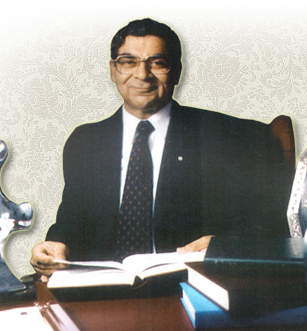
The self-proclaimed “father of nutritional immunology,” Ranjit Kumar Chandra, has lost two more papers following the release of a misconduct investigation report by his former employer, Memorial University of Newfoundland (MUN).
The report was released last year after Chandra lost his libel suit against the Canadian Broadcasting Company (CBC). The newly retracted papers were both published in Nutrition Research. On one, the author is listed as “Amrit Jain,” who is allegedly Chandra, as well.
Here’s the retraction notice for the article by Amrit Jain:
Continue reading Nutrition researcher loses two more papers after misconduct findings come to light
What does “reproducibility” mean? New paper seeks to standardize the lexicon
 What is the difference between “reproducible” and “replicable”? And how does each relate to results that are “generalizable” and “robust”?
Researchers are using these terms interchangeably, creating confusion over what exactly is needed to confirm a scientific result, argues a new paper published today in Science Translational Medicine.
Here’s how the US National Science Foundation (NSF) defines “reproducibility,” according to the authors: Continue reading What does “reproducibility” mean? New paper seeks to standardize the lexicon
Researcher who sued to stop retractions gets his sixth
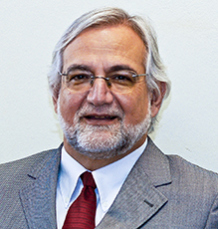
A sixth retraction has appeared for a diabetes researcher who previously sued a publisher to try to stop his papers from being retracted.
Mario Saad‘s latest retraction, in PLOS Biology, stems from inadvertent duplications, according to the authors. Though an investigation at Saad’s institution — the University of Campinas in Brazil — found no evidence of misconduct, a critic of the paper told The Scientist he does not believe that the issues with blots were inadvertent.
Previously, Saad sued the American Diabetes Association to remove four expressions of concern from his papers; they were later retracted, even though Unicamp recommended keeping three of them published.
Here’s the new retraction notice, for “Gut Microbiota Is a Key Modulator of Insulin Resistance in TLR 2 Knockout Mice:” Continue reading Researcher who sued to stop retractions gets his sixth
Dutch university ordered to pay economist after she was accused of plagiarism
 A court in the Netherlands has fined Vrije Universiteit Amsterdam (VU) 7,500 euros to compensate for “immaterial damage” to an economist accused of plagiarism.
Karima Kourtit, a researcher at VU, has been at the receiving end of anonymous complaints to her institution accusing her of plagiarism and her professor, high-profile economist Peter Nijkamp, of duplication (i.e. self-plagiarism). Kourtit is now seeking to prosecute the unnamed source of the complaint for defamation; the VU told us it will no longer accept fully anonymous complaints.
The case began when VU cancelled Kourtit’s thesis defense for plagiarism, and a report published on the VSNU, the Association of Universities, accused Nijkamp of self-plagiarism. Two of Nijkamp’s papers have been retracted as a result of the investigation; Kourtit is an author on one of the retracted papers.
A VU spokesperson told us:
Continue reading Dutch university ordered to pay economist after she was accused of plagiarism
Former accounting prof adds 4 more retractions, bringing total to 37

We’ve found four more retractions for an erstwhile accounting professor, bringing his total to 37.
The latest retractions follow a 2014 investigation into the work of James E. Hunton by his former employer, Bentley University in Massachusetts, which found him guilty of misconduct, resulting in more than two dozen retractions. Here’s the list of retractions released by the American Accounting Association.
Here is the retraction notice, which is similar for all the newly retracted papers:
Continue reading Former accounting prof adds 4 more retractions, bringing total to 37
Researcher who unsuccessfully sued journal to stop retractions earns another expression of concern
A journal has added expressions of concern (EOCs) to four papers about diabetes, including one co-authored by an author who previously sued a different journal when it took a similar action on his papers.
The Journal of Physiology flagged the papers after an investigation “could not rule out the possibility” that they contained duplicated Western blots. Though the three other papers do not include Mario Saad on their author list, he plays a role: The papers include blots duplicated from other papers of Saad’s. And they reveal that Saad may have published those blots multiple times in his own work.
The EOCs all start out with the same statement: Continue reading Researcher who unsuccessfully sued journal to stop retractions earns another expression of concern