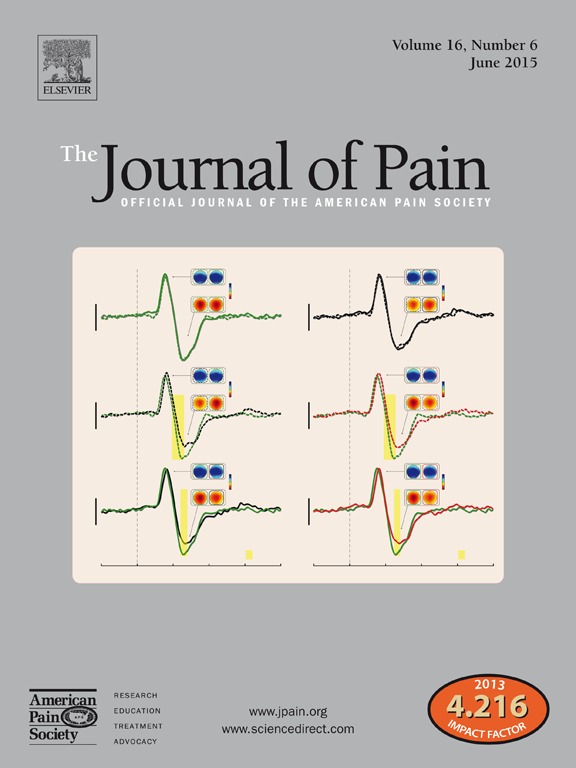
A group of authors published two articles about one study on pain during childbirth, so one journal is retracting it.
This may seem like a standard case of salami slicing — but this one comes with a nearly 600-word commentary co-authored by the editors of the two journals in question.
The commentary lays out — in a refreshingly transparent way — exactly why the journals came to a joint decision to retract one of the papers:
A psychiatric journal has pulled a 2014 paper that found electroconvulsive therapy and exercise helped people with depression, after the authors determined they had mistakenly analyzed the wrong data.
According to the retraction notice from the Journal of Psychiatric Research, the researchers had “erroneously analyzed” data from a previous study they had published the year before.
The main conclusions of the paper are affected by the ORI finding, according to the retraction note from Molecular Cancer Therapeutics. But otherwise, the note contains information that was available in the ORI finding, published in December 2014.
The secretary general of the Nobel Assembly, the body responsible for choosing the Nobel Prizes, has resigned from his post because “he may be involved” in the Karolinska Institutet investigation of trachea surgeon Paolo Macchiarini.
An investigation at the University of New South Wales in Australia has led to a fifth retraction for a cancer researcher long accused of misconduct, due to “unresolvable concerns” with some images.
As we reported in December, UNSW cleared Levon Khachigian of misconduct, concluding that his previous issues stemmed from “genuine error or honest oversight.” Now, Circulation Research is retracting one of his papers after an investigation commissioned by UNSW was unable to find electronic records for two similar images from a 2009 paper, nor records of the images in original lab books.
Again, the retraction note affirms that this is not a sign of misconduct:
UNSW has not attributed any instance of research misconduct or responsibility for the unavailability of the original data to Professor Khachigian or to any of the authors of the publication.
For all our talk about finding new ways to measure scientists’ achievements, we’ve yet to veer away from a focus on publishing high-impact papers. This sets up a system of perverse incentives, fueling ongoing problems with reproducibility and misconduct. Is there another way? Sarah Greene, founder of Rapid Science, believes there is – and we’re pleased to present her guest post describing a new way to rate researchers’ collaborative projects.
In science, we still live – and die – by the published paper. Discontent with the Impact Factor, the H-Index, and other measures of article citation in scholarly journals has led to altmetrics’ quantification of an article’s impact in social media outlets—e.g., Twitter, blogs, newspapers, magazines, and bookmarking systems. But discussions regarding alternative reward systems do not generally swerve from this genuflecting of the scientific paper. Consequently, publishing big, “positive” findings in high-impact journals (and now in social media) is the researcher’s Holy grail.
The Karolinska Institutet University Board announced today it was issuing a new external investigation of trachea surgeon Paolo Macchiarini, looking into questions about his recruitment and the handling of previous allegations of misconduct.
The University Board deems such an inquiry to be an important part of restoring the confidence of the public, the scientific community, staff and students in the university.
The board hopes to appoint the investigative team, which will not consider “matters of a medical-scientific nature,” next week. The goal is to conclude the investigation by the summer.
An engineer has retracted three papers on a method for making nanoscale materials that are useful in solar cells.
The papers, all published in ACS Applied Materials & Interfaces, contain irregularities in data, and one includes images “which have been published elsewhere and identified with different samples,” according to the note.
The first author on all three papers is Khalid Mahmood, who — according to the bio from a talk he gave last year on efficient solar cells — is currently a postdoc at King Abdullah University of Science and Technology in Saudi Arabia. He did the work in the retracted papers while a student at the Korea Advanced Institute of Science and Technology, where, according to the bio, he completed his PhD in two years.
 A group of authors published two articles about one study on pain during childbirth, so one journal is retracting it.