According to the ORI, Alec Mirchandani made up the results of behavioral experiments to make it seem as if he had done the work, and falsified animal transfer logs, which affected research supported by the National Institute of Mental Health.
More specifically, the ORI determined that Mirchandani had “knowingly and intentionally:”
Longtime readers of Retraction Watch may recall a 2011 post about a research team that retracted a paper after realizing that they had ordered the wrong mice. Maureen Gannon and Raymond Pasek of Vanderbilt University contacted us earlier this week to alert us to a similar case: Their retraction, earlier this month, of a 2016 paper from American Journal of Physiology – Endocrinology and Metabolism after discovering that “a colleague from another lab had mistakenly supplied us with the wrong transgenic mouse line.”
One paper that was among those initially criticized has received a formal correction notice from the Journal of Product & Brand Management. The notice, which appears behind a paywall, has drawn fire from a regular critic of Wansink’s work, Jordan Anaya, who argues “this correction actually needs a correction, actually several.”
The University of Louisville’s Kornhauser Library via Wikimedia
Suing the government is difficult. And because public universities often function as an arm of state governments, that makes them hard to sue, too, a fact reiterated in a whistleblower case decided earlier this year.
In January, Judge David Hale of the Western District of Kentucky dismissed a lawsuit filed by former employees of the University of Louisville alleging that the institution fraudulently secured millions in federal grants due to a biosafety program that had fallen out of compliance with federal regulations. The biosafety officers also alleged that they were wrongly terminated for pointing out the compliance issues to Louisville, the National Institutes of Health, and even the Federal Bureau of Investigation. But the judge’s order came before those issues would even be considered.
According to the suit, filed in 2015, plaintiffs Karen Brinkley and Carol Whetstone alleged that the university, seven principal investigators, and an administrator had worked to wrongly obtain as much as $165 million from the National Institutes of Health. Around 2008, according to the plaintiffs, the defendants began allowing persistent biosafety issues — improper training and biological material disposal methods, protocols with expired institutional biosafety committee approvals, performance of research tasks in labs with insufficient biosafety ratings — to taint their applications for multiple federal grants (the complaint didn’t specify how many). Brinkley and Whetstone filed suit under the False Claims Act (FCA), which allows individuals to recover money on behalf of the U.S. government; allegedly, the grants were improperly obtained because the defendants had certified that they were in compliance with NIH’s biosafety requirements, even though they knew that they were not.Continue reading Failed whistleblower suit is a reminder that public universities are hard to sue
Are there a limited number of ways to describe the the background and methods of an experiment? Once something has been written well, and vetted by editors, is it a waste of time to rewrite it ? And if text has been reused, how should that be indicated — if at all?
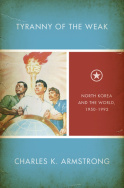
A historian based at Columbia University has returned a 2014 prize after criticisms prompted him to issue more than 70 corrections to his prominent book about North Korea.
Charles Armstrong told Retraction Watch he returned the 2014 John K. Fairbank Prize he received for “Tyranny of the Weak” due to “numerous citation errors.” The book has faced heavy criticism, including allegations of plagiarism and using invalid sources.
The American Historical Society, which issues the Fairbank Prize, released a statement last week:
A Cornell food researcher who has pledged to re-analyze his papers following heavy criticism of his work has issued a major correction to a 2005 paper.
The correction tweaks two tables, a figure, and the description of the methodology — and notes in two instances the correct findings are unknown, since the original data are unavailable. Andrew Gelman, a statistician at Columbia University and critic of Brian Wansink’s work, has dubbed the notice the “best correction ever.”
Two molecular biologists have withdrawn two 2015 papers published in the same journal, citing image duplication and manipulation, among other issues.
One notice — published in June — explains that, after further investigation, the Journal of Biological Chemistry (JBC) found certain experiments “were not performed appropriately.” The other notice cites “missing data” and notes that certain data “did not accurately represent experimental conditions.”
The authors of the papers—Daniel L. Kaplan, associate professor at Florida State University who heads a genomics lab, andIrina Bruck, assistant scholar scientist in Kaplan’s lab—also received a correction in JBC this month, which cites image duplication.
The three notices, all published this month in JBC, may reveal a pattern, but there’s still a lot we don’t know. One of the two papers was questioned on PubPeer. Several commenters flagged duplicated images and had questions about the antibody used.
An exercise scientist who ran a study of the CrossFit exercise program without an approved human subjects protocol has lost two more papers to retraction.
Both papers were retracted on June 26 by the editors of the International Journal of Exercise Science (IJES) with the agreement of last author Steven Devor, a former professor at The Ohio State University. Both have been retracted because the studies were carried out without proper IRB approval.
Earlier in June, another paper from the CrossFit study — which is still at the center of a legal battle between CrossFit and a competitor in the market for exercise instructor licensing — was retracted by the Journal of Strength and Conditioning Research (JSCR) for improper IRB approval. Devor resigned from OSU the day after the first retraction.
Only one of the newly retracted papers had anything to do with the CrossFit study: Published in April 2014, this paper suggested that the so-called “paleo” diet — a diet focused on meat and vegetables — is associated with “unfavorable” changes in cholesterols and other blood-based cardiovascular biomarkers. In addition to following the diet, subjects also participated in a CrossFit exercise program.Continue reading Researcher who tangled with CrossFit loses two more papers
Hearsay is not admissible as evidence in court — and it doesn’t seem to go very far in science, either.
A pair of researchers in the field of human evolution have lost a paper which contained data from “personal correspondence” that the providing party apparently did not enjoy seeing in print.
 A volunteer researcher at Florida Atlantic University fabricated the results of mouse experiments over a 14-day period in June, 2016, according to a new finding issued by the U.S Office of Research Integrity (ORI).
 Journals have posted two corrections alongside papers by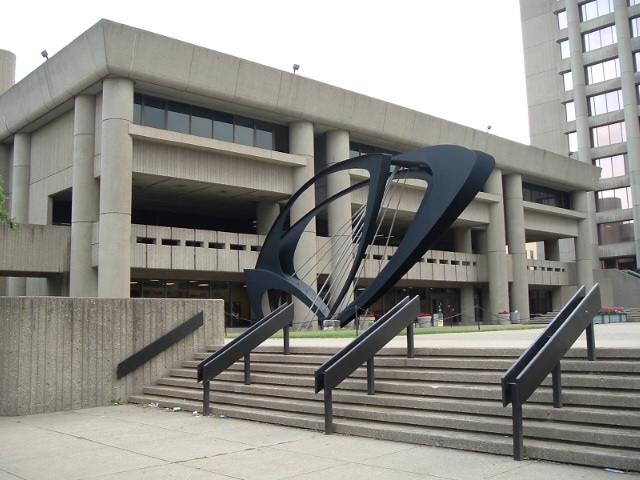
 Are there a limited number of ways to describe the the background and methods of an experiment? Once something has been written well, and vetted by editors, is it a waste of time to rewrite it ? And if text has been reused, how should that be indicated — if at all?
 A historian based at Columbia University has returned a 2014 prize after criticisms prompted him to issue more than 70 corrections to his prominent book about North Korea.
 A Cornell food researcher who has pledged to re-analyze his papers following heavy criticism of his work has issued a major correction to a 2005 paper.

