Hey journals, it is possible to quickly correct the record

Even when a paper is obviously flawed, it can take years for journals to take action. Some never do. But it doesn’t have to be that way.

On April 27, a reader emailed the editors of two journals, noting that each had recently published a paper by the same group of authors that appeared strikingly similar.

Four days later, on May 1, a representative at Medicine, the journal that published the most recent version of the paper, wrote the reader back, saying the paper was going to be retracted.

Continue reading Hey journals, it is possible to quickly correct the record

Two years after student loses PhD, ORI concludes he committed misconduct

The U.S. Office of Research Integrity (ORI) announced today that a former graduate student committed research misconduct — nearly two years after his institution stripped him of his degree.

The ORI concluded that Shiladitya Sen committed misconduct in a PNAS paper (retracted six months ago), his PhD thesis, a poster presentation, and two grant applications to the National Institutes of Health (NIH). Sen has agreed not to seek federal funding for three years.

A spokesperson for The Ohio State University (OSU), where Sen was based, told us its investigation wrapped up in Spring 2016, and Sen’s PhD was revoked that June. It’s not clear why it took two years for the ORI to issue its own finding; the ORI did not immediately respond to requests for comment.

According to ORI’s notice, Sen:

Continue reading Two years after student loses PhD, ORI concludes he committed misconduct

Now-retracted chem paper’s problems “should have been noticed by the referees,” group says

Last year, chemist Marcus Tius at the University of Hawaii saw a paper describing the synthesis of some organic compounds, and was “struck by the implausibility” of the reported structures. So he joined up with some colleagues to try to replicate the data.

While Tius and his team were trying to repeat the experiment, however, in December 2017 the journal — Organic Letters — retracted the paper. The journal, published by the American Chemical Society, noted that the authors had not been able to produce crystal structures that confirm they had synthesized those compounds in particular. So Tius and his colleagues knew they couldn’t replicate the findings — but carried on their experiment anyway:

Continue reading Now-retracted chem paper’s problems “should have been noticed by the referees,” group says

Caught Our Notice: A paper mistakenly ID’d a patient. Its retraction notice did, too. (Oops!)

What Caught Our Attention: Last year, a journal retracted a paper about a child who developed a rare complication related to the inherited disorder Gaucher Disease, after realizing it had inadvertently identified the child. It wasn’t an immediately obvious mistake — the authors listed the drugs the patient was taking, and in the case of one drug, there was only one child in the world taking it. For anyone in the know, that would make the child’s identity clear.

So retracting the paper makes sense — but publishing a retraction notice that spells out the issue in detail, including the name of the drug and the fact the patient was the only pediatric recipient, did not. So last month, the Journal of Pediatric Hematology/Oncology corrected the retraction notice, removing the name of the drug. (Phew.)

Continue reading Caught Our Notice: A paper mistakenly ID’d a patient. Its retraction notice did, too. (Oops!)

A distorted record on blood pressure drugs: Why one group is trying to clean up the literature

In 2015, a group of researchers based in Spain decided to write a review article on high blood pressure. But when they looked over eight articles co-authored by the same person, they noticed some undeniable similarities.

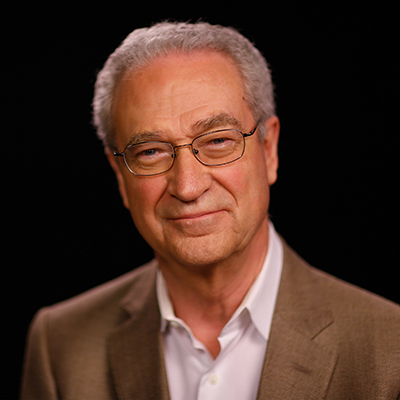
Over the last few years, Giuseppe Derosa, based at the University of Pavia in Italy, has racked up 10 retractions after journals determined he’d published the same material multiple times. But there’s much more to this story: The researchers in Spain (led by Luis Carlos Saiz of the Navarre Regional Health Service in Pamplona) kept digging into his publication record, and have since identified dozens of additional potential duplicates. Although the outside researchers alerted journals to the additional potentially problematic papers in 2015, most have not taken action; recently, two journals published by Taylor & Francis flagged 12 of Derosa’s articles, three of which they had been alerted about in 2015 by Saiz and colleagues.

Now, Saiz is telling his story — and why duplication of medical research matters:

Continue reading A distorted record on blood pressure drugs: Why one group is trying to clean up the literature

Caught Our Notice: A team from Harvard, Cornell, Cambridge, HHMI, and UCSF can’t reproduce a paper’s findings

What Caught Our Attention: Any time there’s an issue with a paper co-authored by researchers from such high-profile institutions as Harvard, Cornell, and the University of Cambridge, we take notice. In this case, the group — which included Laurie Glimcher, then-dean at Cornell, now president of the Dana-Farber Cancer Institute — chose to retract a 2013 paper from a Cell journal after learning they couldn’t reproduce some of the experiments. Continue reading Caught Our Notice: A team from Harvard, Cornell, Cambridge, HHMI, and UCSF can’t reproduce a paper’s findings

Caught Our Notice: Hey peer reviewers — did you even read this paper??

What Caught Our Attention: A tree of life paper has been axed — and based on the information in the retraction notice, we’re wondering how it ever passed peer review.

Specifically, the notice states a review of the paper found “concerns regarding the study design, methodology, and interpretation of the data.” Overall, the research “contradict(s) a large body of existing literature and do(es) not provide a sufficient level of evidence to support the claims made in the paper.” Um, so what did it get right?

Continue reading Caught Our Notice: Hey peer reviewers — did you even read this paper??

Survey says: A researcher wasn’t sure if he needed to correct a paper. So he created a poll.

Craig Jones

When geophysicist Craig Jones realized a figure in one of his published papers contained an error, he was on the fence about what to do. It was a clear mistake, but he’d seen much larger mistakes go uncorrected by other authors. Unsure if it warranted a correction, Jones polled readers of his blog to see what they thought.

The answer: 37 people responded, 23 of whom (62%) said he should correct the paper. In an update, Jones said he was prepping a correction to submit to the journal.

Jones, who is based at the University of Colorado Boulder and blogs under the title the “Grumpy Geophysicist,” told Retraction Watch:

Continue reading Survey says: A researcher wasn’t sure if he needed to correct a paper. So he created a poll.

A cancer researcher said she collected blood from 98 people. It was all her own.

A researcher collected her own blood and forged the labels so it would appear to be samples from nearly 100 people, according to a new finding of research misconduct released today by the U.S. Office of Research Integrity (ORI).

The former researcher at the University of Texas MD Anderson Cancer Center swapped her own blood samples for those taken from 98 human subjects. The misconduct affects two grant progress reports and two papers; one paper has already been retracted, and the former “research interviewer” — Maria Cristina Miron Elqutub — has agreed to correct or retract the other.

Adel El-Naggar, a co-author on both of the papers also based at the University of Texas MD Anderson Cancer Center, told Retraction Watch:

Continue reading A cancer researcher said she collected blood from 98 people. It was all her own.

Mount Sinai multiple sclerosis researcher admits to misconduct

Gareth John

A researcher who has received millions in funding from the U.S. National Institutes of Health and who runs a lab at the Icahn School of Medicine at Mount Sinai in New York has confessed to falsifying data in a 2014 paper.

Gareth John, who studies multiple sclerosis and other neurological diseases, “has expressed remorse for his actions,” according to a report released last week from the U.S. Department of Health and Human Services’ Office of Research Integrity. Continue reading Mount Sinai multiple sclerosis researcher admits to misconduct