Second retraction appears for arcade game-like image manipulation

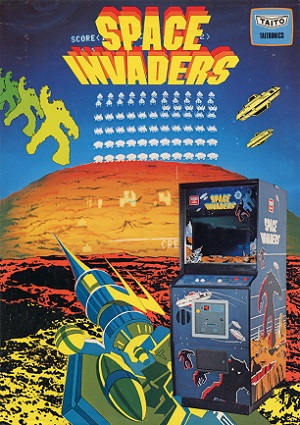
Image via Wikimedia Commons

In June, we reported on a retraction in Current Biology that came after a number of PubPeer commenters suggested that the authors had engaged in figure manipulation, memorably comparing watching the published videos to playing the old-school arcade game “Space Invaders.”

Now a second paper from the same team has been retracted from Biology Open after the authors “were unable to repeat the results.” The journal was unable to get in touch with first author Livana Soetedio, whom the University of Illinois at Chicago found had fabricated the data and images in both publications.

Here’s the notice for “Targeting of vasoactive intestinal peptide receptor 2, VPAC2, a secretin family G-protein coupled receptor, to primary cilia”: Continue reading Second retraction appears for arcade game-like image manipulation

Physics paper sinks amid accusations of unacceptable “overlap”

prl-bannerA paper in Physical Review Letters has been retracted for “overlap” with two other previously published papers.

The notice isn’t available online yet, so we got in touch with American Physical Society (APS) editorial director Dan Kulp for more information. Here’s what he told us about “Anomalous melting scenario of the two-dimensional core-softened system”: Continue reading Physics paper sinks amid accusations of unacceptable “overlap”

Engineer in South Korea forced to retract ten papers in one fell swoop

metals and materials internationalChang-Suk Han, a member of the engineering faculty at Hoseo University in South Korea, has had ten articles retracted at once because of duplicated data.

Here are the ten studies from Metals and Materials International: Continue reading Engineer in South Korea forced to retract ten papers in one fell swoop

Retraction appears for faked study of Novartis anti-cancer compound

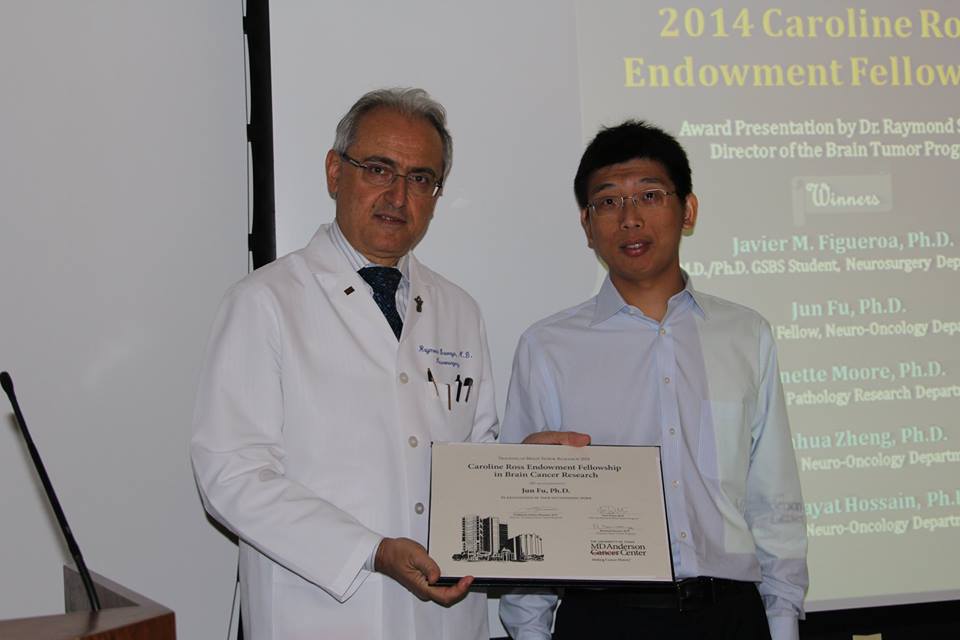
Raymond Sawaya, director of MD Anderson’s brain tumor program, presents Jun Fu with the 2014 Caroline Ross Endowment Fellowship.

A paper by a former postdoc at MD Anderson Cancer Center who “admitted to knowingly and intentionally falsifying” a figure has been retracted.

In August, the Office of Research Integrity announced that it had sanctioned Jun Fu for faking data in a study of the results of a mouse study of NVP-HSP990, a Novartis compound designed to fight brain tumors. Here’s the notice for the study in question, published in Cancer Research:
Continue reading Retraction appears for faked study of Novartis anti-cancer compound

Paper on circulating tumor cells taken out of circulation after lab error

medical oncologyA group of researchers at the Guangdong Academy of Medical Sciences in Guangzhou, China have retracted a paper that came out of a clinical trial on transarterial chemoembolization, a targeted kind of chemotherapy.

According to the notice, one of the authors mixed up the control samples with the clinical samples, and “could not recall which samples were in the wrong group.” The paper hasn’t yet been cited, according to Thomson Scientific’s Web of Knowledge.

Here’s the notice in Medical Oncology:

Continue reading Paper on circulating tumor cells taken out of circulation after lab error

Univ.: No misconduct, but “poor research practice” in mgt prof’s work now subject to 7 retractions

fred-walumbwa
Fred Walumbwa

The Leadership Quarterly has retracted a trio of papers by Frederick Walumbwa, an “ethical leadership” guru at Florida International University, whose work has come under scrutiny for flawed methodology. And another journal  has pulled one of his articles for similar reasons. That brings his count – as far as we can tell — to seven retractions and a mega-correction.

Meanwhile, Arizona State University, Walumbwa’s former employer, has found

that the preponderance of evidence does not support the charge of research misconduct by Dr. Walumbwa…

but that he engaged in “poor research practice.”

The bottom line, according to the Leadership Quarterly, which first announced problems with the articles in February:

Continue reading Univ.: No misconduct, but “poor research practice” in mgt prof’s work now subject to 7 retractions

Lancet journal puts ICU paper on watch after authors acknowledge potentially fatal flaw

lancetrmLancet Respiratory Medicine has issued an expression of concern for a meta-analysis on tracheostomy in the intensive care unit that they published earlier this year.

The paper, “Effect of early versus late or no tracheostomy on mortality of critically ill patients receiving mechanical ventilation: a systematic review and meta-analysis“, came from a group at Harvard, Weill Cornell and the University of Athens. The authors purported to find that: Continue reading Lancet journal puts ICU paper on watch after authors acknowledge potentially fatal flaw

“Significant” copying forces retraction of sternotomy paper

icatsInteractive Cardiovascular and Thoracic Surgery has yanked a 2005 sternotomy paper by a group of researchers who plagiarized from an earlier article on the subject.

The article, “The complications of repeat median sternotomy in paediatrics: six-months follow-up of consecutive cases,” came from a team at Glenfield Hospital in Leicester, England, and has been cited eight times, according to Scopus.

Here’s the notice:

Continue reading “Significant” copying forces retraction of sternotomy paper

“Know how to recognize pseudoscience:” Reader reveals how fish oil paper came to be retracted

Ian Garber
Ian Garber

After our post yesterday on a fishy retraction from author Brian Peskin, a reader who alerted the journal to problems got in touch to give us the lowdown.

Ian Garber is in the last year of medical residency at the University of British Columbia. Here’s the story he told us via email: Continue reading “Know how to recognize pseudoscience:” Reader reveals how fish oil paper came to be retracted

“Undeclared competing interest” sinks fish oil takedown by author fined for deceptive claims

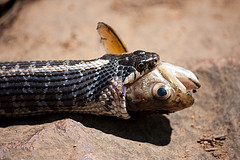
Snake swallowing a whole fish
Image via Jesse Palmer

The Journal of Lipids has retracted an aggressively negative review article called “Why Fish Oil Fails,” written by one Brian S. Peskin, whose bogus health claims have landed him in plenty of hot water in the past.

Here’s the notice: Continue reading “Undeclared competing interest” sinks fish oil takedown by author fined for deceptive claims