A journal said it would retract a paper about asbestos — now it’s “withdrawn.” What changed?

journal-of-occupational-and-environmental-hygieneEarlier this year, an environmental journal told an activist group it was going to retract a study about the safety of roofing products made from asbestos. Now the journal has let the authors withdraw the paper — a different process, according to the journal.

The move follows multiple letters from critics asking to retract a study, which found exposure to asbestos-containing roofing products to be within safe limits. The study’s critics claimed that it contains multiple problems, including not declaring the approving editor’s links with the asbestos industry, grouping together different materials with varying levels of asbestos exposures, and providing misleading information.

Although the Journal of Occupational and Environmental Hygiene (JOEH) initially said it planned to retract the paper, last month, Stephen Reynolds, president of JOEH’s board of directors, sent a letter to Kathleen Ruff, director of the organization Right On Canada, saying plans had changed: Continue reading A journal said it would retract a paper about asbestos — now it’s “withdrawn.” What changed?


U.S. gov’t scientist says he was banned from climate research at work — so he used a pseudonym

A scientist working for the U.S. government says he was told not to work on climate research during working hours, nor reveal his government affiliation when presenting results. So he published his research under a pseudonym instead.

The researcher explains all this in a recent erratum for one of the papers he published under a different moniker — confirming why he and his co-author used the same pseudonyms to publish another now-withdrawn paper that presented some controversial climate findings. That withdrawal — which we covered in in September (as did the Washington Post) — raised eyebrows after Twitter users began pointing out that the authors — Den Volokin and Lark ReLlez — have similar names to another pair of researchers: Ned Nikolov and Karl Zeller

Nikolov’s use of a pseudonym even prompted a misconduct investigation by his employer, the U.S. Department of Agriculture Forest Service.

Here’s the erratum, issued last week for a 2014 paper in SpringerPlus:

Continue reading U.S. gov’t scientist says he was banned from climate research at work — so he used a pseudonym

UCLA lab pulls two papers — one by author who admitted to misconduct

A lab at the University of California, Los Angeles has retracted two papers for duplicated images.

These retractions — in the Journal of Immunology — represent the second and third retractions for the lab head; he lost another paper after one of his former students confessed to manipulating images.

Although Eriko Suzuki admitted to her actions on PubPeer in 2014, the 2007 Oncogene paper wasn’t retracted until June, 2016, when the journal issued a notice citing “data irregularities.”

Unfortunately, Suzuki’s admission in 2014 wasn’t the end of the troubles for lab head Benjamin Bonavida, who recently issued two additional retractions in the Journal of Immunology, only one of which includes Suzuki as a co-author.

Bonavida told us the university received allegations (he’s not sure from who) that some of the control gels were duplicated; he didn’t agree, but couldn’t produce the original gels to disprove it. We asked if any more retractions were coming from Bonavida, who has since retired from running a lab:

Continue reading UCLA lab pulls two papers — one by author who admitted to misconduct

Entomology journal retracts 2016 study with flawed analyses

journal-of-medical-entomologyAn entomology journal has issued its first retraction during the current editor’s nearly 30-year tenure — for a 2016 study with serious flaws in the analyses. 

After the Journal of Medical Entomology (JME) published the study — about the identification of genes that enable an insect to detect odors — an outside researcher wrote a letter to the journal highlighting flaws in the paper. The journal then asked the authors to respond, and enlisted two additional peer reviewers to look into the study, the outside comment, and the authors’ response. They concluded the paper should be retracted.

William Reisen — the journal’s editor-in-chief from the University of California, Davis — said the journal believes the errors were unintentional and there was no fraud on the authors’ part. He added: Continue reading Entomology journal retracts 2016 study with flawed analyses

Journal’s new program: Choose your own reviewers – and get a decision in days

Michael Imperiale

Peer review has numerous problems: Researchers complain it takes too long, but also sometimes that it is not thorough enough, letting obviously flawed papers enter the literature. Authors are often in the best position to know who the best experts are in their field, but how can we be sure they’ll choose someone who won’t just rubber stamp their paper? A new journal – mSphere, an open-access microbial sciences journal only one year old – has proposed a new solution. Early next year, they’re launching a project they call mSphereDirect in order to improve the publication process for authors. We spoke with Mike Imperiale, editor-in-chief at mSphere, about how this system will work.

Retraction Watch: So let’s start with how the program will work, exactly. Can you explain?  Continue reading Journal’s new program: Choose your own reviewers – and get a decision in days

Dispute over shooter video games may kill recent paper

Can playing first-person shooter video games train players to become better marksmen?

A 2012 paper — titled “Boom, Headshot!” — presented evidence to suggest that was, in fact, true. But after enduring heavy fire from critics (one of whom has long argued video games have little lasting impact on users), the authors are planning to retract the paper, citing some irregularities with the data. Although the journal has apparently agreed to publish a revised version of the paper, last year the researchers’ institution decided to launch a misconduct investigation against one of the two co-authors.

Brad Bushman, a professor of communication and psychology at the Ohio State University, headed the research along with then-postdoc Jodi Whitaker, now an assistant professor at the University of Arizona.

According to a recent email from the editor of Communication Research to two critics of the paper, the retraction notice will look something like this:  Continue reading Dispute over shooter video games may kill recent paper

A paper was published in 2015; the authors already lost the data

American Journal of Physiology Renal PhsyiologyThe authors of a 2015 study have retracted it after discovering that several Western blots in their paper “do not represent the experiments that were reported.”

They couldn’t check some of the original blots, because — according to the retraction notice in the American Journal of Physiology – Renal Physiology — they could not be located. The ones that could be found, however, are “inconsistent with what is presented in the figures.”

Here’s the retraction notice, published last month: Continue reading A paper was published in 2015; the authors already lost the data

Researchers retract paper after they run out of breast milk

ejcn

If you think something is amiss with your data, running an experiment again to figure out what’s going on is a good move. But it’s not always possible.

A team of researchers in Seoul recently found themselves in a bind when they needed to check their work, but were out of a key substance: breast milk.

The shortage led them to the retract their 2016 paper on a micronutrient found in breast milk that helps protect infants’ retinas. “Association between lutein intake and lutein concentrations in human milk samples from lactating mothers in South Korea,” was published online last spring in the European Journal of Clinical Nutrition. 

Here’s the retraction notice: 

Continue reading Researchers retract paper after they run out of breast milk

Physics journal removes study for breach of confidentiality

applied-physics-lettersA physics journal has retracted a 2016 study after learning that the author published it without the knowledge or permission of the funder, which had a confidentiality agreement in place for the work.

According to the retraction notice in Applied Physics Letters, the paper also lifted content from other researchers without due credit. Given the “legal issue” associated with the breach of confidentiality, the journal has decided to remove the paper entirely. 

Here’s the retraction notice: Continue reading Physics journal removes study for breach of confidentiality

Sleuthing out scientific fraud, pixel by pixel

lars-koppers
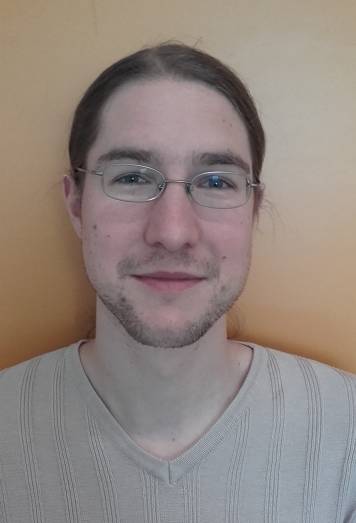
Lars Koppers

When it comes to detecting image manipulation, the more tools you have at your disposal, the better. In a recent issue of Science and Engineering Ethics, Lars Koppers at TU Dortmund University in Germany and his colleagues present a new way to scan images. Specifically, they created an open-source software that compares pixels within or between images, looking for similarities, which can signify portions of an image has been duplicated or deleted. Koppers spoke with us about the program described in “Towards a Systematic Screening Tool for Quality Assurance and Semiautomatic Fraud Detection for Images in the Life Sciences,” and how it can be used by others to sleuth out fraud.

Retraction Watch: Can you briefly describe how your screening system works?

Continue reading Sleuthing out scientific fraud, pixel by pixel