Former UCSF grad student fudged data in two papers

ORIA former graduate student at the University of California, San Francisco “knowingly falsified and/or fabricated” data in two published papers, according to the Office of Research Integrity.

According to a case summary published this morning, Peter Littlefield was working on his PhD, studying the ways that cells respond to external signals, when he published the two problematic papers. He is the first author on the papers; Natalia Jura, whose lab he worked in, is the last on both.

The report’s findings are based on, among other sources, “the respondent’s admission.”

The first paper, “Structural analysis of the EGFR/HER3 heterodimer reveals the molecular basis for activating HER3 mutations” was published in Science Signaling and has been cited twice, according to Thomson Scientific’s Web of Knowledge.

Three figures in the paper are problematic, says the ORI summary:

Continue reading Former UCSF grad student fudged data in two papers

What do you do after painful retractions? Q&A with Pamela Ronald and Benjamin Schwessinger

ARNOLD1
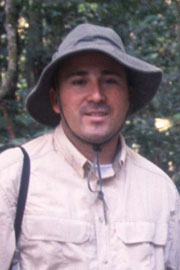
Pamela Ronald and Benjamin Schwessinger, wearing the shirts of a swim competition they entered

2013 was a rough year for biologist Pamela Ronald. After discovering the protein that appears to trigger rice’s immune system to fend off a common bacterial disease – suggesting a new way to engineer disease-resistant crops – she and her team had to retract two papers in 2013 after they were unable to replicate their findings. The culprits: a mislabeled bacterial strain and a highly variable assay. However, the care and transparency she exhibited earned her a “doing the right thing” nod from us at the time.

After many months spent understanding what went wrong and redoing the experiments correctly, today Ronald and her team release another paper in Science Advances that reveals the protein they thought they had identified in 2013.

Ronald and co-first author Benjamin Schwessinger (who recently became an independent research fellow at the Australian National University in Canberra) spoke to us about the experience of recovering from the retractions and finally getting it right. The conversation has been edited for brevity and clarity.

-What did you do differently this time so you didn’t repeat the same mistakes?

Continue reading What do you do after painful retractions? Q&A with Pamela Ronald and Benjamin Schwessinger

Science retracts troubled gay canvassing study against LaCour’s objections

science coverFollowing revelations of data issues and other problems (which crashed our server last week), Science is retracting a paper claiming that short conversations could change people’s minds on same-sex marriage.

The co-author who admitted to faking the data “does not agree” to the retraction, according to Science. Here’s more from the note: Continue reading Science retracts troubled gay canvassing study against LaCour’s objections

Author retracts study of changing minds on same-sex marriage after colleague admits data were faked

science coverIn what can only be described as a remarkable and swift series of events, one of the authors of a much-ballyhooed Science paper claiming that short conversations could change people’s minds on same-sex marriage is retracting it following revelations that the data were faked by his co-author.

[3:45 p.m. Eastern, 5/28/15: Please see an update on this story; the study has been retracted.]

Donald Green, of Columbia, and Michael LaCour, a graduate student at UCLA, published the paper, “When contact changes minds: An experiment on transmission of support for gay equality,” in December 2014. The study received widespread media attention, including from This American LifeThe New York Times, The Wall Street JournalThe Washington Post,  The Los Angeles Times, Science FridayVox, and HuffingtonPost, as LaCour’s site notes.

David Broockman and Joshua Kalla, graduate students at University of California, Berkeley, were two of the people impressed with the work, so they planned an extension of it, as they explain in a timeline posted online yesterday: Continue reading Author retracts study of changing minds on same-sex marriage after colleague admits data were faked

Does peer review ferret out the best science? New study tries to answer

scienceGrant reviewers at the U.S. National Institutes of Health are doing a pretty good job of spotting the best proposals and ranking them appropriately, according to a new study in Science out today.

Danielle Li at Harvard and Leila Agha at Boston University found that grant proposals that earn good scores lead to research that is more cited, more published, and published in high-impact journals. These findings were upheld even when they controlled for notoriously confounding factors, such as the applicant’s institutional quality, gender, history of funding and experience, and field.

Taking all those factors into consideration, grant scores that were 1 standard deviation lower (10.17 points, in the analysis) led to research that earned 15% fewer citations and 7% fewer papers, along with 19% fewer papers in top journals.

Li tells Retraction Watch that, while some scientists may not be surprised by these findings, previous research has suggested there isn’t much of a correlation between grant scores and outcomes:

Continue reading Does peer review ferret out the best science? New study tries to answer

Science chemistry paper earns retraction after expression of concern, marking second for UT group

scienceThe authors of a 2011 Science paper that proposed a new way to direct chemical bonds have withdrawn the paper after concerns about the data prompted an investigation and Editorial Expression of Concern last year from the journal. The retraction is the second for the group, which has also had seven other expressions of concern.

After a reader emailed the editors to raise suspicions about the data, corresponding author Christopher W. Bielawski, then based at the University of Texas at Austin, led an investigation of all the figures. It found substantial problems: “In over 50% of the figure parts, the authors deemed the data unreliable due to uncertainty regarding the origin of data or the manner in which the data were processed,” according to the retraction notice.

UT Austin concluded that there had been misconduct, but did not elaborate.

Continue reading Science chemistry paper earns retraction after expression of concern, marking second for UT group

Researchers retract Science paper claiming to have detected a single proton

science jan 2015Less than three months after publishing a paper in Science which they claim to have been able to detect the spin of a single proton, the authors have retracted it for “a potentially serious issue with the main conclusion.”

Here’s the notice: Continue reading Researchers retract Science paper claiming to have detected a single proton

Paper that formed basis of study retracted earlier this year retracted itself, from Science

science dec 2014Back in May, we reported on a retraction from Molecular Cell that referred to a 2012 study the same group had published in Science. (A few weeks later, the lab head told us just how painful the process was.)

Now, the Science paper has been retracted. Here’s the notice: Continue reading Paper that formed basis of study retracted earlier this year retracted itself, from Science

Downstream effects: Comment on retracted narcolepsy paper retracted

stmcoverThe recent retraction of a paper in Science Translational Medicine reporting “one of the biggest things to happen” in narcolepsy research has claimed a bystander: A letter that commented on the no-longer-landmark article.

The authors of the letter are with GlaxoSmithKline’s vaccine division. Here’s the new notice: Continue reading Downstream effects: Comment on retracted narcolepsy paper retracted

Hayabusa Science retraction made official, but behind a paywall

science 62714Science has published the retraction of a 2006 paper about an asteroid, following a report in its news pages that the study’s authors had requested the move.

Here’s the paywalled — tsk, tsk — notice: Continue reading Hayabusa Science retraction made official, but behind a paywall