Two more retractions appear for prominent MIT cancer researcher Robert Weinberg

genes and developmentTwo identical retraction notices have popped up for MIT professor Robert Weinberg, a highly-cited cancer researcher who had a retraction and a correction in 2013, both in Cancer Cell. 

These two new retractions, in Genes and Development, stem directly from another paper by Weinberg and colleagues in Cell that will apparently be retracted, as the “same analytical methodology was used,” according to the notices [see bottom of the post for an update].

Weinberg is highly regarded, and at least 20 of his papers have been cited over a thousand times.

First author Scott Valastyan was a promising postdoc at the time of the paper’s publication. He was a 2011 Runyon Fellow at Harvard, a three-year, $156,000 award for outstanding cancer postdocs. He doesn’t seem to have published anything since 2012, though he is listed as a joint inventor with Weinberg on patents filed in 2009 and 2014.

Here are the notices for “Concomitant suppression of three target genes can explain the impact of a microRNA on metastasis” (cited 73 times, according to Thomson Scientific’s Web of Knowledge) and “Activation of miR-31 function in already-established metastases elicits metastatic regression” (cited 54 times), both paywalled: Continue reading Two more retractions appear for prominent MIT cancer researcher Robert Weinberg

“Irreconcilable difference of opinion” divides math preprint

arxivA fight over a paper posted on preprint server arXiv.org has divided two mathematicians.

The authors initially posted the paper, which looks at the mathematical properties of spheres, in 2013. And that’s when the trouble started.

Apparently, after submitting the paper to a journal and receiving reviewer feedback, co-authors Fabio Tal at the University of São Paulo and Ferry Kwakkel, who got a PhD at the University of Warwick, began to fight over the content of the paper, causing Kwakkel to post his own version, and Tal to withdraw the previous one. “I believe we are severely at odds now,” Tal told Retraction Watch.

In February 2015, Kwakkel, posted a second paper on arXiv.org that he said is his “version” of the 2013 paper, with which it has “substantial text overlap.” Tal requested that the first paper be withdrawn; the note that now appears on “Homogeneous transformation groups of the sphere” cites an “irreconcilable difference of opinion”:

Continue reading “Irreconcilable difference of opinion” divides math preprint

Second cell bio retraction from UPitt investigation of tweaked images

Journal of Cellular Physiology: Volume 229, Number 10, October 2Two researchers, Tong Wu and Chang Han, have lost a second paper as the result of a University of Pittsburgh investigation into image manipulations.

The first retraction, in Journal of Cellular Biochemistry, went live in February. The researchers, currently based at Tulane University, were originally tapped by pseudonymous tipster Juuichi Jigen, who created a website in 2012 to chronicle the allegations.

The blog lists six papers by the pair with supposedly questionable figures. According to Jigen, this latest retraction, in the Journal of Cellular Physiology, contains a figure (2A) that appears to reuse data from another paper, and another figure (3) where the data appear to be manipulated.

Continue reading Second cell bio retraction from UPitt investigation of tweaked images

Bielawski and Wiggins up retraction count to five with three in JACS

Journal of the American Chemical SocietyThe Journal of the American Chemical Society (JACS) has retracted three articles that had earned expressions of concern by chemistry researchers who were under investigation at the University of Texas, Austin.

Kelly Wiggins and Christopher Bielawski have already received two other retractions and several EoCs.

The newly retracted articles have each been cited more than 50 times, according to Thomson Scientific’s Web of Knowledge.

The three papers are: Continue reading Bielawski and Wiggins up retraction count to five with three in JACS

Catalyst for change: grad student catches error in chem experiments, prompts retraction

acscatalysisACS Catalysis has retracted a 2012 research letter from a chemistry lab that discovered an error in their experiments.

According to last author Rory Waterman at the University of Vermont, an undetected reaction caused his lab to mistakenly mischaracterize the products of an iridium catalyst. The diligence of a graduate student brought it all to light, he noted: “In short, it was the ability of one of my group members to be a very good scientist.”

The letter, titled “High Activity and Selectivity for Silane Dehydrocoupling by an Iridium Catalyst,” was published in February. It has only accumulated 5 citations, according to Thomson Scientific’s Web of Knowledge.

According to the retraction notice: Continue reading Catalyst for change: grad student catches error in chem experiments, prompts retraction

Heart journal issues expression of concern after fraud report

circulationThe American Heart Association’s journal Circulation has issued an expression of concern for a paper about the molecular underpinnings of arrhythmias that was co-authored by a biomedical engineer who committed fraud on a massive scale.

According to an investigation by the Office of Research Integrity (ORI), former Vanderbilt engineer Igor Dzhura faked nearly 70 images and drastically over-estimated the number of experiments he conducted. He was banned from receiving federal funding for three years.

The fraud has resulted in six retracted papers, Dzhura has agreed to retract six papers, which have been cited more than 500 times. [Ed. note: at this time, only one paper has actually been retracted]

Continue reading Heart journal issues expression of concern after fraud report

SfN journal retracts paper, bans UPenn researchers over “data misrepresentation”

journal of neuroscienceThe Journal of Neuroscience has yanked an Alzheimer’s paper and banned three University of Pennsylvania authors from publishing there temporarily, following conflicting investigations by the university and the publisher, the Society for Neuroscience, into the data.

The 2011 paper looked into the cellular makeup of the characteristic plaques that develop in the brains of people with Alzheimer’s disease. It’s been cited 64 times, according to Thomson Scientific’s Web of Knowledge.

While the notice states that Penn’s investigation “supports the journal’s findings of data misrepresentation,” last author Virginia Lee said she asked the journal to simply issue a correction of the faulty data, since the findings are “extremely important” for the field and have been affirmed by a later paper. According to author John Trojanowski (who is married to and publishes regularly with Lee), he and Lee have been barred from publishing in Journal for Neuroscience for several years. Senior Co-author Edward Lee is out for a year [see update at the bottom of this post].

Lee provided us with a letter Vice Dean of Research Glen Gaulton sent to the journal (click here to read), in which he says an investigation found “no evidence of research misconduct” and the “errors…do not detract from or otherwise alter the conclusions of the manuscript.”

Continue reading SfN journal retracts paper, bans UPenn researchers over “data misrepresentation”

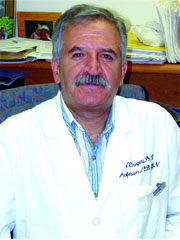
Ob-gyn prof up to 7 retractions, latest due to “substantial data misrepresentation”

University of Florida

Two more retractions have popped up for Nasser Chegini, the former University of Florida professor currently under investigation by the Office of Research Integrity (ORI).

Both retractions appear in the Journal of Clinical Endocrinology & Metabolism. The notices indicate that an investigation report from the University of Florida “found substantial data misrepresentation” in two JCEM articles about Smads, signaling molecules that carry messages from TGF-beta receptors to the nucleus.

Here’s the notice for “The Expression of Smads in Human Endometrium and Regulation and Induction in Endometrial Epithelial and Stromal Cells by Transforming Growth Factor-Beta” (cited 28 times, according to Thomson Scientific’s Web of Knowledge):

Continue reading Ob-gyn prof up to 7 retractions, latest due to “substantial data misrepresentation”

Prominent geneticist David Latchman’s group notches second retraction

j cell scienceA team of researchers whose work is under investigation by University College London has retracted a second paper.

Three of the 11 authors of the 2005 Journal of Cell Science paper being retracted — David Latchman, Richard Knight, and Anastasis Stephanou — were authors of a Journal of Biological Chemistry paper retracted in January. Stephanou takes the blame for the “errors” which felled the Journal of Cell Science paper, about how a tumor suppressor responds to DNA damage.

Here’s the notice for “STAT-1 facilitates the ATM activated checkpoint pathway following DNA damage:” Continue reading Prominent geneticist David Latchman’s group notches second retraction

Frontiers lets HIV denial article stand, reclassifies it as “opinion”

frontiers phFollowing an investigation sparked by criticism for its decision to publish a paper questioning the link between HIV and AIDS, a Frontiers journal has decided to not retract the article but rebrand it as an “opinion.”

In September, 2014, Patricia Goodson, a professor of health education at Texas A&M University, published an article called “Questioning the HIV-AIDS hypothesis: 30 years of dissent.”

The paper was quickly called into question, and the journal, Frontiers in Public Health, issued a statement of concern and promised to look into the problem. Now, they’ve announced their solution: call the paper an “opinion” and publish an argument against it.

Continue reading Frontiers lets HIV denial article stand, reclassifies it as “opinion”