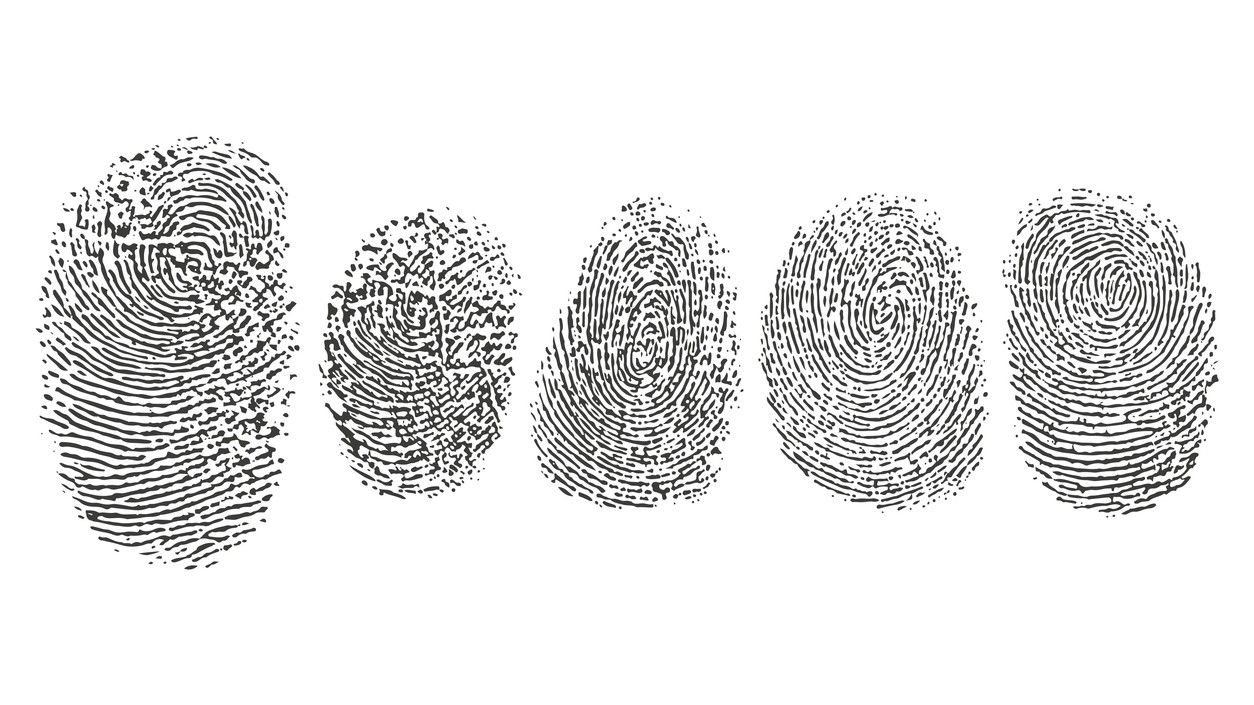
The shape of your fingerprint can predict your blood type — at least, it can according to more than a dozen conference papers and journal articles published since 2023. But those papers seem to rely on fingerprint images that never included any information on the print owner’s blood type, researchers in Australia say.
The papers report training artificial intelligence models to sort fingerprints into blood groups with high accuracy using several collections on the data sharing platform Kaggle. One problem: The fingerprints in those datasets appear to be taken from a single original collection, the Sokoto Coventry Fingerprint Dataset (SOCOFing), which contains no blood type information.
“The papers are produced under false pretence with fake data and should therefore be retracted,” said Lars Kooijman, an adjunct engineering research fellow at Monash University in Melbourne, and Stephanie Summersby, an adjunct associate lecturer with school of psychology at the University of New South Wales, in an email to Retraction Watch.
Two publishers are now looking into the articles.
One paper published in Franklin Open, an Elsevier journal, didn’t name the specific dataset it used, but Kooijman found the fingerprints matched datasets on Kaggle that appeared to have clustered the images into blood type groups.
In an email to Retraction Watch, Sanivarapu Prasanth Vaidya, a computer scientist and lead author of the work, said the team had used the “Fingerprint Blood Group Classification Dataset” on Kaggle. “We did not independently collect fingerprint samples or conduct laboratory blood-group tests on the individuals represented in the dataset,” he wrote. He said the team had not known the images might come from SOCOFing or that the labels were generated by clustering, and had chosen the data “in good faith.”
The dataset he said he used appears to have been uploaded this July, while his paper was published in December 2025. Vaidya said the date on the Kaggle page may reflect a “subsequent update to the Kaggle repository rather than necessarily its original upload date.”
Elsevier is aware of the concerns, said Rebecca Clear, the publisher’s media and communications director. “An investigation is underway, and therefore no further information can be shared at this point.”
Most of the other articles appeared as conference proceedings in IEEE Xplore, which is “currently evaluating the papers in question,” said a spokesperson in their publishing ethics team. The lead author of two of the papers, Krisha R., said in an email that the team had run no blood tests of their own, and it was too early to say whether a correction or retraction was needed.
Kaggle removed seven of the datasets the papers cited after Kooijman reported them for plagiarism. But at least two versions remain public on Kaggle, including the one Vaidya named.
Kooijman and Summersby came across the papers while reviewing research on fingerprint image quality. They said they grow suspicious whenever a paper reports more than 90% accuracy in biology, “as there is simply too much noise.” There is also little evidence that fingerprints are related to blood type, said Kooijman and Summersby, who did the analysis independently of their work at Monash and UNSW. At best, some studies have found an association between fingerprints and blood type, though say the results can’t be used at an individual level, and others have found no link.
The Kaggle datasets the papers cited included around 6,000 fingerprint images sorted into eight blood group folders. The pair ran the files through a hashing algorithm, which generates a unique signature from a file’s contents, and found more than 6,000 exact matches with SOCOFing — meaning the images had come from that dataset. But the file naming system was also a giveaway that the images had been clustered, they said. “The people who created this dataset were so slack they even left the name ‘Cluster’ in the fingerprint image names.”
“We have not collected or used blood type in our research (a PhD thesis) or predicted blood type from the scanned fingerprints,” Vasile Palade, one of SOCOFing’s creators, said in an email to Retraction Watch.
One uploader of a derivative dataset even acknowledged in the description that the images had come from SOCOFing and had been clustered into blood groups, according to Kooijman and Summersby.
They found no papers from before 2023, and suspect AI-generated code played a role. More likely exist, they said.
“The fact that fake information is being circulated as scientific fact worries us,” Kooijman and Summersby wrote in an email to Retraction Watch, “especially the implications this may have in the medical system if a detection system such as the ones proposed in the articles is ever implemented.”
Like Retraction Watch? You can make a tax-deductible contribution to support our work, follow us on X or Bluesky, like us on Facebook, follow us on LinkedIn, add us to your RSS reader, or subscribe to our daily digest. If you find a retraction that’s not in our database, you can let us know here. For comments or feedback, email us at [email protected].