Too many of us have sat through too many bad presentations. And no one wants to give one, either.
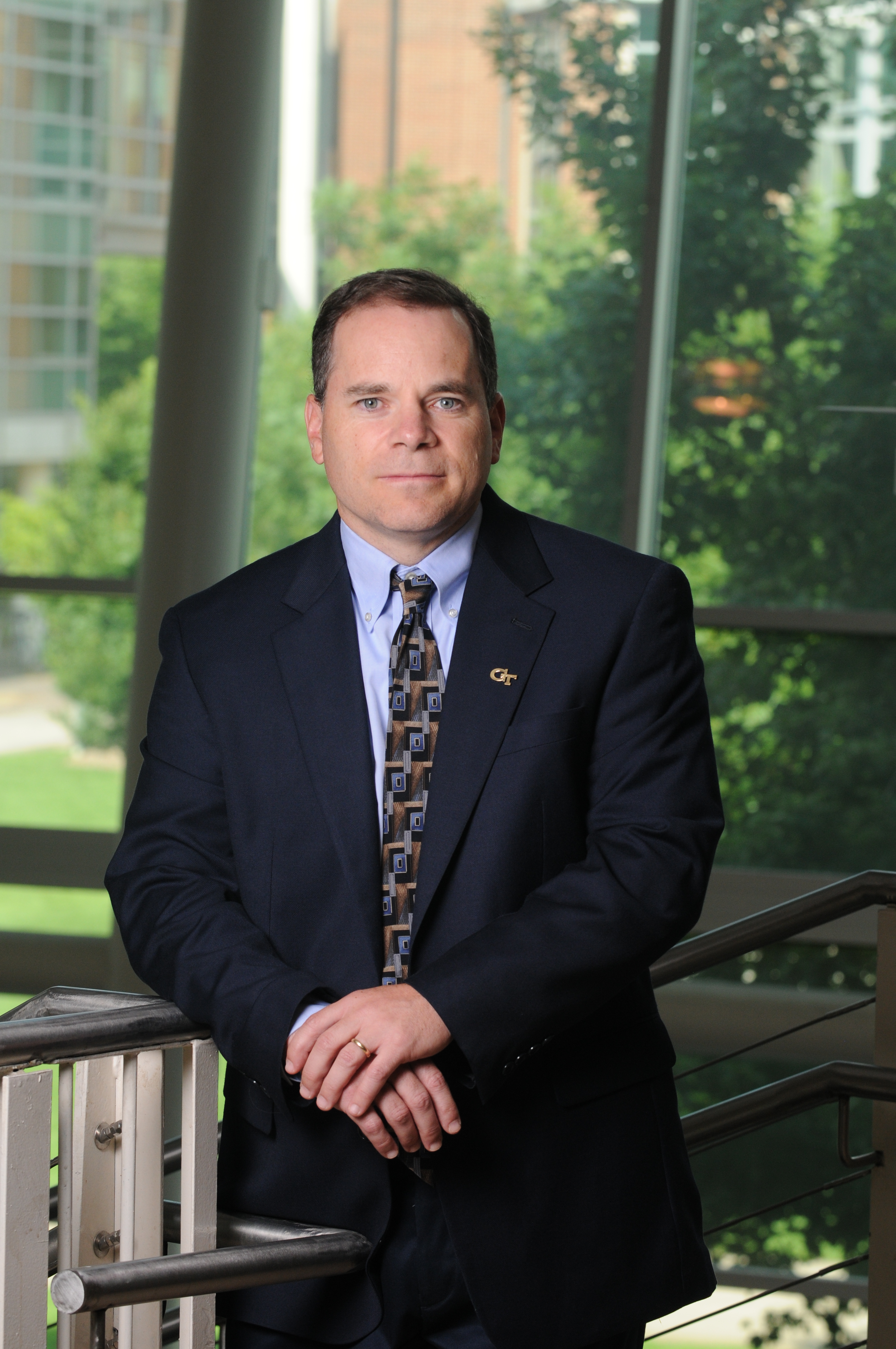
Someone who’s seen his fair share of bad talks is David Sholl, of the Georgia Institute of Technology. In this helpful video, “The Secrets of Memorably Bad Presentations,” he presents some tongue-in-cheek advice on how to torture your audience.
(If it’s not immediately obvious — Sholl wants you to do the exact opposite of what he’s suggesting, below.)
Last year, a cancer researcher wrote to the Journal of Biological Chemistry, asking to correct one of his papers. The journal responded by requesting the raw data used to prepare his figures. Then, in a follow-up request, it asked for raw data behind the figures in 20 additional published articles.
And when all was said and done six months later, Jin Cheng ended up with far more than just a single correction: Last month, the journal issued withdrawals for 19 of his papers — including the paper he originally asked to correct — along with one correction.
We’ve pieced together some clues about what happened after reviewing correspondence between representatives of JBC and Moffitt Cancer Center, where Cheng conducted his research. A spokesperson for Moffitt confirmed that the retractions did not initiate from an institutional investigation — but that the institution is now conducting one.
That’s not the way retractions typically happen: Often, journals don’t have the resources to conduct investigations themselves, so institutions mostly take the lead in double-checking papers and, if necessary, contacting the journal to initiate a retraction. Here, it seems the opposite took place.
A study linking vaccines to autism and other neurological problems has been removed by a Frontiers journal after receiving heavy criticism since it was accepted last week.
The abstract — published online in Frontiers in Public Health after being accepted November 21 — reported findings from anonymous online questionnaires completed by 415 mothers of home-schooled children 6-12 years old. Nearly 40 percent of children had not been vaccinated, and those that had were three times more likely to be diagnosed with neurodevelopmental disorders such as autism, the study found.
Three psychiatric studies of children contained a myriad of problems that may have put participants at greater risk than was disclosed by consent forms, according to a 2014 letter sent to hundreds of the participants and their families.
Through a public records request, we’ve obtained a copy of the letter — which lists a host of problems in the studies, ranging from enrolling ineligible patients, not informing families of the risks associated with the studies, and skipping tests intended to minimize the risks associated with lithium.
In 2013, Mani Pavuluri told the University of Illinois at Chicago that one of her study participants had been hospitalized — an event which prompted the university to halt three of her studies, launch a misconduct probe, and send letters to approximately 350 families of children participating in the research, notifying them of what happened.
Circumcision is a hot topic. So hot, questions about a reviewer’s potential conflict with the author of an article promoting circumcision prompted a journal editor to resign, and one academic to call another a “fanatic.”
It began in August, when Brian Morris, professor emeritus of molecular medicine at the University of Sydney, published a critique of a paper that itself had critiqued the practice of circumcision. But the sole reviewer of Morris’s article was a frequent co-author of his, Aaron Tobian of the Johns Hopkins School of Medicine. In his reference section, Morrislisted five papers on which he and Tobian were co-authors.
A tipster forwarded us emails from Eduardo Garin, editor in chief of the journal, saying he had resigned from the journal after it refused to retract the paper, despite the fact that its sole reviewer was a frequent collaborator of the author. However, Garin is still listed as editor in chief on the journal’s site.
Garin confirmed to us that he resigned after the publisher refused to retract or correct the Morris article; however, Xiu-Xia Song, vice director of the editorial office at Baishideng, told us by email that Garin is still the journal’s editor.
And now, thanks to the American Civil Liberties Union, which is representing PubPeer in court and has filed a motion to include the report as evidence in the case, we have a copy.
Two sets of authors based largely at Harvard Medical School have each retracted a paper for duplication in the same journal.
Both papers — which are more than a decade old — were pulled in The Journal of Clinical Investigation on November 1 by their respective corresponding authors.
One paper’s last author told us it was difficult to identify how the duplications occurred since the study took place so long ago, but added that multiple experiments had corroborated the results.
All of the papers were produced by a research group in Brazil; all were retracted after the publisher conducted an investigation, concluding that the NMR results had been manipulated. At the time, the last author on the latest retraction, Claudio Airoldi, defended the work. Since then, however, Airoldi has logged two more retractions, bringing his total to 13.
Some people can look at an old photograph of a person — say, of your grandmother in elementary school — and tell whether the person is today alive or dead, according to a paper published last spring.
If that sounds too weird to be true…well, it might be. The journal editors have retracted the paper for not having enough evidence to back up its claims, despite the authors’ objections.
Two journals sharing the same title — allegedly due to an “academic divorce” between the founders — are giving two different accounts to why a paper may (or may not) have been retracted.
Confused yet? We are.
Here’s what we can piece together. The journal Amphibian and Reptile Conservation once had two editors, Craig Hassapakis and Robert Browne; both names appear on the same cover of a 2011-2012 issue of the journal, as librarian Jeffrey Beall noted in a blog post published last year. But since then, there seems to have been an “academic split” between the two (as defined by Beall), and each now publishes a different version of the publication named Amphibian and Reptile Conservation.



 Circumcision is a hot topic. So hot, questions about a reviewer’s potential conflict with the author of an article promoting circumcision prompted a journal editor to resign, and one academic to call another a “fanatic.”

 After five years, Elsevier has