A highly cited paper by a well-known scientist at the Massachusetts Institute of Technology who studies longevity could have aged better: The ten-year-old paper has earned its second correction.
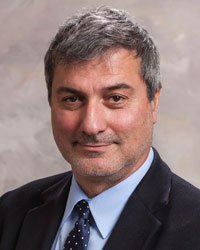
Last week, The Lancet honored a co-author’s request to remove his name from Paolo Macchiarini’s seminal 2011 paper, which described the first transplant of an artificial trachea seeded with autologous stem cells but has since come under fire.
The Lancet has been contacted by Dr KH Grinnemo who was an author on the paper. Dr Grinnemo no longer wishes to be an author and asks for his name to be removed. This correction has been made to the online version as of March 3, 2016.
The paper has been cited 187 times, designating it “highly cited” by Thomson Reuters Web of Science.
A promising early career researcher has been dismissed from her post at the National Center for Cardiovascular Research (CNIC) in Spain, following “an alleged ongoing fraud,” according to El Pais.
We don’t know what exactly the internal investigation into Susana González’s work found; El Pais relied on anonymous sources, and the CNIC confirmed only that they dismissed her on February 29th. There are allegations against her work on PubPeer, but we don’t know what role those played in the investigation.
(We had the story translated; here’s a PDF of the article in English.)
González denies that she committed misconduct, the paper reports:
After reading too many papers that either are not reproducible or contain statistical errors (or both), the American Statistical Association (ASA) has been roused to action. Today the group released six principles for the use and interpretation of p values. P-values are used to search for differences between groups or treatments, to evaluate relationships between variables of interest, and for many other purposes. But the ASA says they are widely misused. Here are the six principles from the ASA statement:Continue reading We’re using a common statistical test all wrong. Statisticians want to fix that.
Approximately six out of 10 economics studies published in the field’s most reputable journals —American Economic Review and the Quarterly Journal of Economics — are replicable, according to a study published today in Science.
The authors repeated the results of 18 papers published between 2011 and 2014 and found 11 — approximately 61% — lived up to their claims. But the study found the replicated effect to be on average only 66% of that reported in the earlier studies, which suggests that authors of the original papers may have exaggerated the trends they reported.
A cancer researcher who recently retired from MD Anderson Cancer Center — and also recently lost seven papers from one journal following a multi-year investigation — is one of the world’s top scientists, according to a new ranking.
In Thomson Reuters Web of Science’s 2015 list of The World’s Most Influential Scientific Minds, Bharat Aggarwal’s name tops the section for Pharmacology and Toxicology (see p. 89). In all fairness, the list is presented in alphabetical order, and seven of Aggarwal’s papers have each been cited at least 1,000 times. But in addition to his recent seven retractions, he has has six corrections, two unexplained withdrawals, and two Expressions of Concern.
A paper about the biomechanics of human hands published last month in PLOS ONE is raising some questions on Twitter, after readers stumbled upon some curious language in the abstract:
The explicit functional link indicates that the biomechanical characteristic of tendinous connective architecture between muscles and articulations is the proper design by the Creator to perform a multitude of daily tasks in a comfortable way.
Yeah, that’s right — “the Creator.” You don’t see such language all that often in academic papers.
Sonia Melo, the recipient of an early career award from the European Molecular Biology Organization (EMBO) who fell under investigation after one of her papers was retracted, has now lost the grant.
Authors are retracting a 2014 paper about how liquid-crystalline materials self-organize in low temperature conditions after realizing they had measured the temperatures incorrectly.