Professor forced to retire after threatening co-author

jialalI-bio
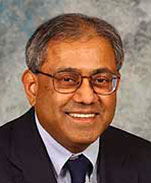
Ishwarlal “Kenny” Jialal

As the University of California Davis is reeling from the resignation of Chancellor Linda Katehi over alleged ethical violations, we’ve learned of more drama at the school: The fallout from a single retraction back in 2012 pushed one UC Davis professor into early retirement this summer without professor emeritus status.

What’s more, a UC Davis committee had recommended that former professor Ishwarlal “Kenny” Jialal retire early but maintain his professor emeritus status, and Katehi overruled that decision, deciding to strip Jialal of any future emeritus status.

Here’s the story: Jialal was found innocent of any research misconduct after Nutrition Reviews journal editors found portions of a 2008 review paper contained writing from the Linus Pauling Institute website, according to an internal investigation. However, after the first author — former postdoc Uma Singh, now an adjunct professor at Valencia College in Orlando — admitted to plagiarizing a passage, the investigation found Jialal sent her threatening emails in reaction to the perceived smear of the retraction on his reputation.

For instance, Continue reading Professor forced to retire after threatening co-author

Widely used brain tumor cell line may not be what researchers thought it was

Bengt Westermark
Bengt Westermark

Nearly 50 years ago, researchers in Uppsala, Sweden used cells from a patient to establish a brain tumor cell line that has become widely used. But a new study suggests that the most common source of that cell line used by scientists today may not be derived from that original patient’s tumor, raising questions about the results obtained in hundreds of studies.

In a new paper out today in Science Translational Medicine, Bengt Westermark, of Uppsala University, and colleagues describe what they found when they performed a forensic DNA analysis comparing the widely used version of the cell line to the original. The findings are consistent with those of other analyses in which cell lines turn out not to be what researchers thought, a problem we’ve focused some attention on.

Here’s an email interview with Westermark about the findings and their implications: Continue reading Widely used brain tumor cell line may not be what researchers thought it was

Author lifts from one paper in two different articles. Why does one journal retract, while the other corrects?

circ resAre there instances when similarities between papers should be fixed by a correction, rather than a retraction?
We’re asking ourselves that question after seeing two journals take very different approaches to a somewhat similar situation. Last year, Frontiers in Physiology retracted a paper by Anastasios Lymperopoulos at Nova Southeastern University in Florida because of an “an unacceptable level of similarity” to a 2009 review article by different authors. But more recently, after Circulation Research discovered another paper co-authored by Lymperopoulos also contained similar text from the same 2009 review, it decided to correct the passages.

The last author of the Circulation Research paper told us the overlap between the two papers was less than 5%, and the journal never suggested the authors retract the paper.

Here’s the correction notice in Circulation Research:

Continue reading Author lifts from one paper in two different articles. Why does one journal retract, while the other corrects?

Sting operation forces predatory publisher to pull paper

Medical Archives

Sometimes, the best way to expose a problem with the publishing process is to put it to a test — perhaps by performing a Sokal-style hoax, or submitting a paper with obvious flaws.

In 2014, that’s just what a researcher in Kosovo did. Suspicious that a journal wasn’t doing a thorough job of vetting submissions, she decided to send them an article of hers that had already appeared in another journal. Her thinking was that any journal with an honest and thorough peer review process would hesitate to publish the work. But this journal didn’t — at least at first. Though they retracted the paper this summer, it took a few twists and turns to get there.

The researcher wasn’t the only one wary of the journal — it’s on Jeffrey Beall’s list of “potential, possible, or probable” predatory publishers. Appropriately, Beall recounts the story of her sting operation on his blog. Here’s how it all went down:

Continue reading Sting operation forces predatory publisher to pull paper

Anesthesia journal pulls study lacking patient consent

Journal of AnesthesiaAn anesthesia journal has retracted a paper after an author admitted that the study did not obtain appropriate consent from patients receiving a neuromuscular block in muscles on the face and hands. 

The first author, Yuhji Saitoh, has the same name as a co-author of Yoshitaka Fujii, the all-time record holder with 183 retractions listed on our leaderboard. Thirty-six of those retracted papers include a co-author with the name of Yuhji Saitoh, but we were unable to confirm this is the same person listed on the newly retracted paper.  

Here’s the retraction notice, issued by the Journal of Anesthesia on August 11: Continue reading Anesthesia journal pulls study lacking patient consent

Scotland researcher suspended during misconduct probe: report

Robert Ryan
Robert Ryan

A prominent researcher in Scotland has been suspended amidst a misconduct investigation at the University of Dundee.

According to The Scotsman, the allegations against Robert Ryan center around falsifying data and duplicating figures in his work about molecular bacteriology.

As the outlet reports: Continue reading Scotland researcher suspended during misconduct probe: report

You’ve been dupe’d: Results so nice, they’re published twice

obesity surgeryWith retraction notices continuing to pour in, we like to occasionally take the opportunity to cover several at a time to keep up.

We’ve compiled a handful of retractions that were all issued to papers that were published twice by at least one of the same authors — known as duplication. (Sometimes, this can be the publisher’s fault, although that doesn’t appear to be the case in any of the following examples.)

So here are five recently retracted papers that were pulled because of duplication: Continue reading You’ve been dupe’d: Results so nice, they’re published twice

USDA finds “evidence of manipulation” in vaccine study

VaccineA journal is retracting a paper by scientists at the U.S. Department of Agriculture about a vaccine to protect fish from a deadly bacterial infection, after an investigation found evidence of data manipulation. 

The retraction notice — which appears in the journal Vaccine — cites an investigation by the USDA. It also notes that the authors — who are no longer with the USDA — have not agreed to the retraction.

Here’s the retraction notice, issued on August 20: Continue reading USDA finds “evidence of manipulation” in vaccine study

U Colorado’s former “golden boy” up to 7 retractions

University of Colorado DenverA former graduate student at the University of Colorado Denver has gained three retractions and two expressions of concern (EOC), following an institutional probe into his work. 

Last year, we reported on an investigation by the University of Colorado Denver into the research of Rajendra Kadam, which recommended retracting 10 papers. The report also flagged eight additional papers co-authored by Kadam whose data could not be validated, raising “concerns as to the scientific validity and integrity” of the material. A few months later, we reported on some of the notices — four retractions and an EOC — that had begun to appear for Kadam’s manuscripts.

We’ve since discovered more notices, bringing his total to seven retractions and three EOCs. 

Kadam was once a prominent member in the lab of Uday Kompella, and often referred to by colleagues as the “golden boy,” according to the institution’s report. In 2012, he won a graduate student symposium award from the American Association of Pharmaceutical Scientists.

A University of Colorado Denver spokesperson told Retraction Watch: Continue reading U Colorado’s former “golden boy” up to 7 retractions

Nutrition researcher Chandra, who lost libel suit, charged with health care fraud

R K Chandra
R K Chandra

A nutrition researcher with multiple retractions who unsuccessfully sued the Canadian Broadcasting Corporation (CBC) for libel has been charged with defrauding a state health insurance plan.

The Toronto Star reports that a warrant has been issued for the arrest of Ranjit Kumar Chandra for billing the Ontario Health Insurance Plan for “services that were either not provided or billed inappropriately.” The charges do not appear to be related to his research: Chandra worked once a week as an allergist for the past four years, the Star reports, and the alleged fraud was at least $5,000. Continue reading Nutrition researcher Chandra, who lost libel suit, charged with health care fraud