“Think of the unthinkable:” JAMA retraction prompts author to urge others to share data

A few months ago, a researcher told Evelien Oostdijk there might be a problem with a 2014 JAMA study she had co-authored.

The study had compared two methods of preventing infection in the intensive care unit (ICU). But a separate analysis had produced different results.

Oostdijk, from the University Medical Center Utrecht in The Netherlands, immediately got to work to try to figure out what was going on. And she soon discovered the problem: The coding for the two interventions had been reversed at one of the 16 ICUs. This switch had “a major impact on the study outcome,” last author Marc Bonten, also from the University Medical Center Utrecht, wrote in a blog post about the experience yesterday, because it occurred at “one of the largest participating ICUs.”

When Oostdijk and a researcher not involved in the study analyzed the data again, they discovered a notable difference between the revised and original findings: The new analysis revealed that one of the interventions had a small but significant survival benefit over the other.

Oostdijk and Bonten, who supervised the re-analysis, notified their colleagues of the revised study outcomes and contacted the journal requesting a retraction and replacement, which was published yesterday in JAMA.

According to the notice of retraction and replacement:

Continue reading “Think of the unthinkable:” JAMA retraction prompts author to urge others to share data

Fraud by bone researcher takes down two meta-analyses, a clinical trial, and review

The troubles continue for a bone researcher, who’s lost multiple papers in recent months due to problems ranging from data issues to including authors without their consent.

Now, journals have retracted two more papers by Yoshihiro Sato. And in a sign of the downstream effects that fraud can have, another journal has retracted two meta-analyses by other authors that cited his work.

Earlier this month, the journal Current Medical Research and Opinion retracted the two meta-analyses because they were based on recently retracted papers by Sato, affiliated with Mitate Hospital. The two new retractions of Sato’s papers are a review and a randomized controlled trial.

Sato was not an author on the meta-analyses published in 2008 and 2011; he was, however, first and lead author on all the retracted papers referenced in the notices. The notices state that the trio of authors on the meta-analyses:

Continue reading Fraud by bone researcher takes down two meta-analyses, a clinical trial, and review

Three figures in blood pressure paper were manipulated, says journal

A pharmacology journal has retracted a 2011 paper after concluding images in three figures had been manipulated.

According to the British Journal of Pharmacology, four of the five authors claim they played no role in the manipulation. There is no comment from the remaining author, first author Ian Morecroft, a research associate at the University of Glasgow.

Here’s more from the notice, which says an investigation at the University of Glasgow is ongoing:

Continue reading Three figures in blood pressure paper were manipulated, says journal

A diabetes researcher sued his former employer for defamation. Here’s the story.

Franck Mauvais-Jarvis

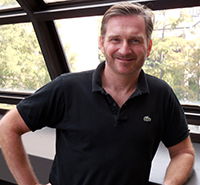
The last decade hasn’t exactly been drama-free for Franck Mauvais-Jarvis, head of the Diabetes Research Program at Tulane University.

After being accused of falsifying three figures in a submitted manuscript, Mauvais-Jarvis sued his accusers and officials at his former employer — Northwestern University — for defamation and conspiracy in 2011.

In 2014, a judge dismissed the suit. We wish we could tell you more details about it—such as what the university’s misconduct investigation found, or how the lawsuit was concluded—but they remain shrouded in mystery. What we know is based on court records from the lawsuit, which we recently obtained through an unrelated public records request. Even without all the details, it’s a long, sordid tale, involving a lot of finger-pointing and allegations of misconduct.

In 2008, a former research technician in the lab of Mauvais-Jarvis, then an associate professor of medicine at Northwestern University, raised concerns of fabrication in two figures in a paper on the regulation of insulin synthesis that had been submitted the Journal of Biological Chemistry. An inquiry committee at the university unanimously concluded that research misconduct charges against Mauvais-Jarvis were not credible.

But then a third figure in the manuscript was found to be “inaccurate,” and the university initiated a second inquiry. That’s when Mauvais-Jarvis — whose papers have been cited more than 2,000 times, according to Clarivate Analytics’ Web of Science, formerly part of Thomson Reuters — initiated a lawsuit. Continue reading A diabetes researcher sued his former employer for defamation. Here’s the story.

First retraction appears for embattled food researcher Brian Wansink

Brian Wansink

Earlier this month, a high-profile food researcher who’s recently come under fire announced a journal was retracting one of his papers for duplication. Today, a retraction appeared — for a 2002 study which contained “major overlap,” according to the journal.

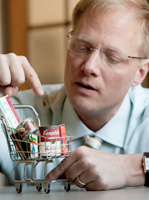
The Journal of Sensory Studies has retracted a paper by Cornell’s Brian Wansink about how labeling of foods can affect how they taste, after determining it borrowed too heavily from a 2000 paper. Wansink is the first author on both studies.

Here’s more from the retraction notice:

Continue reading First retraction appears for embattled food researcher Brian Wansink

Busted: Researcher used fake contact info for co-authors

In February, Lusine Abrahamyan, an assistant professor at the University of Toronto, was contacted by ResearchGate. Her name was listed on a 2016 paper in a heart journal, the site told her — was Abrahamyan indeed a co-author?

Um, no, she was not. In fact, before that moment, she didn’t know such a paper existed.

It turns out, Abrahamyan had supervised the thesis of the first author — who, she soon learned, had also published an identical paper in another heart journal. Both have since been retracted.

How did this happen?

International Cardiovascular Forum Journal editor Andrew Coats told us more about the actions of first author Joshua Chadwick Jayaraj: Continue reading Busted: Researcher used fake contact info for co-authors

Cornell finds mistakes — not misconduct — in papers by high-profile nutrition researcher

Brian Wansink

An internal review by Cornell University has concluded that a high-profile researcher whose work has been under fire made numerous mistakes in his work, but did not commit misconduct.

In response, the researcher — Brian Wansinkannounced that he has submitted four errata to the journals that published the work in question. Since the initial allegations about the four papers, other researchers have raised numerous questions about additional papers that appear to contain duplicated material. Wansink noted that he has contacted the six journals that published that work, and was told one paper is being retracted.

Here’s the statement from Cornell about its initial probe:

Continue reading Cornell finds mistakes — not misconduct — in papers by high-profile nutrition researcher

Hello…Newman: Yet another sting pranks a predatory journal, Seinfeld-style

John McCool

Starting to get bored of stings designed to expose the well-documented flaws in scientific publishing? Yeah, sometimes we are too. But another one just came across our desks, and we couldn’t help ourselves.

John McCool is neither a researcher nor a urologist. When received an unsolicited invitation to submit a paper to an open-access urology journal, however, he just couldn’t resist: He is the owner of a freelance scientific editing company, and has long been concerned about so-called predatory journals, which often publish sub-par papers as long as authors pay. And he loves the TV show “Seinfeld.”

Like many others before him, McCool decided to punk the journal by submitting a fake paper. He told us:

Continue reading Hello…Newman: Yet another sting pranks a predatory journal, Seinfeld-style

Star pediatric oncologist committed misconduct, ethical violations: reports

Stefaan Van Gool

A high-profile pediatric oncologist quietly left his former institution in 2015 after it concluded his clinical trials had been affected by significant “administrative problems.” But now the results of the university’s investigations and what followed have become public, after a paper in Belgium published a series of news reports last month.

We’re still hazy on some details of the case. The recent news reports allege that Van Gool started some clinical trials without proper ethical approvals and informed consent, and may have misled patients and their families about the benefits and potential side effects of his experimental treatment. Meanwhile, the CEO University Hospitals Leuven (UZLeuven) told us that Stefaan Van Gool, who had appointments at both the hospital and the university (KULeuven), left the hospital in 2015 as a result of administrative problems, but did not disclose the specific nature of these issues.

For the past 15 years or so, Van Gool has been developing and studying a vaccine to treat various cancers, initially at UZLeuven and, after September 2015, at a private clinic in Germany. Today, patients travel to his private clinic from all over the world and pay tens of thousands of dollars to receive the vaccine. But according to Flemish daily newspaper De Standaard, several years ago, UZLeuven began investigating his research and patient care practices. The outcome of these investigations was kept private until last month, after De Standaard published its reports.

Marc Decramer, the CEO of UZLeuven, confirmed that Van Gool left the hospital in 2015 and the university in 2016, but did not provide the specific reasons for his exit:

Continue reading Star pediatric oncologist committed misconduct, ethical violations: reports

Once-prominent researcher logs retraction following misconduct finding

A researcher who resigned from the University of Dundee in Scotland after it concluded he was guilty of misconduct has issued his first retraction.

According to an internal email to staff forwarded to us last year, the university concluded that Robert Ryan had misrepresented clinical data and images in 12 different publications. The first retraction, published by Molecular Microbiology, cites image duplications in multiple figures.

Here’s the full notice:

Continue reading Once-prominent researcher logs retraction following misconduct finding