Management researcher with 16 retractions has new professorship

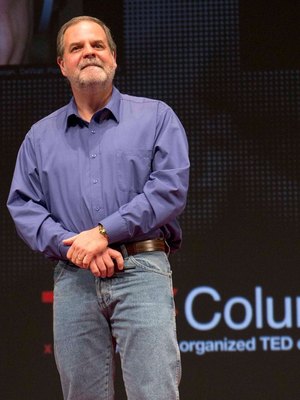
Ulrich Lichtenthaler

Ulrich Lichtenthaler, a management professor who has had to retract 16 papers for data irregularities, has a new position in academia.

According to a news release from the International School of Management (ISM), a business school based in Germany, Lichtenthaler has been appointed Professor of Business Management and Entrepreneurship at the Cologne campus. Lichtenthaler is also taking over as one of the directors of the Entrepreneurship Institute at ISM, which conducts research in the field.

Lichtenthaler’s name may be familiar to readers: After journals retracted more than a dozen of his articles, he resigned from a previous post at the University of Mannheim in 2015.

We emailed Lichtenthaler to ask if he had disclosed his history to his new employers; he forwarded the email to ISM’s head of marketing and sales, who told us:

Continue reading Management researcher with 16 retractions has new professorship

A 2015 PNAS paper is six pages long. Its correction is four pages long.

Sometimes, corrections are so extensive, they can only be called one thing: Mega-corrections.

Recently, the Proceedings of the National Academy of Sciences (PNAS) issued a four-page correction notice to a paper about a compound that appeared to reduce the chances a cancer will recur. The notice describes figure duplication, problems with error bars and figure legends — as well as the loss of statistical significance for some data.

According to the authors’ statement in the notice:

Continue reading A 2015 PNAS paper is six pages long. Its correction is four pages long.

Distraction paper pulled for clerical error

The authors of a 2018 paper on how noisy distractions disrupt memory are retracting the article after finding a flaw in their study.

The paper, “Unexpected events disrupt visuomotor working memory and increase guessing,” appeared in Psychonomic Bulletin & Review, a publication of the Psychonomic Society. (For those keeping score at home, psychonomics is the study of the laws of the mind.)

The article purported to show that an unexpected “auditory event,” like the sudden blare of a car horn, reduced the ability of people to remember visuomotor cues. Per the abstract:

Continue reading Distraction paper pulled for clerical error

Nature cancer paper that raised animal welfare concerns is retracted

When Nature published a paper in 2011 describing a compound extracted from a pepper plant that appeared to kill cancer cells but leave healthy cells unscathed, it got some attention.

Of course, the news caught the media’s eye, but also that of other researchers, who have since jumped on the concept, and continued to study the effects of the compound — piperlongumine — on cancer, as well as other conditions.

But ever since the 2011 letter appeared, researchers have raised concerns about some of the figures — including one that showed mice with massive tumors, suggesting they had experienced an unreasonable amount of distress during the study. Nature has responded by issuing two lengthy correction notices in 2012 and 2015 — as well as an editorial that admitted the animals may have “experienced more pain and suffering than originally allowed for,” but did not warrant retracting, as the results remained “valid and useful.”

Today, the journal is retracting the paper, with the following brief notice:

Continue reading Nature cancer paper that raised animal welfare concerns is retracted

Meet two data sleuths who paid a steep price for raising concerns about a problematic paper

Researchers Malte Elson and Patrick Markey probably didn’t know what they were getting into when they first raised questions about a problematic study of the possible effects of violent video games.

Like many other data sleuths out there, they simply wanted to ensure the scientific record wasn’t muddied by problematic data — particularly in such a high-profile area with a potentially profound impact on policy.  Although their efforts ultimately paid off — the paper was retracted, and the first author lost her PhD — they also paid a price. Continue reading Meet two data sleuths who paid a steep price for raising concerns about a problematic paper

A publisher just retracted ten papers whose peer review was “engineered” — despite knowing about the problem of fake reviews for years

Many publishers have been duped by fake peer reviews, which have brought down more than 600 papers to date. But some continue to get fooled.

Recently, SAGE retracted 10 papers published as part of two special collections in Advances in Mechanical Engineering after discovering the peer review process that had been managed by the guest editors “did not meet the journal’s usual rigorous standards.” After a new set of reviewers looked over the collections, they determined 10 papers included “technical errors,” and the content “did not meet the journal’s required standard of scientific validity.”

Yeah, we’re not exactly sure what happened here, either. SAGE gave us a little extra clarity — but not much.

Continue reading A publisher just retracted ten papers whose peer review was “engineered” — despite knowing about the problem of fake reviews for years

Journals punished by high-profile indexing service cry foul, demand a recount

A group of editors of journals focused on the history of economics has gone public to urge Clarivate Analytics, which publishes a highly influential ranking of journals, to reconsider its decision to drop the titles from this year’s index.

Clarivate said it suppressed the titles because of apparent “citation stacking,” in which various editors agree to cite one another to boost their journals’ Impact Factors (JIFs). The metric is based on average rates of citation over a given period. As we noted in a June 26 post about the suppressions, suppressing titles Continue reading Journals punished by high-profile indexing service cry foul, demand a recount

Researchers pull Nature paper over first author’s objections

Researchers have retracted a 2015 Nature paper about the molecular underpinnings of immune function after discovering they could not replicate key parts of the results.

The first author, Wendy Huang — who started working as an assistant professor at the University of California, San Diego, only months after the paper appeared — did not sign the retraction letter, published last week. The research was conducted while Huang was working as a postdoctoral fellow at New York University, home of last author Dan Littman (also an investigator at the Howard Hughes Medical Institute).

What happened appears to be a case of “he said, she said:” Littman asked to retract the paper after his lab couldn’t reproduce it, and Huang insists the data remain correct, saying the process had been “unfair and done without due process:”

Continue reading Researchers pull Nature paper over first author’s objections

A university went to great lengths to block the release of information about a trial gone wrong. A reporter fought them and revealed the truth.

Jodi S. Cohen

Here’s a story that shows the lengths a public university — The University of Illinois at Chicago — went to block the release of information about a child psychiatry trial gone wrong, and how a reporter — Jodi S. Cohen of ProPublica — fought them effectively at every turn to reveal the truth.

Earlier this year, ProPublica “revealed that the National Institute of Mental Health ordered the university to repay $3.1 million in grant money it had received to fund [Mani] Pavuluri’s study.” This kind of clawback is very, very rare.

We tipped our hats to Cohen then, because we had been trying for years to obtain documents that would tell the full story of the Pavuluri case, which we had been covering since 2015 when a retraction appeared. In particular, we’ve been trying to get the university to release their report of the investigation into Pavuluri’s work. We have been making a push for such reports, as we noted earlier this week in a roundup of more than 16 of them. Continue reading A university went to great lengths to block the release of information about a trial gone wrong. A reporter fought them and revealed the truth.

A misconduct probe — which led to 20 retraction requests — took four years. Why?

Santosh Katiyar

A probe into the work of a researcher who studied natural products for cancer had many stops and starts along the way — including five extensions granted by the U.S. Office of Research Integrity — according to documents obtained by Retraction Watch.

Following a public records request, we recently obtained a copy of the report on the investigation of allegations of misconduct by Santosh Katiyar, issued jointly by the University of Alabama Birmingham and the Birmingham VA Medical Center. As a result of the report, the institutions have requested 20 retractions of work by Santosh Katiyar, who received millions in funding from the U.S. National Institutes of Health

How does the report stack up?

Continue reading A misconduct probe — which led to 20 retraction requests — took four years. Why?