Technobabble papers by professor and editor under scrutiny

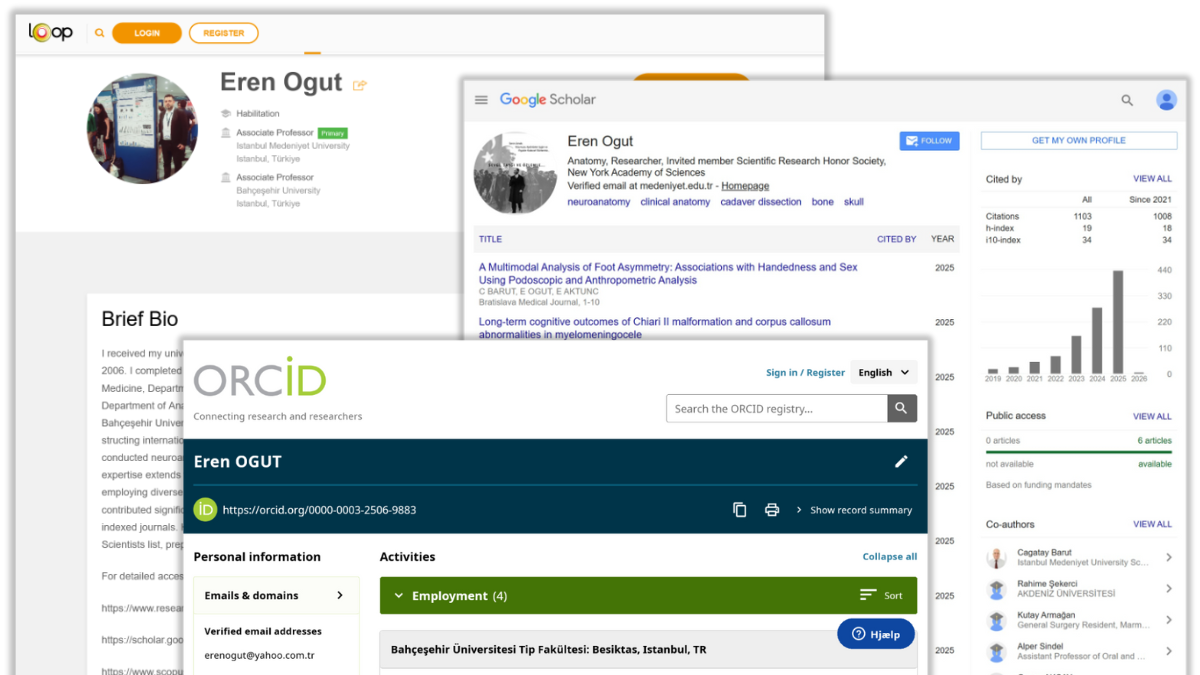
After we reached out to Eren Öğüt, his profiles at Google Scholar, ORCID and Frontiers’ Loop all vanished.

The reviewer, a neuroscientist in Germany, was confused. The manuscript on her screen, describing efforts to model a thin layer of gray matter in the brain called the indusium griseum, seemed oddly devoid of gist. The figures in the single-authored article made little sense, the MATLAB functions provided were irrelevant, the discussion failed to engage with the results and felt more like a review of the literature.

And, the reviewer wondered, was the resolution of the publicly available MRI data the manuscript purported to analyze sufficient to visualize the delicate anatomical structure in the first place? She turned to a colleague who sat in the same office. An expert in analyzing brain images, he confirmed her suspicion: The resolution was too low. (Both researchers spoke to us on condition of anonymity.)

The reviewer suggested rejecting the manuscript, which had been submitted to Springer Nature’s Brain Topography. But in November, just a few weeks later, the colleague she had consulted received an invitation to review the same paper, this time for Scientific Reports. He accepted out of curiosity. A figure supposed to depict the indusium griseum but showing a simple sine wave baffled him. “You look at that and think, well, this is not looking like an anatomical structure,” he told us. 

Continue reading Technobabble papers by professor and editor under scrutiny

Professor suspended after Japanese university finds fishy results in sushi paper

Iwate University

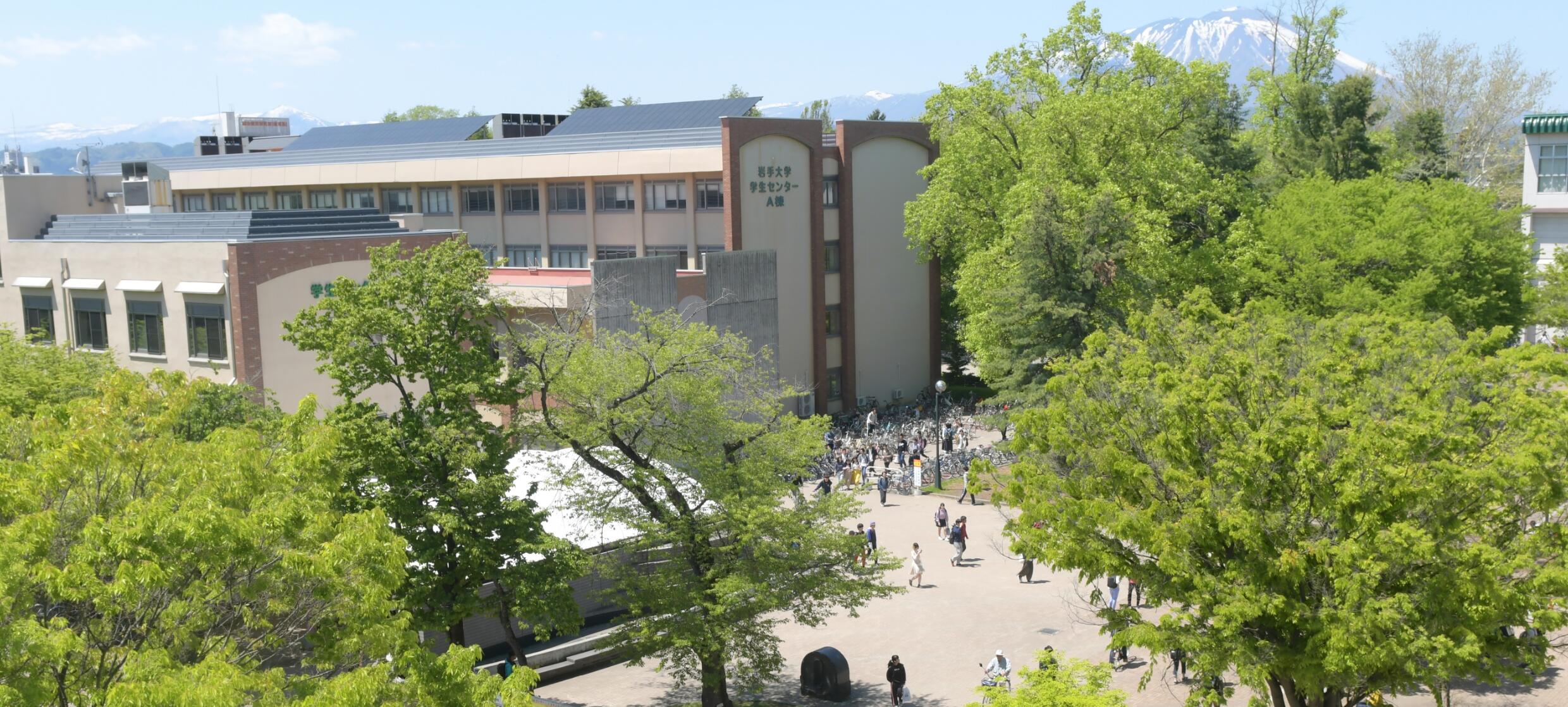
A university in Japan has suspended a fishery science professor for a month after its investigation found fabrication in a retracted paper on fish freezing. 

According to the investigatory report, Iwate University scrutinized a retracted paper coauthored by six researchers at the school, including Chunhong Yuan, a professor of fishery systems science. Following the researchers’ inability to provide the investigating committee with appropriate records of the reported experiment, the inquiry found Yuan and two unnamed coauthors – a graduate student and an individual now retired – fabricated claims about the experimental conditions. 

Yuan has been suspended for one month starting December 25, according to a press release. The university plans to administer additional training on research integrity for laboratory leaders, according to the report. 

Continue reading Professor suspended after Japanese university finds fishy results in sushi paper

Finance professor in Ireland loses 12 papers in journals he edited

Brian Lucey

Elsevier has pulled a dozen papers by a finance professor in Ireland who oversaw the review of the articles and made “the final decision” to publish them in three journals he edited, according to the retraction notices.  

The professor, Brian M. Lucey of Trinity College Dublin, and his coauthors disagreed with the retractions, which came a few days before Christmas.

“I’m not disputing the fact that I made the final decision” to publish the articles, some of which have garnered hundreds of citations, Lucey told us in an interview. ”What I’m disputing is that that is not prima facie grounds” for retracting them.

Continue reading Finance professor in Ireland loses 12 papers in journals he edited

History journal retracts paper about killing of German WWI POWs

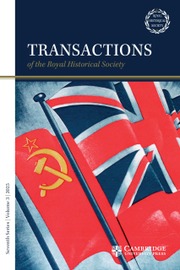
The flagship journal of the Royal Historical Society has retracted a paper positing that British and Canadian soldiers committed “scores” of prisoner executions against German forces during World War I. The move followed an investigation for plagiarism.

The article, written by historian Alex J. Kay of the University of Potsdam in Germany,  was published online in Transactions of the Royal Historical Society in early February. On February 19, the co-editors of the journal received a complaint that Kay’s article shared similarities with a 2010 article by Brian Feltman, a historian at Georgia Southern University, in Statesboro. 

The journal  looked into the claims and identified several passages that “appeared to follow this source too closely in argument, content, and style, with insufficient acknowledgement,” according to a statement the Royal Historical Society shared with Retraction Watch. The group then shared the passages with external editors, who agreed with the initial findings. 

Continue reading History journal retracts paper about killing of German WWI POWs

‘Elite cohort’ of biz school scholars and editors scratch each others’ backs, study finds

Image: Mohamed Hassan/Pixabay

Academics who publish frequently in two top business journals often have prior working relationships with the editors who handle their papers, according to a new analysis of editor-author relationships at the two publications over the last 15 years. 

One journal editor in chief called the results “concerning,” while another thought the analysis was looking for problems on purpose. 

The authors of the analysis, Vitali Mindel of Virginia Tech in Blacksburg and Raffaele Ciriello of the University of Sydney in Australia, told Retraction Watch in a joint email they had set out to do a bibliometric study of “superstar” scholars in business research. The goal: “to understand the secret sauce behind exceptional productivity and success.” 

Continue reading ‘Elite cohort’ of biz school scholars and editors scratch each others’ backs, study finds

COPE’s involvement leads to retraction of paper on homeopathy for lung cancer

A journal that last year corrected a paper claiming to show a homeopathic intervention improved quality of life and survival for people with advanced lung cancer has now retracted the article after the Committee on Publication Ethics got involved in the case. 

The extensive correction and an accompanying editorial, published in September 2024 in The Oncologist, came two years after the Austrian Agency for Scientific Integrity asked the journal to retract the article due to concerns about manipulated data, we reported at the time

The retraction notice, published November 24, acknowledged the watchdog agency’s retraction request. It also noted the previous corrections and expression of concern for the article, which originally appeared in October 2020. 

Continue reading COPE’s involvement leads to retraction of paper on homeopathy for lung cancer

One of Kazakhstan’s top nuclear physicists also leads his nation in retractions

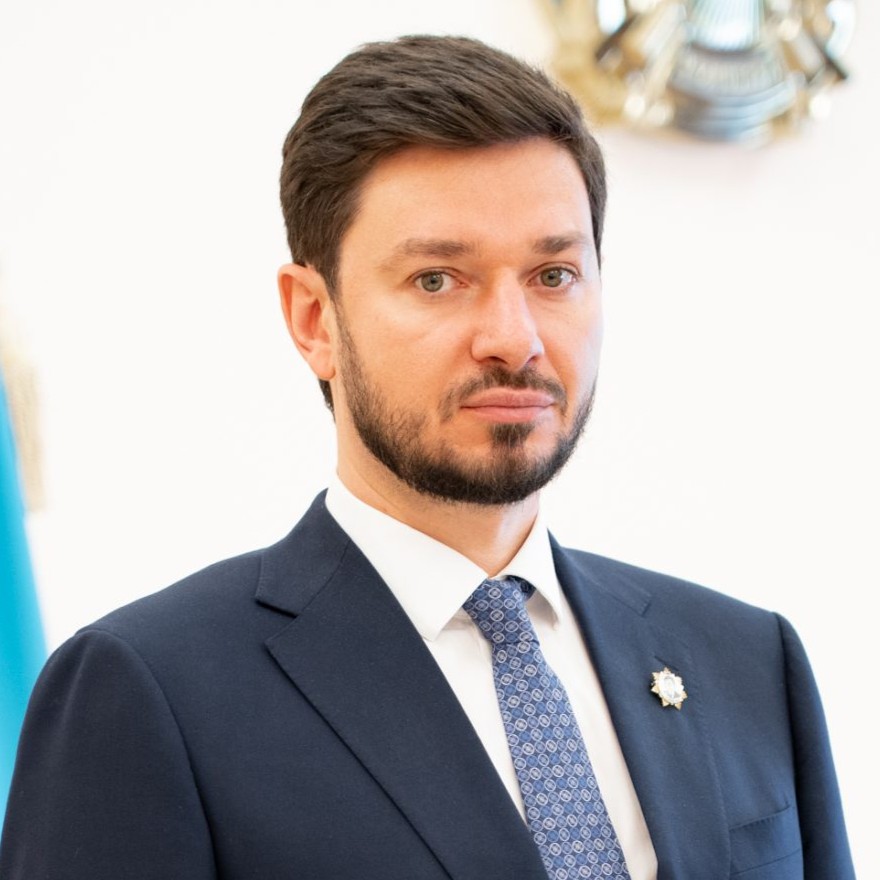
Maxim Zdorovets
Source

The head of a nuclear physics institute in Kazakhstan now has 21 retractions to his name — most of them logged in the past year — following dozens of his papers being flagged on PubPeer for data reuse and images showing suspiciously similar patterns of background noise, suggesting manipulation.

Maxim Zdorovets, director of the Institute of Nuclear Physics in Astana, has written or coauthored 480 papers indexed on Scopus, and one analysis puts him as the third most cited researcher in Kazakhstan. His prolific publication record has been linked to Russian paper mills, though those claims are unverified. Zdorovets has defended his work in a series of online posts, arguing the imaging similarities come from technical issues and that his own analyses prove image manipulation did not occur. He did not respond to Retraction Watch’s request for comment. 

The latest retraction for Zdorovets came last month when Crystallography Reports retracted a study containing electron microscope images “highly similar” to those published a year earlier in a now-retracted paper in the Russian Journal of Electrochemistry by a similar group of authors. Both papers also included images that closely resemble ones Zdorovets and his colleagues presented at a nanomaterials conference in Ukraine in 2017. In each instance, the images were meant to be showing different materials. 

Continue reading One of Kazakhstan’s top nuclear physicists also leads his nation in retractions

Number of ‘unsafe’ publications by psychologist Hans Eysenck could be ‘high and far reaching’

Hans Eysenck

A “high and far reaching” number of papers and books by Hans Eysenck could be “unsafe,” according to an updated statement from King’s College London, where the psychologist was a professor emeritus when he died in 1997.

A 2019 investigation launched by the U.K. institution found 26 papers coauthored by Eysenck and Ronald Grossarth-Maticek, a social scientist in Germany, were based on questionable data and contained findings that were “incompatible with modern clinical science and the understanding of disease processes.”

For example, the two researchers’ data showed people with a “cancer-prone” personality were more than 120 times as likely to die from the disease as were those with a “healthy” personality, Anthony Pelosi, a longtime Eysenck critic, pointed out in an article preceding the university probe.

Continue reading Number of ‘unsafe’ publications by psychologist Hans Eysenck could be ‘high and far reaching’

Authors retract Nature paper projecting high costs of climate change

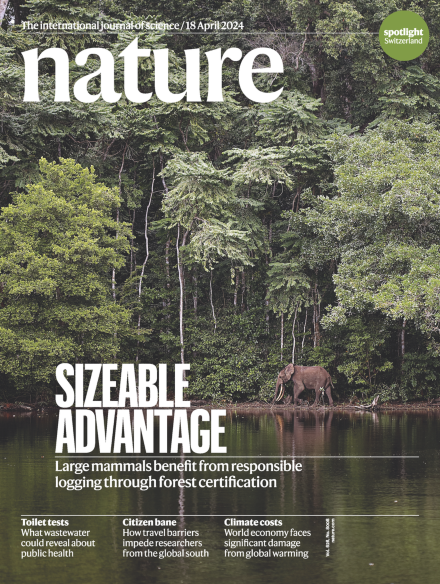
The authors of a highly publicized study predicting climate change would cost $38 trillion a year by 2049 have retracted their paper following criticism of the data and methodology, including that the estimate is inflated. 

The economic commitment of climate change,” which appeared April 17, 2024, in Nature, looked at how changes in temperature and precipitation could affect economic growth. Forbes, the San Diego Union-Tribune and other outlets covered the paper, which has been accessed over 300,000 times. It has been cited 168 times, according to Clarivate’s Web of Science.

But after two commentaries published this August raised questions about the study’s data and methodology, the researchers revisited their findings. “The authors acknowledge that these changes are too substantial for a correction,” the retraction notice, published today, states. 

Continue reading Authors retract Nature paper projecting high costs of climate change

Exclusive: Reviewer recommended against publishing paper on DNA in COVID vaccines

Rolf Marschalek was on vacation when he saw a new paper had been published in the journal Autoimmunity. Marschalek, a biochemist at Goethe University Frankfurt in Germany, was “very upset,” he told Retraction Watch – because he’d peer-reviewed the manuscript and had recommended against publication. 

The authors of the paper claimed to find DNA in mRNA-based COVID-19 vaccines above regulators’ suggested amounts. The article appeared online September 6, and within weeks the publisher began an investigation into concerns about its content, as we reported previously.

In Marschalek’s initial review, which he provided to us, he detailed how Qubit fluorometry, one of the methods the authors used to measure the amount of DNA in the vaccine vials, was “not suited” for use when samples contain much higher amounts of RNA than DNA, as is the case with mRNA-based COVID-19 vaccines. He cited a paper he and colleagues had written about methods of quantifying amounts of RNA and DNA in mRNA vaccine vials, including Qubit. 

Continue reading Exclusive: Reviewer recommended against publishing paper on DNA in COVID vaccines