Drunk rats paper wasted by “significant statistical errors”, among other issues

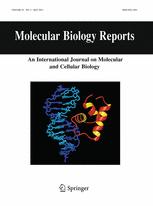
MolBiolRep_ak5Authors from Xinxiang Medical University in Weihui, China, are retracting a 2014 paper in Molecular Biology Reports because… well, because lots of things.

The researchers exposed nine rats to acute levels of alcohol then compared them to unexposed mice rats, noting differences in gene expression and molecular pathways.

But no one is toasting these findings anymore. Here are the details behind the retraction, courtesy of the notice:

Continue reading Drunk rats paper wasted by “significant statistical errors”, among other issues

Third structure slip-up for chemist in Korea yields retraction

Chem_ak3Authors of a 2010 Chemistry – A European Journal article have retracted it “due to the wrong assignment of structure” of catalysts.

The retraction is the third, by our count, for corresponding author Doo Ok Jang, a chemist at Yonsei University in Wonju. Jang authored one of the previously retracted papers with Sung Jun Kim and the other with Sang Yoon Kim. Both papers were also sunk by misassigned structures.

The current study, “Enantioselective Radical Addition to Ketimines: A Synthetic Route Towards α,α-Disubstituted α-Amino Acids,” is authored by all three chemists. Here’s the retraction notice:

Continue reading Third structure slip-up for chemist in Korea yields retraction

So you want to be a whistleblower? Part II

john thomas
John R. Thomas

This is the second article in a series by John R. Thomas, Jr., a lawyer at Gentry Locke [Editor’s note, 3/26/19: He has since moved to Haley, Hafemann, Magee and Thomas] who represents whistleblowers in a variety of False Claims Act cases. In this installment, he writes about how whistleblowers can tell if they have a viable FCA case.

In my first article, I briefly outlined the role that the False Claims Act (FCA) can play in promoting scientific integrity and safeguarding public grant funding. This article will answer a more substantive and practical question that a potential whistleblower must consider: What constitutes a viable FCA case? Continue reading So you want to be a whistleblower? Part II

Authors retract leptin paper due to “fabricated data”

CellPress_ak2The authors of a study on the effects of the hormone leptin on the liver have retracted it from Cell Metabolism, almost four months after the Office of Research Integrity (ORI) determined it contained faked data, courtesy of its first author.

However, the authors say that the paper’s conclusions remain valid, and are supported by new experiments and additional research by outside groups.

Here’s more from the retraction notice: Continue reading Authors retract leptin paper due to “fabricated data”

Widely covered editorial extolling importance of diet over exercise “temporarily removed”

Source: NIH
Source: NIH

The British Journal of Sports Medicine has “temporarily removed” an editorial arguing that physical activity alone will not cure the obesity epidemic, following an expression of concern.

In its place stands the following message:

This paper has been temporarily removed following an expression of concern.

First author Assem Malhotra, based at the Department of Cardiology, Frimley Park Hospital and Consultant Clinical Associate to the Academy of Medical Royal Colleges, told us the paper was pulled due to a “technical issue,” and an “official explanation” would be forthcoming.

Indeed, just this morning, we received a statement from Fiona Godlee, editor of the British Medical Journal, which publishes the British Journal of Sports Medicine:

Continue reading Widely covered editorial extolling importance of diet over exercise “temporarily removed”

Malpractice case against Duke, Anil Potti settled

pottiA lawsuit filed in October 2011 against Duke University and Anil Potti, who has retracted 11 papers and corrected a number of others amidst investigation into his work, has been settled, Retraction Watch has learned.

Potti resigned from Duke in 2010 following questions about his work, and revelations that he had lied on grant applications about being awarded a Rhodes Scholarship. He now works at a cancer center in North Dakota.

The lawsuit was filed by subjects in clinical trials based on Potti’s work. Plaintiff’s attorney Thomas W. Henson, who confirmed the settlement, tells Retraction Watch: Continue reading Malpractice case against Duke, Anil Potti settled

NIH neuroscientist loses second paper, again the result of first author misconduct

Stanley Rapoport. Source: NIH

Stanley Rapoport, a neuroscientist in the National Institute on Aging, isn’t having a lot of luck with his first authors. One committed misconduct and cost him a paper in the journal Age last year, and now he’s lost another paper with a different first author, but for the exact same reason.

The latest paper, in Neurochemical Research, examined whether chronic doses of aspirin reduce brain inflammation. It has been cited 14 times, according to Thomson Scientific’s Web of Knowledge.

Here’s more from the note: Continue reading NIH neuroscientist loses second paper, again the result of first author misconduct

Misconduct earns researcher a five-year ban on federal funding

ori logoUniversity of Minnesota former chemistry graduate student has been banned from receiving federal funding for five years based on “a preponderance of the evidence that the Respondent intentionally and knowingly engaged in research misconduct.”

Venkata J. Reddy appears to have manipulated findings in one R01 grant application. In recent years, bans are less common than having research supervised. What’s also unusual is that the sanction appeared to have begun two years ago, in 2013, because it lifts August 26, 2018. The report, which is scheduled to published tomorrow in the Federal Register, says the debarment has a “joint jurisdiction,” suggesting another agency may be involved. [See first update at end of post.]

According to the ORI notice, Reddy “intentionally and knowingly engaged in research misconduct by falsifying and/or fabricating data that was provided to his mentor” for an R01 application to the National Institute of General Medical Sciences (NIGMS). More specifically: Continue reading Misconduct earns researcher a five-year ban on federal funding

Drug study pulled after researchers admit altering trial protocol

egypt anaesthesiaThe Egyptian Journal of Anaesthesia is retracting a 2014 paper by a pair of researchers at Cairo University who appear to have tinkered with their protocol after having received ethics approval.

The paper, titled “Can Sugammadex improve the reversal profile of Atracurium under Sevoflurane anesthesia?” was written by Heba Ismail Ahmed Nagy and Hany Wafik Elkadi, both in the department of anesthesiology.

Sugammadex, or Bridion, is given to rapidly reverse the effects of drugs that keep patients motionless during surgery. It is available throughout the world but not, as it happens, in the United States, where the Food and Drug Administration has refused to approve the agent because of fears that it might provoke severe allergic-like reactions.

According to the retraction notice:

Continue reading Drug study pulled after researchers admit altering trial protocol

It’s a man’s world — for one peer reviewer, at least

We’ve written quite a lot about the perks and pitfalls of the peer review system, but one thing we never really touched on was the risk that a reviewer might be … well, not to put too fine a point on it: a dope.

But Fiona Ingleby can speak to that. Ingleby, a postdoc in evolutionary genetics at the University of Sussex in the United Kingdom, co-wrote an article on gender differences in the transition from PhD-dom to postdoc land and submitted it to a journal for consideration. What she heard back was lamentably ironic — and grossly sexist. Continue reading It’s a man’s world — for one peer reviewer, at least