Boldt’s retraction count upped to 94, co-author takes legal action to prevent 95th

Screen Shot 2015-09-16 at 12.12.13 AM

We’ve found two recent retractions and an expression of concern for Joachim Boldt, former prominent anesthesiologist and currently Retraction Watch leaderboard’s 2nd place titleholder. He now has 94 retractions.

One of the retracted articles contains falsified data, along with a researcher who didn’t agree to be a co-author, according to an investigation by the Justus Liebig University Giessen, where Boldt used to work. The expression of concern is regarding some questionable data. The other new retraction is actually one of 88 papers that a group of editors agreed to retract back in 2011, after they were “unable to verify” approval by the Institutional Review Board (IRB) for the studies.

One of those 88 papers, we’ve discovered, has still has not been retracted. According to an editor at the journal, they haven’t removed it because one of Boldt’s co-authors has threatened them with legal action. Continue reading Boldt’s retraction count upped to 94, co-author takes legal action to prevent 95th

Three more retractions for former record-holder Boldt, maybe more to come

m_cover

Justus Liebig University in Germany has been investigating concerns that Joachim Boldt, number two on the Retraction Watch Leaderboard and now up to 92 retractions, may have “manipulated” more data than previously believed.

Until now, the vast majority of Boldt’s retractions were thought to have involved inadequate ethics approval. However, new retraction notices for Boldt’s research suggest that there’s evidence the researcher also engaged in significant data manipulation.

The first retraction from the university investigation emerged last year. Two of three new notices cite the investigation specifically, and an informant at the university told us that there are more retractions to come.

Here are the retracted papers that are freshly on the record, starting with an August retraction for a 1991 Anesthesiology paper (cited 37 times, according to Thomson Scientific’s Web of Knowledge):

Continue reading Three more retractions for former record-holder Boldt, maybe more to come

Half of anesthesiology fraudster’s papers continue to be cited years after retractions

ethicsIn yet more evidence that retracted studies continue to accrue citations, a new paper has shown that nearly half of anesthesiologist Scott Reuben’s papers have been cited five years after being retracted, and only one-fourth of citations correctly note the retraction.

According to the new paper, in Science and Engineering Ethics: Continue reading Half of anesthesiology fraudster’s papers continue to be cited years after retractions

To catch a cheat: Paper improves on stats method that nailed prolific retractor Fujii

anaesthesiaThe author of a 2012 paper in Anaesthesia which offered the statistical equivalent of coffin nails to the case against record-breaking fraudster Yoshitaka Fujii (currently at the top of our leaderboard) has written a new article in which he claims to have improved upon his approach.

As we’ve written previously, John Carlisle, an anesthesiologist in the United Kingdom, analyzed nearly 170 papers by Fujii and found aspects of the reported data to be astronomically improbable. It turns out, however, that he made a mistake that, while not fatal to his initial conclusions, required fixing in a follow-up paper, titled “Calculating the probability of random sampling for continuous variables in submitted or published randomised controlled trials,” also published in Anaesthesia.

According to the abstract:

Continue reading To catch a cheat: Paper improves on stats method that nailed prolific retractor Fujii

Drug study pulled after researchers admit altering trial protocol

egypt anaesthesiaThe Egyptian Journal of Anaesthesia is retracting a 2014 paper by a pair of researchers at Cairo University who appear to have tinkered with their protocol after having received ethics approval.

The paper, titled “Can Sugammadex improve the reversal profile of Atracurium under Sevoflurane anesthesia?” was written by Heba Ismail Ahmed Nagy and Hany Wafik Elkadi, both in the department of anesthesiology.

Sugammadex, or Bridion, is given to rapidly reverse the effects of drugs that keep patients motionless during surgery. It is available throughout the world but not, as it happens, in the United States, where the Food and Drug Administration has refused to approve the agent because of fears that it might provoke severe allergic-like reactions.

According to the retraction notice:

Continue reading Drug study pulled after researchers admit altering trial protocol

Chinese medical case study erased after guardian consent withdrawn

JMCRThe editor of the Journal of Medical Case Reports, a BioMed Central title, has retracted and removed a case study of a novel surgical treatment after the patient’s legal guardian withdrew consent post-publication.

The paper, “Novel two-stage surgical treatment for Cantrell syndrome complicated by severe pulmonary hypertension: a case report,” describes the treatment of a six-month-old Han Chinese girl suffering from a rare combination of birth defects called Cantrell syndrome, complicated by pulmonary hypertension.

The original article, published in March 2014, has been removed from the journal’s website, though the abstract can be read on PubMed. It is unclear whether the authors, the child’s guardian, or some other party informed the editor of the withdrawal of consent.

The brief notice offers few details:

Continue reading Chinese medical case study erased after guardian consent withdrawn

Pain paper scratched for authorship issues

ejacoverA group of pain researchers in Austria has lost their 2014 paper in the European Journal of Anaesthesiology because one of the authors wasn’t, well, one of the authors.

The article, “Intravenous nonopioid analgesic drugs in chronic low back pain patients on chronic opioid treatment: A crossover, randomised, double-blinded, placebo-controlled study,” came from a team at the Medical University Vienna and Evangelical Hospital Vienna.

During the study, the authors tested whether intravenous infusions of nonopioid drugs (such as paracetamol, or Tylenol) helped people with chronic back pain who take opioids regularly. They found that people’s pain levels decreased in the days leading up to treatment, when they were receiving a placebo, but not after the actual infusion. The results likely stem from “expectation-related mechanisms,” they wrote. Continue reading Pain paper scratched for authorship issues

Boldt’s data were fake in 1996 paper

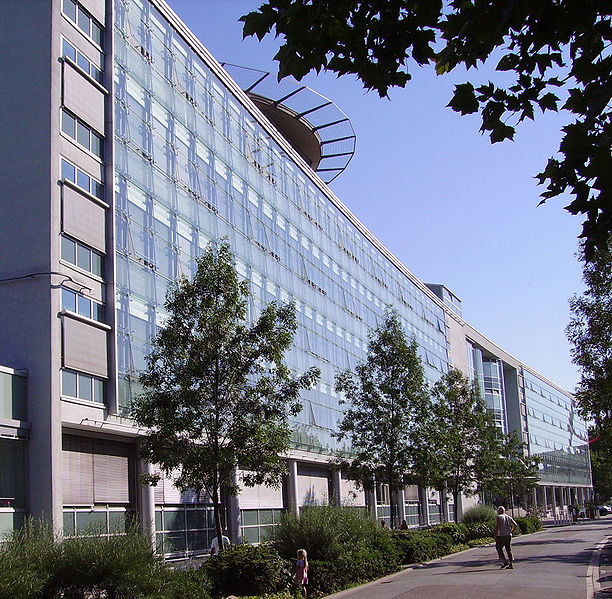
Ludwigshafen Hospital, via Wikimedia http://commons.wikimedia.org/wiki/File:Klinikum_Ludwigshafen_Nordseite.jpg

Update, 4 p.m. EST, 10/29/14: As a commenter points out, we didn’t quite get this one right. The Boldt paper that has been retracted was not previously retracted for lack of IRB approval. Rather, it was a heretofore unretracted article, from 1996, which German investigators have determined contained faked data. We’ve made edits below using strikethroughs, and have changed the headline to better reflect the content. We apologize for the errors.

We’ve commented before on the fact that we’ve noticed there’s often more to retractions whose stated reason is lack of institutional review board (IRB) approval. We can understand editors’ inclination to act as quickly as possible to issue a retraction, the scientific publishing equivalent of jailing Al Capone for tax evasion. But we appreciate it even more when said editors return to the scene of the crime, as it were, when new important details come out.

Case in point: Anesthesia & Analgesia has amended its retraction of a 2009 1996 study by Joachim Boldt — who with nearly 90 retractions once held the record in that department — based on findings that the data in that paper were fabricated.

The article was titled “Cardiopulmonary bypass priming using a high dose of a balanced hydroxyethyl starch versus an albumin-based priming strategy,” “The effects of albumin versus hydroxyethyl starch solution on cardiorespiratory and circulatory variables in critically ill patient.”  had previously been retracted because Boldt had failed to obtain adequate ethics approval for the research. But now comes this, According to the retraction notice from editor in chief Steven Shafer: Continue reading Boldt’s data were fake in 1996 paper

Wasted breath: Cribbing earns retraction of anesthesia paper

cbandbThe authors of a paper on anesthetic waste gases in the operating room have pulled the article for plagiarism.

The paper, titled “Further Pieces of Evidence to the Pulmonary Origin of Sevoflurane Escaping to the Operating Room During General Anaesthesia,” appeared in Cell Biochemistry and Biophysics and came from a group at various institutions in Harbin, China.

But according to the retraction notice, the further pieces weren’t really further, after all:
Continue reading Wasted breath: Cribbing earns retraction of anesthesia paper

Anesthesiologist “con man” apologizes for faking cover-up charges against Australian university

Via IADH
Via IADH

It’s not uncommon for scientists accused of wrongdoing — especially if they’re fired for it — to attempt to muddy the waters by claiming that they are being framed because they had threatened to blow the whistle on others.  Some of those stories have more than a grain of truth to them.

Here’s one that doesn’t.

Paul Barach, an anesthesiologist who accused his former employer, the University of New South Wales, of a massive cover-up — and in turn accused by his employer of being an academic grifter — has admitted making up the affair.

The Australian, which broke the story, says Barach — a U.S.-born physician — has apologized for making the claims. According to an earlier article in the paper:

Continue reading Anesthesiologist “con man” apologizes for faking cover-up charges against Australian university