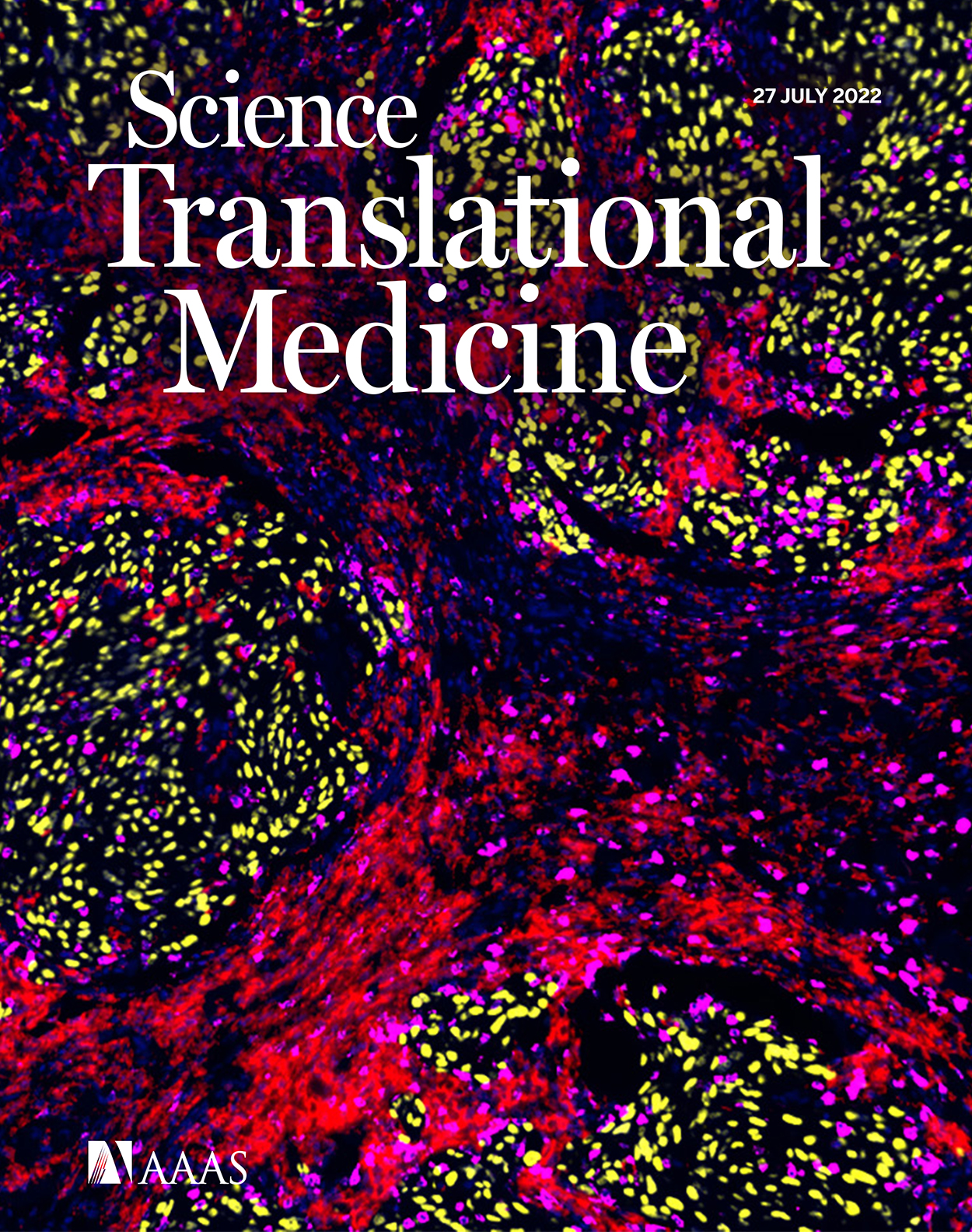
Science Translational Medicine has retracted a paper on COVID-19 vaccines after an institutional investigation revealed a former Ph.D. student fabricated data and falsified images in the article. The retraction is the former student’s second for fabrication this year.
The July 2022 article looked at whether a vaccine targeting a particular part of the SARS-CoV-2 virus could help defend against a wider range of COVID-19 variants in mice. It has been cited 83 times, according to Clarivate’s Web of Science.
According to the October 14 retraction notice, lead author Kevin Ng, formerly a Ph.D. student at the Francis Crick Institute in London, was responsible for fabricated data in one of the figures and falsifying images in another. Ng admitted responsibility for the fabrication during the editorial investigation, the notice states, which “casts doubt on some other experiments presented in the paper, for which primary data and samples are unavailable, precluding post hoc verification.”
The retraction follows another earlier this year in Nature on which Ng was also the first author. Ng’s supervisor, George Kassiotis, and two other Crick researchers are coauthors on both papers. The Crick investigation into the Nature paper — which investigated the sensitivity of lung cancers to immunotherapy — similarly found Ng solely responsible for the fabrication.
That investigation prompted the institute to look into other works by Ng, according to a statement Kathryn Ingham, the public affairs lead at the Crick Institute, provided from the Crick Institute. Beyond the Science Translational Medicine paper, “the investigation found no evidence of data fabrication or inappropriate manipulation.”
“There was no evidence of malpractice by any other authors of the paper,” the statement says.
Ingham did not respond to our request for the full investigation report. Kassiotis forwarded Retraction Watch’s request for comment to Ingham.
Nature put an editor’s note on another of Ng’s papers on September 29 after PubPeer commenters flagged “abnormal” data and apparent “numerical reuse.”
“We are actively investigating concerns that have been raised with us and will take action as appropriate once this process is complete,” Francesca Cesari, chief biological, clinical and social sciences editor for the journal, told us.
After graduating from the Crick, Ng was a postdoctoral researcher at Rockefeller University in New York. Alicia Samuels, associate vice president for communications and public affairs at the university, told us he was no longer employed there but declined to elaborate on when and why he left.
A spokesperson for Science Translational Medicine told us the Crick sent them a request to retract the paper on September 8. “No other papers were named in this communication, and to date, no concerns have reached our attention regarding other papers co-authored by Ng,” they said, noting the publisher was not currently investigating any of Ng’s other papers published in Science journals.
The Science Translational Medicine article joins our list of over 700 retracted COVID-19 papers. It’s the second retraction for the journal this year, and the seventh in the journal’s 17-year history.
Ng has pivoted away from science and now covers classical music, according to his website, an archived version of which lists his research and affiliations with Rockefeller and the Crick. Ng wrote an article on Giacomo Puccini’s opera “Turandot” for The New York Times earlier this year.
We were unable to find current contact information for Ng, and messages sent to his Instagram account went unanswered.
Like Retraction Watch? You can make a tax-deductible contribution to support our work, follow us on X or Bluesky, like us on Facebook, follow us on LinkedIn, add us to your RSS reader, or subscribe to our daily digest. If you find a retraction that’s not in our database, you can let us know here. For comments or feedback, email us at [email protected].