Overlooked virus “generated a mess,” infected highly cited Cell, PNAS papers

When Alexander Harms arrived at the University of Copenhagen in August 2016, as a postdoc planning to study a type of antibiotic resistance in bacteria, he carried with him a warning from another lab who had recruited him:

People said, “If you go there, you have to deal with these weird articles that nobody believes.”

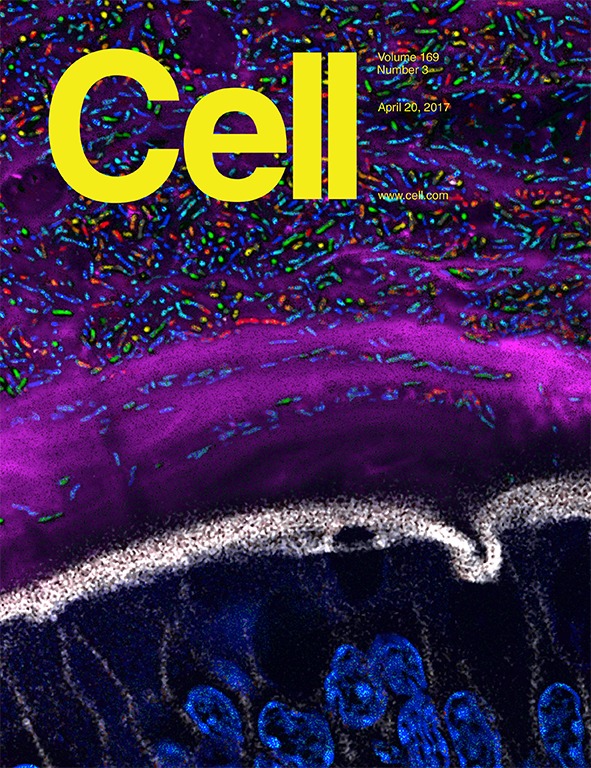
The papers in question had been published in the Proceedings of the National Academy of Sciences in 2011 and Cell in 2013. Led by Kenn Gerdes, Harms’s new lab director, the work laid out a complex chain of events that mapped out how an E. coli bacterium can go into a dormant state, called persistence, that allows it to survive while the rest of its colony is wiped out.

Despite some experts’ skepticism, each paper had been cited hundreds of times. And Harms told us:

I personally did believe in the published work. There had been papers from others that kind of attacked [the Gerdes lab’s theory], but that was not high-quality work.

But by November 2016, Harms figured out that the skeptics had been right.  Continue reading Overlooked virus “generated a mess,” infected highly cited Cell, PNAS papers

“The sampling had been compromised:” MD Anderson researchers retract cancer study

Erich Sturgis

Researchers from the University of Texas, MD Anderson Cancer Center have retracted a 2015 paper after they discovered their samples had been compromised.

Exactly how the samples were compromised, and how and when the researchers found out, remains unclear.

Originally published March 30, 2015, in Cancer, “Genome-wide association study identifies common genetic variants associated with salivary gland carcinoma and its subtypes” reported that at least three protein-coding gene variants were associated with rare salivary gland cancers. In the paper, the authors — all but one of whom are affiliated with MD Anderson — cautioned that they still needed to confirm the findings and figure out the mechanism by which the genes might increase the risk of cancer.

On Oct. 23, 2017, the researchers asked the journal to either correct or withdraw the paper. According to the retraction notice issued Jan. 9, the researchers had discovered: Continue reading “The sampling had been compromised:” MD Anderson researchers retract cancer study

Caught Our Notice: “Ironically,” same error in same journal “was noted last year”

Via Wikimedia

Title: Sleep quality and body composition variations in obese male adults after 14 weeks of yoga intervention: A randomized controlled trial

What Caught Our Attention: Last year, researchers led by David Allison at the University of Alabama at Birmingham’s School of Public Health called for the retraction of an article linking weight loss and obese female yoga participants in the International Journal of Yoga, citing problems with randomization and baseline statistics. Despite the first author’s statement that he planned to retract the article, the journal refused to retract it.   Continue reading Caught Our Notice: “Ironically,” same error in same journal “was noted last year”

Caught Our Notice: Don’t count your chicken (genes) before they’re hatched

Via Wikimedia

Title: Molecular Characterization and Biological Activity of Interferon-α in Indian Peafowl (Pavo cristatus)

What Caught Our Attention: Soon after the paper appeared, the journal was alerted to the fact its findings were at odds with others in the field. When the editor approached the authors, everything fell apart: The authors couldn’t repeat the experiments, and “were also unsure of the molecular probes that were used in the study.” While it isn’t unusual to have doubts about data — since since research is a process of experimentation — it is odd not to know how your experiment was conducted. The paper was retracted less than two months after it was published. The manuscript was accepted two months after it was submitted in early May, theoretically giving reviewers enough time to catch these issues (along with the authors’ failure to cite relevant papers).  

Continue reading Caught Our Notice: Don’t count your chicken (genes) before they’re hatched

Caught Our Notice: Dear peer reviewer, please read the methods section. Sincerely, everyone

Via Wikimedia

TitlePlasma contributes to the antimicrobial activity of whole blood against Mycobacterium tuberculosis

What Caught Our Attention: A big peer review (and perhaps academic mentorship) fail.  These researchers used the wrong anticoagulant for their blood samples, leading them to believe that certain blood components were fighting microbes. The authors counted the number of colonies to show how well or poorly Tuberculin mycobacteria were growing in cultures — but blood samples need anticoagulants to prevent clots before analysis, and they used an anticoagulant that actually prevented the microbes from colonizing. The authors (and reviewers) should have known this from  Continue reading Caught Our Notice: Dear peer reviewer, please read the methods section. Sincerely, everyone

Retract, replace, retract: Beleaguered food researcher pulls article from JAMA journal (again)

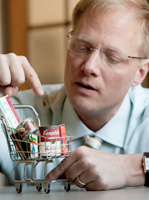
Brian Wansink

A high-profile food researcher who’s faced heavy criticism about his work has retracted the revised version of an article he’d already retracted last month.

Yes, you read that right: Brian Wansink at Cornell University retracted the original article from JAMA Pediatrics in September, replacing it with a revised version. Now he’s retracting the revised version, citing a major error: The study, which reported children were more likely to choose an apple over a cookie if the apple included an Elmo sticker, was conducted in children 3-5 years old, not 8-11, as the study reported.

Although Wansink told BuzzFeed he asked the journal to retract the paper, Annette Flanagin, Executive Managing Editor for The JAMA Network, told us the editors requested the retraction:

Continue reading Retract, replace, retract: Beleaguered food researcher pulls article from JAMA journal (again)

Estimate: Nearly 33,000 papers include misidentified cell lines. Experts talk ways to combat growing problem

Willem Halffman
Serge Horbach

Although most researchers realize too many are using misidentified cell lines in their work, they may be shocked to see the scope of the problem: Approximately 32,755 articles report on research that relied on misidentified cells, according to a new report in PLoS ONE. And even though more people may be aware of the problem, it hasn’t slowed it down: Most of the papers the authors flagged were written after 2000, and the number of new publications relying on misidentified cells continues to grow. We’ve tackled the issue — a 2015 poll of RW readers showed most believed the papers that report data from misidentified cell line should be either retracted or corrected, and our co-founders have recommended journals at least post “expressions of concern.” We spoke with the authors of the latest paper (also covered by The Scientist), Serge Horbach and Willem Halffman at Radboud University Nijmegen in the Netherlands.

Retraction Watch: You estimate more than 32,000 articles that used misidentified cells. That’s a very large number, to say the least — were you surprised at the scope of the problem?

Continue reading Estimate: Nearly 33,000 papers include misidentified cell lines. Experts talk ways to combat growing problem

Prominent food researcher retracts paper from JAMA journal, replaces it with multiple fixes

Brian Wansink

Earlier this week, we reported that high-profile food researcher Brian Wansink — who’s faced months of criticisms about his research — had issued his second retraction. On Thursday, he issued his third.

The retracted paper — a 2012 research letter in the Archives of Pediatrics and Adolescent Medicine, now JAMA Pediatrics — reported that children were more likely to choose an apple over a cookie if the apple included an Elmo sticker. The same day the paper was retracted, Wansink and his co-authors published a replacement version that includes multiple changes, including to the methodology and the results.

The retraction notice lists the mistakes, which the authors say they made “inadvertently:”

Continue reading Prominent food researcher retracts paper from JAMA journal, replaces it with multiple fixes

“The paper is extremely flawed:” Journal retracts article linked to vaccines

A journal has retracted a 2016 paper after receiving criticism from outside researchers who raised concerns about its methodology and data.

The paper shares multiple authors with another paper that linked the vaccine for human papillomavirus (HPV) to behavioral problems in mice. Last year, a journal removed the study; later that year, the authors published a revised version in another journal. The latest retracted paper focuses on the antibodies present in a form of lupus.

Yehuda Shoenfeld at Tel-Aviv University in Israel, the corresponding author on both this latest retraction and the HPV vaccine paper, recently edited a textbook that explored how vaccines can induce autoimmunity in some people.  He told us the 2016 lupus paper does have a link to vaccines [his emphasis]:

Continue reading “The paper is extremely flawed:” Journal retracts article linked to vaccines

Researchers retract a paper when they realize they had sequenced the wrong snail’s genome

Researchers in China thought they had sequenced the genomes of two snails that help transmit diseases to other species — an important first step to stopping the spread. But their hopes were soon dashed after they realized they had misidentified one of the snails.

The researchers published their findings earlier this year in the journal Parasites & Vectors. In the paper, the authors stressed that understanding the genetic makeup of these molluscs is important because many “freshwater snails are intermediate hosts for flatworm parasites and transmit infectious diseases” to humans and other animals. They also acknowledged that identifying snail species from their appearance alone can be tricky. Continue reading Researchers retract a paper when they realize they had sequenced the wrong snail’s genome