Ob-gyn prof up to 7 retractions, latest due to “substantial data misrepresentation”

University of Florida

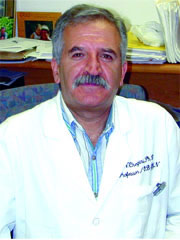
Two more retractions have popped up for Nasser Chegini, the former University of Florida professor currently under investigation by the Office of Research Integrity (ORI).

Both retractions appear in the Journal of Clinical Endocrinology & Metabolism. The notices indicate that an investigation report from the University of Florida “found substantial data misrepresentation” in two JCEM articles about Smads, signaling molecules that carry messages from TGF-beta receptors to the nucleus.

Here’s the notice for “The Expression of Smads in Human Endometrium and Regulation and Induction in Endometrial Epithelial and Stromal Cells by Transforming Growth Factor-Beta” (cited 28 times, according to Thomson Scientific’s Web of Knowledge):

Continue reading Ob-gyn prof up to 7 retractions, latest due to “substantial data misrepresentation”
Science chemistry paper earns retraction after expression of concern, marking second for UT group

scienceThe authors of a 2011 Science paper that proposed a new way to direct chemical bonds have withdrawn the paper after concerns about the data prompted an investigation and Editorial Expression of Concern last year from the journal. The retraction is the second for the group, which has also had seven other expressions of concern.

After a reader emailed the editors to raise suspicions about the data, corresponding author Christopher W. Bielawski, then based at the University of Texas at Austin, led an investigation of all the figures. It found substantial problems: “In over 50% of the figure parts, the authors deemed the data unreliable due to uncertainty regarding the origin of data or the manner in which the data were processed,” according to the retraction notice.

UT Austin concluded that there had been misconduct, but did not elaborate.

Continue reading Science chemistry paper earns retraction after expression of concern, marking second for UT group

More evidence scientists continue to cite retracted papers

Screen Shot 2015-02-17 at 2.38.46 PMA new paper in the MDPI journal Publications reports that the only controlled study on the effect of giving COPD patients Omega-3 has been cited 52 times since being retracted. Of those, only two mentioned the retraction.

In 2005, Chest published an article that found that COPD patients who took omega-3 supplements for 2 years experienced improvements in their condition, such as better walking tests and a decrease in sputum cytokines. But when an institutional investigation found the lead author had falsified the data, the journal retracted the paper in 2008.

That’s news to many researchers in the field. Among the 50 papers that cited the research after 2008 without stating it had been retracted, 20 included “specific data” from the paper, while the other 30 “cited the reference in passing.” Articles citing the retracted study have themselves been cited 947 times total, pointing to the ripple effect this kind of unwitting mention can have throughout the literature.

Continue reading More evidence scientists continue to cite retracted papers

Fraud retraction appears for deceased Maryland dental researcher

osomoporeA former dental researcher at the University of Maryland, Baltimore, has lost a 2009 paper in the journal Oral Surgery, Oral Medicine, Oral Pathology, Oral Radiology and Endodontology for fabricating his data on an NIH-funded study.

The researcher, Mark A. Scheper, is not identified in the retraction notice as the person implicated in the university investigation. However, one of his co-authors confirmed his involvement. Scheper died in January 2014 at age 45 of natural causes, according to the Maryland State Medical Examiner.

The article was titled “The oncogenic effects of constitutive Stat3 signaling in salivary gland cancer cells are mediated by survivin and modulated by the NSAID sulindac.” It appeared online in March 2009, and has been cited six times, according to Thomson Scientific’s Web of Knowledge.

According to the abstract: Continue reading Fraud retraction appears for deceased Maryland dental researcher

Georgia State student paper retracts article for faked quotes, fires writer

Screen Shot 2015-01-27 at 2.53.55 PMGeorgia State University student newspaper The Signal pulled an article and dropped a writer after discovering he lied about talking to a school spokesperson and made up quotes.

The paper tells Retraction Watch that the undergraduate, Rico Johnson, has been removed from the staff of the paper.

Here’s the notice for “Georgia State planning renovation for new media production center”: Continue reading Georgia State student paper retracts article for faked quotes, fires writer

Second retraction appears for former accounting professor James Hunton

James Hunton, via Bentley University

It took five months, but in December a second retraction popped up for disgraced accounting professor James E. Hunton.

Hunton resigned his teaching post at Bentley University in December of 2012. An extensive investigation by Bentley showed that not only was the data in two papers falsified. Hunton also lied about non-existent confidentiality agreements and tried to destroy evidence of his lies by unsuccessfully wiping his laptop and changing metadata on files.

The first paper Hunton was accused of faking, ironically about accounting fraud, was retracted in 2012.

Here’s the notice for “The relationship between perceived tone at the top and earnings quality”: Continue reading Second retraction appears for former accounting professor James Hunton

Former Pitt cancer researcher admits to faking findings

Dong Xiao
Dong Xiao

A former researcher at the University of Pittsburgh inflated the number of mice used in his experiments, and faked data in a number of images in a paper reporting the results, according to the Office of Research Integrity (ORI).

Dong Xiao admitting to having

intentionally fabricated data contained in a paper entitled ‘Guggulsterone inhibits prostate cancer growth via inactivation of Akt regulated by ATP citrate signaling,’ specifically Figure 6G,

the ORI reports. The paper was published in  in July 2014 in Oncotarget. Here’s Figure 6: Continue reading Former Pitt cancer researcher admits to faking findings

Oklahoma postdoc admits to faking data in grant application, submitted paper

bin kang
Bin Kang

A postdoc at the Oklahoma Medical Research Foundation faked data in a submitted paper and in a grant application, according to a new report from the Office of Research Integrity.

Bin Kang admitted to the misconduct, in which he Continue reading Oklahoma postdoc admits to faking data in grant application, submitted paper

Heaven still waiting: Publisher pulls book after boy recants on visit to heaven

malarkeyTyndale House says it will be recalling copies of The Boy Who Came Back from Heaven after the boy in question, Alex Malarkey (yes, that’s really his name), said he didn’t make the trip after all.

Malarkey made the claim after having been injured in a car accident when he was 6. The book became a best-seller for Tyndale, which, according to NPR, called it Continue reading Heaven still waiting: Publisher pulls book after boy recants on visit to heaven

U Colorado “golden boy” grad student faked data in drug lab, says investigation

u coloradoA graduate student at the University of Colorado Denver faked data in his work at a drug research lab that has notched two retractions and an expression of concern over “data integrity,” according to an extensive university investigation.

It seems like many more retractions are on the horizon for grad student Rajendra Kadam, who worked in the lab of Uday Kompella, a pharmaceutical researcher at the university.  

Here’s an excerpt from the report, which you can read in full (but redacted) here: Continue reading U Colorado “golden boy” grad student faked data in drug lab, says investigation