Braggadacio, information control, and fear: Life inside a Brigham stem cell lab under investigation

anversa
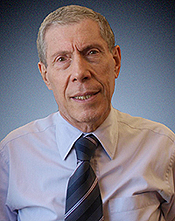
Piero Anversa

The following post was written by a former research fellow in the lab of Piero Anversa to whom we’ve promised confidentiality. Anversa has previously told us that he cannot comment because of an ongoing investigation.

Regular readers of Retraction Watch will note the recent news regarding the work conducted in the laboratory of Piero Anversa at Brigham and Women’s Hospital, a Harvard Medical School affiliate. In the early 2000s, his laboratory published a series of papers regarding the regenerative qualities of bone marrow-derived and cardiac-resident “stem cells.”

Those initial findings, as well as the research conducted since those early studies, have always been surrounded by controversy, as many have been unsuccessful in efforts to replicate their results. Controversy among competitors is not uncommon in our profession, but this particular one has blossomed into a formal investigation of their findings, and has, to date, led to the retraction of one paper and an expression of concern about another. Continue reading Braggadacio, information control, and fear: Life inside a Brigham stem cell lab under investigation

“Misrepresentation,” “reckless disregard for basic scientific standards”: Hauser report reveals details of misconduct

Harvard-logo_7Courtesy of a Freedom of Information Act request, The Boston Globe has a very good piece detailing what investigators found had actually happened in the Marc Hauser lab before the former Harvard psychology researcher resigned in 2011 and was found guilty of misconduct by the Office of Research Integrity (ORI) in 2012.

The Globe requested the 2010 report Harvard sent the ORI. Here’s a summary:

The 85-page report details instances in which Hauser changed data so that it would show a desired effect. It shows that he more than once rebuffed or downplayed questions and concerns from people in his laboratory about how a result was obtained. The report also describes “a disturbing pattern of misrepresentation of results and shading of truth” and a “reckless disregard for basic scientific standards.”

The Globe quotes key passages from the report: Continue reading “Misrepresentation,” “reckless disregard for basic scientific standards”: Hauser report reveals details of misconduct

Serial fakery: Researcher found to have committed misconduct at Harvard and Oxford

harvardA former Harvard postdoc who was found guilty of faking data at Oxford as a student did the same thing at Harvard, according to the Office of Research Integrity (ORI).

We first wrote about Helen Freeman in February, when we covered a retraction in Cell Metabolism that said the UK’s Medical Research Council had found that she committed misconduct while working as a student at Oxford. Today, a Federal Register notice from the ORI reports that Freeman faked images in a manuscript submitted to Nature while she was working on federally funded grants at Harvard Medical School and Beth Israel Deaconess Medical Center.

From the ORI’s report: Continue reading Serial fakery: Researcher found to have committed misconduct at Harvard and Oxford

NIH/Harvard team loses aging study to manipulated data

agecoverAge has retracted a 2012 article by a group of scientists from the National Institutes of Health and Brigham and Women’s Hospital in Boston after an NIH inquiry turned up evidence of data manipulation in the work.

The article, “Aging decreases rate of docosahexaenoic acid synthesis-secretion from circulating unesterified α-linolenic acid by rat liver,” came from the lab of Stanley Rapoport, chief of the brain physiology and metabolism section of the National Institute on Aging.

As the abstract explained: Continue reading NIH/Harvard team loses aging study to manipulated data

Fraud fells Alzheimer’s “made to order” neurons paper in Cell

cell414In 2011, a group of researchers at Columbia University reported in Cell that they had been able to convert skin cells from patients with Alzheimer’s disease into functioning neurons — a finding that raised the exciting prospect of “made to order” brain cells for patients with the degenerative disease. As one researcher not involved with the study, led by Asa Abeliovich, put it:

“[This is] simply a remarkable and complete piece of work which will now set a standard for stem cell work in neurological disease. The standard of the characterization of the neuronal cultures is very high,” John Hardy at University College London, U.K., wrote to [Alzforum]. He was not involved in the work but is taking a similar approach in his own lab.

According to the abstract of “Directed Conversion of Alzheimer’s Disease Patient Skin Fibroblasts into Functional Neurons:”

Continue reading Fraud fells Alzheimer’s “made to order” neurons paper in Cell

Harvard and the Brigham investigating leading heart group for “compromised” data

circulationcoverCirculation has retracted a 2012 study by a group of Harvard heart specialists over concerns of corrupt data, and the university is investigating. The group was led by Piero Anversa, a leading cardiologist, and Joseph Loscalzo — who will be familiar to readers of Circulation as the editor in chief of that journal. (Anversa’s also on the editorial board).

Continue reading Harvard and the Brigham investigating leading heart group for “compromised” data

Sex worker paper falls in data dispute

raps20.v010.i01.coverThe authors of a 2011 paper on sex workers in India have lost the article in a dispute over the provenance of the data.

The article, “Health of Home-Based Sex Workers and their Children in Rural Andhra Pradesh, India,” appeared in Asian Population Studies and was written by Monique M. Hennink and Solveig A. Cunningham, both of the Rollins School of Public Health at Emory University in Atlanta.

Here’s the abstract: Continue reading Sex worker paper falls in data dispute

RIP, Ed Rickards: Duke watchdog who covered Anil Potti case dies at 72

dukeIt’s unusual for us to post obituaries on Retraction Watch — we’ve published just one so far in three-and-a-half years — but we wanted to pause for a moment to note the passing of a tireless crusader for transparency and accountability whose electronic path crossed with ours a number of times since 2012 because of our shared interest in the case of Anil Potti.

We learned of the death of Ed Rickards this weekend while Ivan was attending ScienceOnline 2014. The Duke Chronicle, the university’s student newspaper, reported on February 5: Continue reading RIP, Ed Rickards: Duke watchdog who covered Anil Potti case dies at 72

Nature paper retracted following multiple failures to reproduce results

nature 2-27-14An international team of researchers from the NIH, Harvard, the University of Michigan, and two Chinese universities — Fourth Military Medical University and China Medical University — has retracted their 2012 paper in Nature after they — and a number of other groups — were unable to reproduce the key results.

The original abstract for “The NAD-dependent deacetylase SIRT2 is required for programmed necrosis” said that the findings

implicate SIRT2 as an important regulator of programmed necrosis and indicate that inhibitors of this deacetylase may constitute a novel approach to protect against necrotic injuries, including ischaemic stroke and myocardial infarction.

But here’s the notice, by corresponding author Toren Finkel and colleagues: Continue reading Nature paper retracted following multiple failures to reproduce results

Failure to reproduce leads to retraction of Nature Chemical Biology herbicide paper

nat chem bioA group of researchers at Emory has retracted a highly regarded paper after being unable to reproduce its key results.

Here’s the notice from Nature Chemical Biology: Continue reading Failure to reproduce leads to retraction of Nature Chemical Biology herbicide paper