Cancer researcher logs 5th retraction

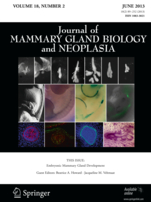
Journal of Mammary Gland Biology and NeoplasiaA cancer researcher has added a fifth retraction to his name — but the notice doesn’t mention any problems with the paper itself. 

Rather, the Journal of Mammary Gland Biology and Neoplasia decided to retract the paper because it referenced other papers that had been retracted as a result of data manipulation.

The notice doesn’t specify which references were problematic, but the list includes three papers that are now retracted; all three include Scott Valastyan (the sole author of the newly retracted paper) as first author, and two list Robert Weinberg, his former supervisor and prominent cancer researcher, as last author.
Continue reading Cancer researcher logs 5th retraction

Coptic cop-out? Religion journal won’t pull paper based on bogus ‘gospel’

HTR107_02What the Harvard Theological Review giveth, it evidently will not taketh away.

The venerable publication about religious matters is refusing to retract a 2014 article by a noted scholar of early Christianity despite evidence that the article — about Jesus’s wife — was based on a forgery.

The paper, by Harvard theologian Karen King, described a Coptic papyrus called “The Gospel of Jesus’s Wife,” which, among other things, includes language that suggests Christ was married: Continue reading Coptic cop-out? Religion journal won’t pull paper based on bogus ‘gospel’

Singapore investigation leads to another retraction, correction for Harvard research fellow

Screen Shot 2016-03-25 at 8.12.49 AM

After an investigation found evidence of misconduct, a biologist has issued a third retraction.

Sudarsanareddy Lokireddy — now a research fellow at Harvard Medical School — “admitted falsification,” a Research Integrity Officer at Nanyang Technological University in Singapore told us in December. According to The Scientist, another journal has also published a correction that the authors had requested earlier.

The newly retracted paper is “Myostatin is a novel tumoral factor that induces cancer cachexia,” published in Biochemical Journal and cited 40 times, according to Thomson Reuters Web of Science. Here’s the retraction note:

What did retractions look like in the 17th century?

Alex Csiszar
Alex Csiszar

We always like to get a historical perspective on how scientists have tried to correct the record, such as this attempt in 1756 to retract a published opinion about some of the work of Benjamin Franklin. Although that 18th century note used the word “retract,” it wasn’t a retraction like what we see today, in which an entire piece of writing is pulled from the record. These modern-day retractions are a relatively recent phenomenon, which only took off within the last few decades, according to science historian Alex Csiszar at Harvard University. He spoke to us about the history of retractions – and why an organization like Retraction Watch couldn’t have existed 100 years ago.

Retraction Watch: First of all, let’s start with something you found that appears to break our previous record for the earliest retraction – a “retractation” by William Molyneux of some assertions about the properties of a stone, published in 1684. Could this be the earliest English-language retraction? Continue reading What did retractions look like in the 17th century?

Stem cell researcher who sued Harvard, Brigham & Women’s is leaving his post

anversa
Piero Anversa
A stem cell researcher who sued his employers, Harvard and Brigham & Women’s Hospital, is headed to Switzerland.

Piero Anversa‘s departure follows the dismissal of his suit last summer. Anversa filed the suit with colleague Annarosa Leri, claiming that an investigation into their work damaged their reputations:

they lost a multimillion-dollar offer to purchase their company, Autologous/Progenital; and both Plaintiffs have had possible employment offers at several institutions postponed.

Anversa’s lawyer, Tracey Miner, confirmed that he was moving:

Continue reading Stem cell researcher who sued Harvard, Brigham & Women’s is leaving his post

Judge dismisses cardiac stem cell researchers’ lawsuit against Harvard

Piero Anversa
Piero Anversa

A Massachusetts judge has dismissed a lawsuit by researchers who argued that an investigation by Harvard cost them job offers.

Last year, Piero Anversa, a stem cell researcher at the Brigham & Women’s Hospital, and a colleague, Annarosa Leri, sued Harvard over an investigation into their work that they claim damaged their reputations: Continue reading Judge dismisses cardiac stem cell researchers’ lawsuit against Harvard

Bad image prompts correction of Harvard-Brigham stem cell paper by Anversa

circresA group of Harvard stem cell researchers who already have one retraction and an expression of concern now have a correction. This one’s in Circulation Research, and it involves an image that previously had been flagged as suspicious in our comments.

The group is led by Piero Anversa, who as we reported last year is one of two researchers suing Harvard because the institution’s investigation into their work

has cost them millions in a forfeited sale of their company, and job offers.

Continue reading Bad image prompts correction of Harvard-Brigham stem cell paper by Anversa

Stem cell researchers sue Harvard, claiming faulty investigation lost them job offers

anversa
Piero Anversa

Piero Anversa, a stem cell researcher at the Brigham & Women’s Hospital, and a colleague, Annarosa Leri, have sued Harvard over an investigation into their work that they claim has cost them millions in a forfeited sale of their company, and job offers.

The team has had a paper in Circulation retracted, and a paper in The Lancet subject to an expression of concern.

In the suit, first reported by the Boston Business Journal and the Boston Globe, Anversa and Leri blame a co-author for the issues in the papers, and claim that their Continue reading Stem cell researchers sue Harvard, claiming faulty investigation lost them job offers

Harvard stem cell scientist Vacanti taking leave in wake of STAP retractions

vacanti
Charles Vacanti, by Diemut Strebe via BWH

Charles Vacanti, a Harvard anesthesiologist and stem cell pioneer whose name appeared on both retracted STAP stem cell papers, is giving up his post as chair of anesthesiology at Brigham and Women’s Hospital, and taking a year-long sabbatical.

According to the Knoepfler Lab Stem Cell Blog, which as become a must-read for anyone interested in the STAP saga, Vacanti — the corresponding author, with Haruko Obokata, on one of the Nature articles, and a co-author on the other — told colleagues in an email: Continue reading Harvard stem cell scientist Vacanti taking leave in wake of STAP retractions

Alleged Medicare cheat loses paper for data mix-up

A Boston doctor indicted on charges of Medicare fraud in 2007 has had a paper relating to the case retracted this month.

Abdul Razzaque Ahmed was considered something of a miracle worker by his patients, treating two rare and disfiguring skin conditions called pemphigoid and pemphigus vulgaris. He used more powerful medicines than the typical course of treatment, including a drug normally used to treat cancer.

The initial indictment stated that Ahmed mixed blood samples to falsely show a “dual diagnosis” of both diseases, and prove to Medicare that they required the more rigorous (and expensive) treatment. It also alleged that he profited massively from the government pay-outs. He was convicted of obstruction in 2007; the other charges were dropped when he agreed to forfeit assets worth $2.9 million.

Now, a 2001 paper by Ahmed, which claimed fifteen patients had a dual diagnosis, has been retracted because the samples were all mixed. Here is the retraction notice from Clinical Immunology: Continue reading Alleged Medicare cheat loses paper for data mix-up